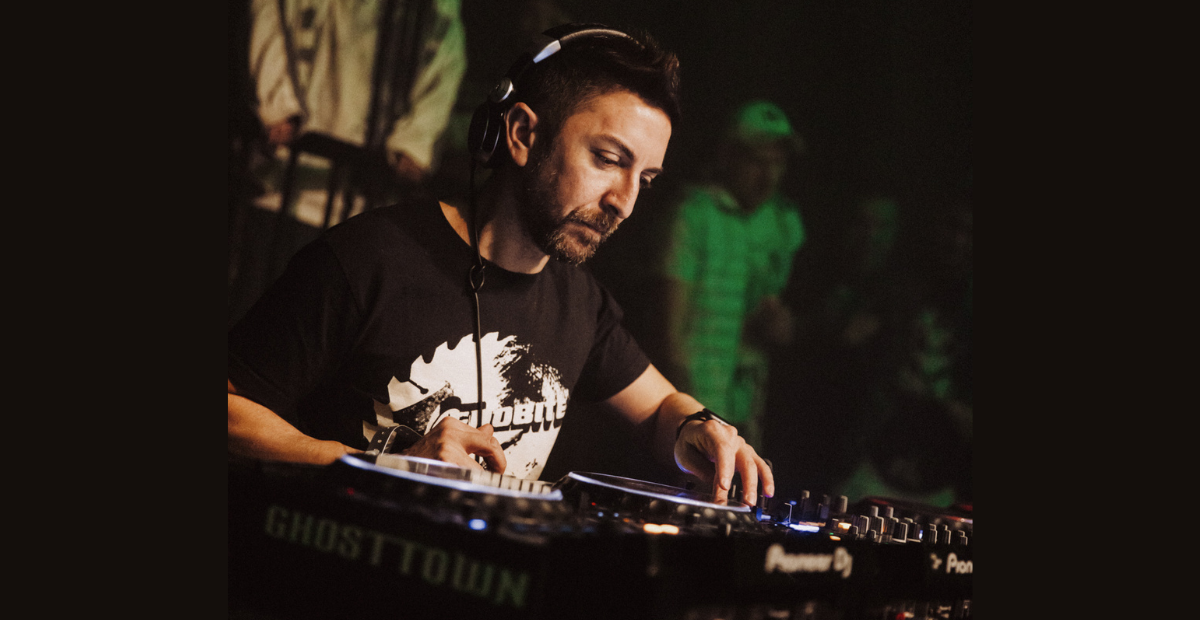

In occasione dei 30 anni della Cenobite Records, storica etichetta olandese all’avanguardia nell’innovazione della scena Hardcore, fondata nel 1996 ad Amsterdam da Michel Klaassen meglio noto come Leviathan e Tellurian, abbiamo avuto il piacere di intervistare uno dei suoi ambasciatori più talentuosi e geniali: Roberto Stramaccioni in arte Formek.
Nata come sotto-etichetta della leggendaria Hellraiser Ultimate Hardcore Dance Events (I.S.P.), la Cenobite, fondata nel 1996 ad Amsterdam da Michel Klaassen meglio noto come Leviathan e anche come Tellurian, si è rapidamente evoluta in una piattaforma indipendente e influente per la musica dance sperimentale con una portata davvero globale.
Nota per il suo carattere decisamente Trance-Core, tanto da renderla riconoscibile ai più come avente un tocco tutto suo, il c.d. “Cenobite Style”, questa label ha definito il proprio sound come Psycore – Psychedelic Hardcore, una potente fusione di Dark Hardcore, Breakbeat, Tekno, Acidcore e PsyTrance che rappresenta sia la libertà in campo musicale sia quella spinta incessante a voler superare continuamente i propri limiti.

Nel corso di tre decadi la Cenobite ha prodotto innumerevoli classici dell’Hardcore e ha avuto un ruolo chiave nel plasmare il movimento New Gen Hardcore, influenzando artisti, etichette e piste da ballo in tutto il mondo.
Di questa e di altre cose ce ne parla Formek, che ringraziamo per averci concesso questa intervista davvero avvincente ed emozionante.

Come e quando nasce il tuo amore per la musica? Con quale musica sei cresciuto? Che generi ascoltavi prima di arrivare all’elettronica?
La mia passione per la musica nasce in giovane età, anche mio padre era appassionato di musica e mi ha trasmesso questo amore. Sono cresciuto con il Rock ma anche con la Progressive dei primi anni Novanta, con l’Hardtechno e con il Big Beat.
Quando e perché a un certo punto hai deciso di diventare DJ e producer? E perché hai scelto questo alias, Formek: ha un significato in particolare?
Ho deciso di diventare DJ a 13 anni. Il miglior regalo nel tempo sono stati i miei Technics SL-1210 MK2: da 30 anni ho ancora gli stessi giradischi. Quanto al mio nome d’arte “Formek”, esso è nato per caso: deriva da “formica”, il mio soprannome, dovuto alla mia stazza. “Formek” è stata l’evoluzione di quel soprannome: molto più in linea con l’estetica Hardcore. Poi ho sentito la necessità di esprimermi attraverso le mie produzioni.
Con quali strumentazioni produci?
La mia daw è Logic Pro ma nel tempo ne ho cambiate molte. In realtà mi trovo bene con il flow di lavoro di Logic, tutto qui. Uso vari strumenti analogici e digitali, ma anche plugin. Un sintetizzatore che mi piace per praticità e suono è il Roland System-1; mi piace anche il suono dei Novation per questo uso anche un X-Station. Il tuttofare per me è l’Access Virus C. Per le drum uso una Roland RD-9 ma anche altri strumenti. Immancabile il mixer Mackie e andrei avanti ancora per molto: diciamo che finora ho citato quegli strumenti a cui sono più affezionato.
Cosa ti emoziona o comunque ti dà maggior soddisfazione: produrre o mixare? Con quale delle due “arti” pensi di esprimere al meglio te stesso?
Oscillo tra le due cose, dipende dal mood. Se sono in studio dedico tutto me stesso alla produzione; se sono in serata, naturalmente, metto tutto me stesso nella performance. In studio ho più controllo perché posso ritornare sulle scelte fatte. In serata è tutto live e le cose accadono in diretta. Sono due sensazioni diverse e differentemente appaganti.
Sei uno che ha sperimentato vari generi… cosa ha fatto sì che poi decidessi di passare all’Hardcore e di rimanere in tale ambito? Come definiresti il tipo di Hardcore che produci e suoni?
Dal Big beat alla Psytrance, ho collaborato anche con band Hard-Rock, portando il mio suo elettronico. L’Hardcore è qualcosa che mi scorre dentro: ascolto tutta la musica, e vado a concerti di vari generi musicali. Dell’Hardcore mi piace l’energia che trasmette e le sfumature che contiene: ad un orecchio vergine può sembrare semplice e ripetitiva, ma entrando in sintonia con il suo linguaggio ha molto da raccontare. Produco un sound molto ragionato: non affido niente alle macchine e scrivo praticamente tutto, curando ogni sfumatura “a mano”. Evito le automazioni impostate dagli strumenti, le scrivo tutte. Il mio suono è molto influenzato dalla Psycore, ma non saprei dargli una definizione.
Nel 2015 hai fondato con Daniele Scaccia (Dany Tribe / The Twins Artcore), che tra l’altro è anche tuo amico, la Overdrive Records: ce ne puoi parlare? Da cosa è caratterizzato il sound di questa etichetta?
Con Daniele Scaccia ci conosciamo da una vita. Nei primi anni 2000 ho lavorato in un negozio di dischi a Frosinone e curavo la vendita del genere Hardcore. Lì ho conosciuto Daniele e Giuseppe (The Twins Artcore) perché venivano ad acquistare i dischi. Nel 2015 stavo riprendendo in mano la produzione musicale e abbiamo deciso di fondare la Overdrive Records. La nostra decisione è stata di tornare al vinile, fare vinili e distribuirli: era un momento nel quale l’Hardcore aveva perso il contatto con questo formato ed era praticamente quasi solo in formato digitale. La cosa funzionò. Il sound è caratterizzato da un’Hardcore dura, orientata alla Gabber con varie influenze: dalla Terror alla Psycore. Decisamente fuori dai cliché e dalla logica mainstream. La visione estetica è questa.
Fai parte della storica scuderia Mokum, il che è fantastico per chi come te ha fatto dell’Hardcore la sua bandiera: come è avvenuto il tuo reclutamento?
Nel 2015 ho inviato qualche demo alla Mokum Records che ha subito deciso di pubblicare le mie produzioni. Ammetto che mi sono sentito orgoglioso di entrare a far parte della Mokum: per me è come una famiglia e rappresenta la storia del genere.
Nel 2016 sei poi entrato a far parte anche della Cenobite, altra pietra miliare nella storia dell’Hardcore che dal 1996 continua a dare vita a festival ed eventi in tutto il mondo: ce ne puoi parlare? Che differenza c’è tra le produzioni targate Mokum e quelle Cenobite?
In quegli anni decisi di mixare i suoni Psy con l’Hardcore. A mio parere non c’è etichetta più rappresentativa della Cenobite Records per questo genere. Mokum e Cenobite sono una grande famiglia per me e sono orgoglioso di farne parte. La differenza è sicuramente l’attitudine Psycore della Cenobite: le due etichette hanno una discografia ampia, ma sento nella Cenobite un inconfondibile suono Psycore, per così dire. La Mokum è decisamente più Hardcore e Gabber.
E poi è arrivata la Cyndium Booking Agency, molto conosciuta per i suoi eventi come Pandemonium e Cynergize, con cui recentemente hai firmato un contratto: parlaci di questa tua esperienza.
Ho deciso di stringere la collaborazione partendo dall’estetica del Pandemonium: il suo linguaggio è molto simile al mio. Avere un’agenzia che gestisce i booking è una risorsa e suonare al Pandemonium o gli eventi Cyndium è emozionante.
Dato che hai collaborato con artisti di calibro internazionale e preso parte ad eventi di grossa portata in tutto il mondo, ce ne puoi fare una breve panoramica? Quale collaborazione e quale evento, per esempio, ti sono rimasti più di tutti nel cuore?
Sicuramente mi è rimasta nel cuore la collaborazione con François Prijt aka Chosen Few, grande artista purtroppo di recente scomparso.

Il remix di “After Hourz”, ma anche quello di “Chosen Paradize”, sono stati molto vissuti: nel senso che li ho vissuti con grande emozione visto che avevo a che fare con remix di tracce storiche di un artista leggendario. Tra gli eventi più emozionanti, il Galaxydrome IV a Mosca e il Pandemonium The Dark Dimension: qui suonai in versus con due grandi artisti nonché grandi amici, The Twins Artcore e Slugnoid, e devo dire che è sempre piacevole suonare con loro perché siamo in grande sintonia. Di recente, il Ghosttown a Utrecht è stato micidiale: si è creata molta sinergia con il pubblico, per cui credo proprio che questo evento resterà impresso nei miei ricordi più belli per sempre. Sono molti gli eventi che porto nel cuore, ma ecco, questi che vi ho citato sono tra quelli che non dimenticherò mai.

Parlaci del tuo ultimo lavoro, l’EP “Obsession” uscito per Cenobite, che abbiamo avuto il piacere di ascoltare in anteprima e che Cenobite stessa ha definito “assalto a quattro tracce dall’energia pura e inarrestabile, pensata per le piste da ballo di tutto il mondo“: in quali formati è uscito, quali i link per poterlo ascoltare ed eventualmente acquistare? Come definiresti il tipo di Hardcore a cui hai dato vita con questo lavoro? Qual è la tua traccia preferita?
“Obsession” è uscito il 30 settembre 2025 in digitale e in vinile. Può essere acquistato direttamente dal sito della Cenobite a questi indirizzi:
https://cenobiterecords.com/product/formek-obsession-e-p-cb-55-25
https://cenobiterecords.com/category/tracks-download-mp3/formek-1/
L’EP racchiude un sound Psycore e Old School, chiaramente in chiave contemporanea. Credo che la mia preferita tra le quattro tracce sia “Hit the Crowd”: energica, con un grande climax.
L’artwork dell’EP è fantastico: chi l’ha creato? E cosa rappresenta?
Io stesso ho creato l’artwork del demone e Daniele Scaccia mi ha aiutato a completarlo mettendo il logo Cenobite, il mio logo sulla cintura del demone e curando il retro-copertina con tutte le info. Ogni cosa che compongo porta con sé messaggi nascosti o un riferimento a qualche elemento culturale o personale. Lascio spesso indizi nelle produzioni con la speranza che le persone ci facciano caso e vadano ad approfondire. In questo caso, il demone è la trasformazione di un essere umano ossessionato da quel suono, da quel mondo: quello della Cenobite. Chiaro il riferimento a Hellraiser, una saga che sicuramente ha ispirato la Cenobite. Generalizzando, l’ossessione che un po’ tutti abbiamo verso qualcosa e che ci trasforma.

Quali sono le prossime date che hai in programma per suonare e che vuoi segnalarci?
In particolare voglio segnalarvi i 30 anni della Cenobite Records. Questo anniversario sarà celebrato con uno speciale evento che si terrà il 5 settembre 2026 presso il Melkweg di Amsterdam. Per l’occasione Strength of Unity si unirà a Cenobite apportando l’eredità grezza dell’OSIB – Ouwe Stijl Is Botergeil per una serata che rifletterà il passato, il presente e il futuro della Psychedelic Hardcore.

Finora abbiamo parlato di Formek, dunque del DJ e del producer, ma ora parlaci ora un po’ di te: cosa fai nella vita? Per esempio, oltre alla musica, quali sono le altre tue passioni?
Mi piace viaggiare, mi piace conoscere altre culture perché sono appassionato di tutto quel che ruota attorno alle scienze umane e all’arte. Da questo derivano gli elementi che apporto nelle mie tracce. Chiaramente mi piace la tecnologia, in particolare quella legata alla musica, quindi amo i sintetizzatori, gli effetti e tutto ciò che ruota attorno alla composizione e al mastering. Sono appassionato di mastering ed effettuo mastering per vinile e digitale per varie etichette della scena Hardcore. Ho anche lavorato come Sound Designer per un’azienda che realizza videogame.
Quale consiglio daresti a chi si avvicina per la prima volta al mondo del DJing e della produzione?
Ci vuole costanza, tenacia ma soprattutto passione. Volate basso e dimenticate l’invidia distruttiva: può esserci un’invidia costruttiva, nel senso che ti spinge a migliorare. Chi è più bravo di te è il tuo stimolo. Lasciatevi influenzare ascoltando tutto e tutti, poi trovate la vostra strada e il vostro sound. Avere un’identità artistica aiuta a diventare riconoscibili e identificabili.
Cosa ne pensi dell’annosa diatriba “vinile o CDJ”?
Penso che sia totalmente inutile creare una frattura tra le due realtà. Nasco come DJ con i vinili e per me è stato difficile abituarmi ai CDJ. C’è del feticismo (nel senso buono) verso ciò che è concreto e tastabile, cosa che piace molto anche a me: toccare la musica è emozionante ed è bello collezionare i vinili. Se la vediamo da un punto di vista di qualità sonora, basta studiare per capire le differenze e ognuno può poi tirare le sue conclusioni scegliendo ciò che preferisce. Certamente è innegabile la comodità di andare a suonare all’estero senza portare con sé la valigia dei dischi, e questo va tenuto in considerazione. Per me ognuno fa quel che vuole, non credo sia il formato a dare più o meno valore al set o al DJ: durante un bel set non mi metto a guardare se lo si sta eseguendo con i giradischi o con i CDJ. L’artista sceglie i suoi strumenti e il suo linguaggio. C’è il rischio di non apprezzare molte capacità artistiche ed espressive se ci si ferma solo a guardare il formato che si utilizza.
Come vedi l’attuale scena Gabber/Hardcore?
C’è un cambio generazionale molto apprezzabile, in Italia soprattutto. Vedo i ragazzi della nuova generazione molto più aperti, tolleranti e rispettosi verso l’altro: elementi importanti sia dal punto di vista della scena musicale che sociale in generale. In ogni caso è una scena matura, da un lato molto coerente con il passato ma con molta voglia di dire la propria nel tempo e nei modi presenti. C’è molta cultura anche grazie a Internet: è più facile trovare informazioni rispetto a quando io mi avvicinai a questa realtà. Resta una scena molto viva.
Nel ringraziarti per queste tue bellissime parole, vorremmo ci salutassi con una tua top 5 delle tracce che più ti piacciono e che vorresti far ascoltare ai lettori di Parkett.
E io ringrazio voi per l’intervista!
Ecco la mia top 5: sono tracce iconiche, che hanno segnato me e tutte le generazioni negli anni. Immancabili.
- Archatos – The Strength of Unity
- Predator – Final Confrontation
- Chosen Few – Name of The Dj
- Leviathan – We’ll Tear Your Soul Apart
- Rexanthony – Cocoacceleration
ENGLISH VERSION
30 Years of Cenobite Records: An Interview with Formek
On the occasion of the 30th anniversary of Cenobite Records, a historic Dutch label at the forefront of innovation in the hardcore scene, founded in 1996 in Amsterdam by Michel Klaassen, better known as Leviathan and Tellurian, we had the pleasure of interviewing one of its most talented and brilliant ambassadors: Roberto Stramaccioni, aka Formek.
Born as a sub-label of the legendary Hellraiser Ultimate Hardcore Dance Events (I.S.P.), Cenobite, founded in 1996 in Amsterdam by Michel Klaassen, better known as Leviathan and also as Tellurian, quickly evolved into an independent and influential platform for experimental dance music with a truly global reach. Known for its distinctly Trance-Core character, so much so that it is recognizable by many as having a style all its own, the so-called “Cenobite Style,” the label has defined its sound as Psycore – Psychedelic Hardcore, a powerful fusion of Dark Hardcore, Breakbeat, Tekno, Acidcore, and PsyTrance that represents both musical freedom and the relentless drive to continually push boundaries.
Over the course of three decades, Cenobite has produced countless hardcore classics and played a key role in shaping the New Gen Hardcore movement, influencing artists, labels, and dance floors worldwide.
Formek discusses this and other topics, and we thank him for granting us this truly compelling and moving interview.
How and when did your love for music begin? What kind of music did you grow up with? What genres did you listen to before turning to electronic music?
My passion for music began at a young age; my father was also passionate about music and passed this love on to me. I grew up with rock, but also with early ’90s progressive rock, hard techno, and big beat.
When and why did you decide to become a DJ and producer? And why did you choose this alias, Formek: does it have a specific meaning?
I decided to become a DJ at 13. The best gift I’ve had over time has been my Technics SL-1210 MK2: I’ve still had the same turntables for 30 years. As for my stage name “Formek,” it came about by chance: it comes from “ant,” my nickname, due to my size. “Formek” was the evolution of that nickname: much more in line with the hardcore aesthetic. Then I felt the need to express myself through my productions.
What gear do you use to produce?
My DAW is Logic Pro, but I’ve changed a lot over time. I actually get along well with Logic’s workflow, that’s all. I use various analog and digital instruments, as well as plugins. A synthesizer I like for its practicality and sound is the Roland System-1; I also like the sound of Novations, which is why I also use an X-Station. My all-purpose tool is the Access Virus C. For drums, I use a Roland RD-9, but I also use other instruments. A Mackie mixer is a must, and I could go on. So far, I’ve mentioned the instruments I’m most fond of.
What excites you or gives you greater satisfaction: producing or mixing? Which of the two “arts” do you think best expresses yourself with?
I oscillate between the two, depending on the mood. If I’m in the studio, I dedicate myself entirely to production; if I’m on a night out, naturally, I put my all into the performance. In the studio, I have more control because I can go back on the choices I’ve made. In the evening, everything is live and things happen live. They are two different and differently satisfying sensations.
You’ve experimented with various genres… what made you decide to move into hardcore and stay within that genre? How would you define the type of hardcore you produce and play?
From big beat to psytrance, I’ve also collaborated with hard rock bands, bringing my own electronic touch. Hardcore is something that flows through me: I listen to all music and go to concerts of various genres. What I like about hardcore is the energy it conveys and the nuances it contains: to an untrained ear, it may seem simple and repetitive, but once you get in tune with its language, it has a lot to say. I produce a very thoughtful sound: I don’t rely on machines and I write practically everything, taking care of every nuance “by hand.” I avoid automated instruments; I write everything. My sound is heavily influenced by psycore, but I couldn’t really define it.
In 2015, you founded Overdrive Records with Daniele Scaccia (Dany Tribe / The Twins Artcore), who is also a friend of yours. Can you tell us about it? What defines the label’s sound?
Daniele Scaccia and I have known each other for a lifetime. In the early 2000s, I worked in a record store in Frosinone, handling hardcore sales. There, I met Daniele and Giuseppe (The Twins Artcore) because they came to buy records. In 2015, I was getting back into music production, and we decided to found Overdrive Records. Our decision was to return to vinyl, make vinyl records, and distribute them: it was a time when hardcore had lost touch with this format and was practically exclusively available in digital format. It worked. The sound is characterized by a hard, gabber-oriented hardcore with various influences, from terror to psychocore. Definitely outside of clichés and mainstream logic. The aesthetic vision is this.
You’re part of the historic Mokum label, which is fantastic for someone like you who has made hardcore their flagship: how did you get recruited?
In 2015, I sent some demos to Mokum Records, who immediately decided to release my productions. I admit I was proud to join Mokum: to me, it’s like family and represents the history of the genre.
In 2016, you also joined Cenobite, another milestone in the history of hardcore, which has continued to host festivals and events around the world since 1996: can you tell us about it? What’s the difference between Mokum and Cenobite productions?
During those years, I decided to mix Psy sounds with hardcore. In my opinion, there’s no label more representative of this genre than Cenobite Records. Mokum and Cenobite are like a big family to me, and I’m proud to be a part of it. The difference is definitely Cenobite’s psychedelic attitude: both labels have extensive discography, but I hear Cenobite’s unmistakable psychedelic sound, so to speak. Mokum is decidedly more hardcore and gabber.
And then came Cyndium Booking Agency, well-known for its events like Pandemonium and Cynergize, with which you recently signed a contract: tell us about this experience.
I decided to start this collaboration based on Pandemonium’s aesthetic: its language is very similar to mine. Having an agency that manages bookings is an asset, and playing at Pandemonium or Cyndium events is exciting.
Since you’ve collaborated with internationally renowned artists and participated in major events around the world, can you give us a brief overview? Which collaboration and which event, for example, have remained closest to your heart?
My collaboration with François Prijt aka Chosen Few, a great artist who sadly passed away recently, has definitely remained close to my heart.
The “After Hourz” remix, as well as the “Chosen Paradize” one, were deeply felt: in the sense that I experienced them with great emotion since I was dealing with remixes of historic tracks by a legendary artist. Among the most exciting events were Galaxydrome IV in Moscow and Pandemonium The Dark Dimension: there I played versus with two great artists and great friends, The Twins Artcore and Slugnoid, and I must say it’s always a pleasure to play with them because we are so in tune. Recently, Ghosttown in Utrecht was killer: there was a great synergy with the audience, so I really believe this event will remain etched in my fondest memories forever. There are many events I hold dear, but these I mentioned are among the ones I will never forget.
Tell us about your latest work, the EP “Obsession,” released on Cenobite. We had the pleasure of previewing it, and Cenobite itself described it as “a four-track assault of pure, unstoppable energy, designed for dance floors everywhere.” What formats is it released in? What are the links to listen to it and possibly purchase it? How would you define the type of hardcore you’ve created with this work? What’s your favorite track?
“Obsession” was released on September 30, 2025, digitally and on vinyl. It can be purchased directly from the Cenobite website at the following addresses:
https://cenobiterecords.com/product/formek-obsession-e-p-cb-55-25
https://cenobiterecords.com/category/tracks-download-mp3/formek-1
The EP embodies a psychedelic and old-school sound, clearly with a contemporary edge. I think my favorite of the four tracks is “Hit the Crowd”: energetic, with a great climax.
The EP artwork is stunning: who created it? And what does it represent?
I created the demon artwork, and Daniele Scaccia helped me complete it by adding the Cenobite logo, my logo on the demon’s belt, and curating the back cover with all the info. Everything I compose carries hidden messages or a reference to some cultural or personal element. I often leave clues in my productions, hoping people will notice them and delve deeper. In this case, the demon is the transformation of a human being obsessed with that sound, that world: that of the Cenobite. The reference to Hellraiser is clear, a saga that undoubtedly inspired the Cenobite. Generalizing, it’s the obsession we all have toward something that transforms us.
What upcoming dates do you have planned that you’d like to share with us?
I’d especially like to highlight Cenobite Records’ 30th anniversary. This anniversary will be celebrated with a special event on September 5, 2026, at Melkweg in Amsterdam. Strength of Unity will join Cenobite for the occasion, bringing the raw legacy of OSIB – Ouwe Stijl Is Botergeil to the table for an evening reflecting the past, present, and future of Psychedelic Hardcore.
So far we’ve talked about Formek, the DJ and producer, but now tell us a little about yourself: what do you do for a living? For example, besides music, what are your other passions?
I like to travel and explore other cultures because I’m passionate about everything related to the humanities and art. This informs the elements I bring to my tracks. I obviously love technology, especially music-related technology, so I love synthesizers, effects, and everything related to composition and mastering. I’m passionate about mastering and do vinyl and digital mastering for various labels in the hardcore scene. I’ve also worked as a Sound Designer for a video game company.
What advice would you give to someone new to the world of DJing and production?
It takes perseverance, tenacity, and above all, passion. Keep your head down and forget about destructive envy: there can be constructive envy, in the sense that it pushes you to improve. Those who are better than you are your motivation. Let yourself be influenced by listening to everything and everyone, then find your own path and your own sound. Having an artistic identity helps you become recognizable and identifiable.
What do you think of the age-old debate about “vinyl or CDJ”?
I think it’s completely pointless to create a divide between the two. I started out as a vinyl DJ, and it was difficult for me to get used to CDJs. There’s a fetish (in a good way) for the tangible and tangible, which I also really enjoy: touching music is exciting, and collecting vinyl is fun. If we look at it from a sound quality perspective, all it takes is studying to understand the differences, and everyone can then draw their own conclusions and choose what they prefer. The convenience of playing abroad without having to carry a suitcase of records is certainly undeniable, and this should be taken into consideration. For me, everyone does what they want; I don’t think the format determines the value of the set or the DJ: during a good set, I don’t bother to check whether it’s being performed on turntables or CDJs. The artist chooses his tools and his language. There’s a risk of failing to appreciate many artistic and expressive skills if we simply focus on the format used.
How do you see the current Gabber/Hardcore scene?
There’s a very appreciable generational shift, especially in Italy. I see the new generation as much more open, tolerant, and respectful of others: important elements both from a musical and social perspective. In any case, it’s a mature scene, on the one hand very consistent with the past but with a strong desire to express its own voice in the present and in the present. There’s a lot of culture, thanks also to the internet: it’s easier to find information than when I first became involved. It remains a very vibrant scene.
In thanking you for these beautiful words, we’d like you to leave us with your top 5 favorite tracks that you’d like Parkett readers to listen to.
And I thank you for the interview! Here are my top 5: they’re iconic tracks that have influenced me and all generations over the years. Unmissable.
- Archatos – The Strength of Unity
- Predator – Final Confrontation
- Chosen Few – Name of The Dj
- Leviathan – We’ll Tear Your Soul Apart
- Rexanthony – Cocoacceleration