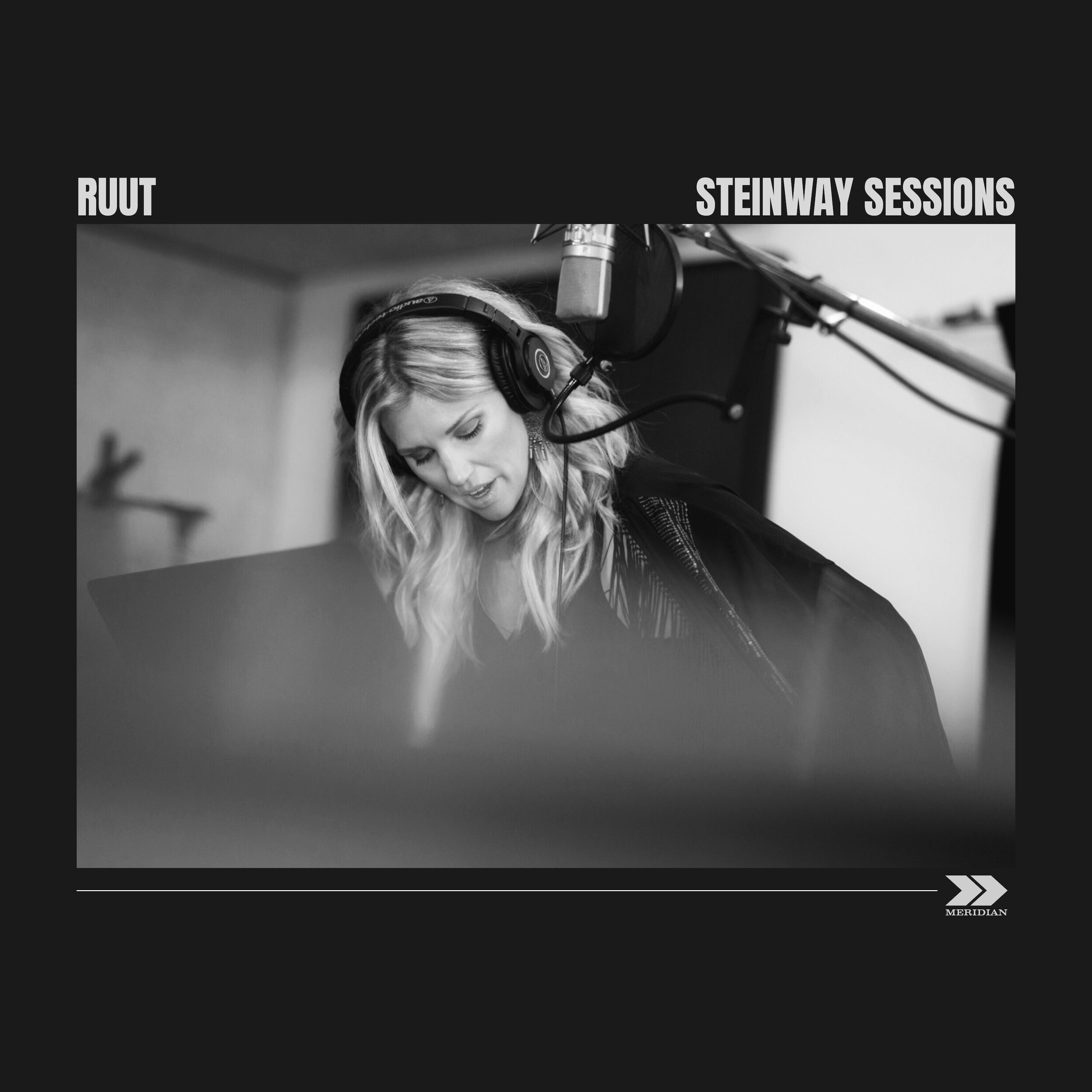

A sense of return runs through Steinway Sessions, yet it never settles into nostalgia. This remastered edition reframes Ruut’s earlier work with a clarity that feels almost disarming, as if the songs had been waiting for the right moment to reveal their full dimension. Recorded in a Steinway atelier and now revisited under the meticulous ear of producer Blake Morgan, the album captures a formative period while refusing to be confined by it.
Although often associated with alternative rock, the record approaches the genre from an unusual angle. Traditional rhythmic frameworks are largely deconstructed, replaced by a more fluid, piano-led motion. The pulse is rarely explicit; instead, it emerges from the phrasing itself, from the weight and timing of each chord. This gives the music a shifting, almost breathing quality, where tempo feels intuitive rather than fixed. At times, the absence of percussion creates a suspended atmosphere, allowing each note to resonate fully before dissolving into the next.
Rhythm, in this context, becomes something less predictable. It doesn’t drive the songs forward in a linear way, but rather shapes their internal dynamics. Subtle pauses and elongated transitions act as structural elements, guiding the listener through an experience that feels both deliberate and unforced. There’s a quiet tension in these moments, a sense that the music could move in multiple directions but chooses restraint instead.
The role of synth textures is equally nuanced. They appear sparingly, yet their presence is essential in defining the album’s tonal palette. Instead of occupying the foreground, these elements drift beneath the surface, adding a layer of depth that is felt more than immediately heard. In certain passages, they lend a gentle warmth, softening the edges of the piano; in others, they introduce a faintly distant quality, almost like a memory echoing in the background. This careful balance prevents the arrangements from becoming overly minimal while maintaining their intimate character.
Atmosphere plays a central role throughout the record. The songs are built around a sense of space, where silence is as important as sound. This approach creates an environment that feels open, almost fragile, yet never empty. Each track unfolds with a measured pace, allowing emotions to surface gradually rather than being imposed. The result is a listening experience that feels immersive without becoming overwhelming.
“Life Is Beautiful” stands out as a defining moment within the album’s arc. Its progression is understated, relying on subtle shifts rather than dramatic peaks. The emotional weight of the song lies in its repetition, in the way certain phrases gain meaning over time. It reflects a perspective rooted in acceptance—an acknowledgment of imperfection that feels both personal and universal.
Vocally, Ruut maintains a consistent sense of control and presence. Her voice is clear, direct, and notably free of embellishment. There’s no reliance on dramatic flourishes; instead, the performance is grounded in authenticity. This restraint allows the lyrics to resonate without distraction, reinforcing the album’s overall sense of cohesion.
As the record unfolds, its structure reveals a careful attention to detail. Each element, from the rhythmic phrasing to the subtle integration of synth layers, contributes to a unified aesthetic. Even moments that feel slightly irregular—small shifts in timing or dynamics—add to the authenticity of the recordings. They suggest a process that values expression over perfection, resulting in a sound that feels genuinely lived-in.
The remastering enhances these qualities without altering the album’s core identity. There is a noticeable increase in clarity, particularly in the interplay between piano and voice, yet the intimacy remains intact. It’s a delicate balance, one that allows the material to feel both refined and immediate.
This is a release that resonates through its precision and emotional depth rather than overt complexity. We’re pleased to host it on our webzine, recognizing it as a work that continues to reveal new layers with each listen, quietly reaffirming its place within a broader contemporary landscape.