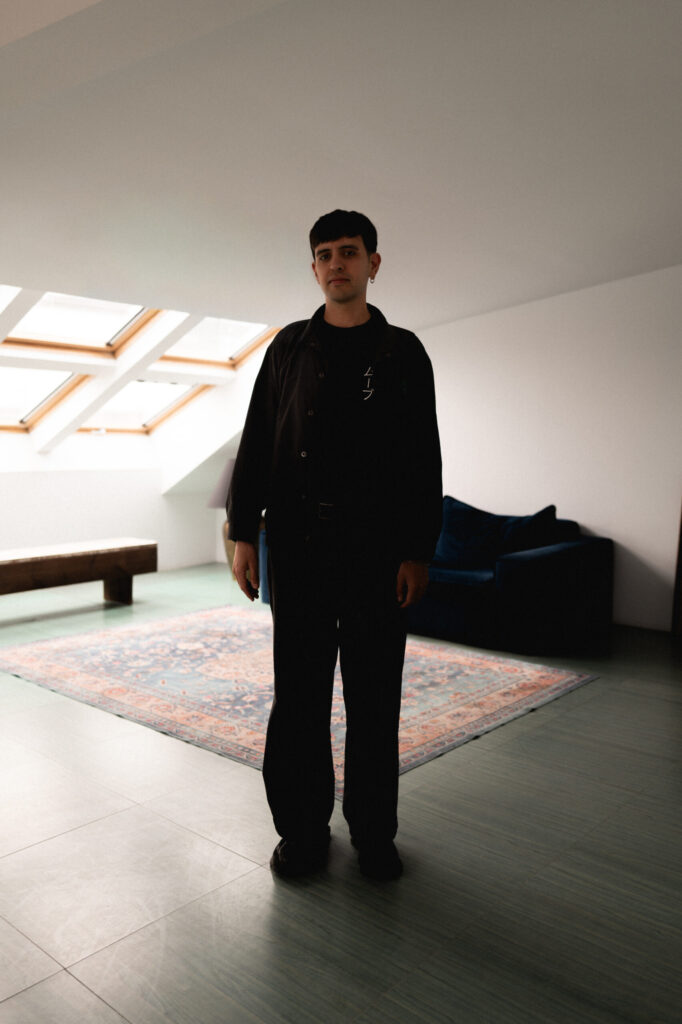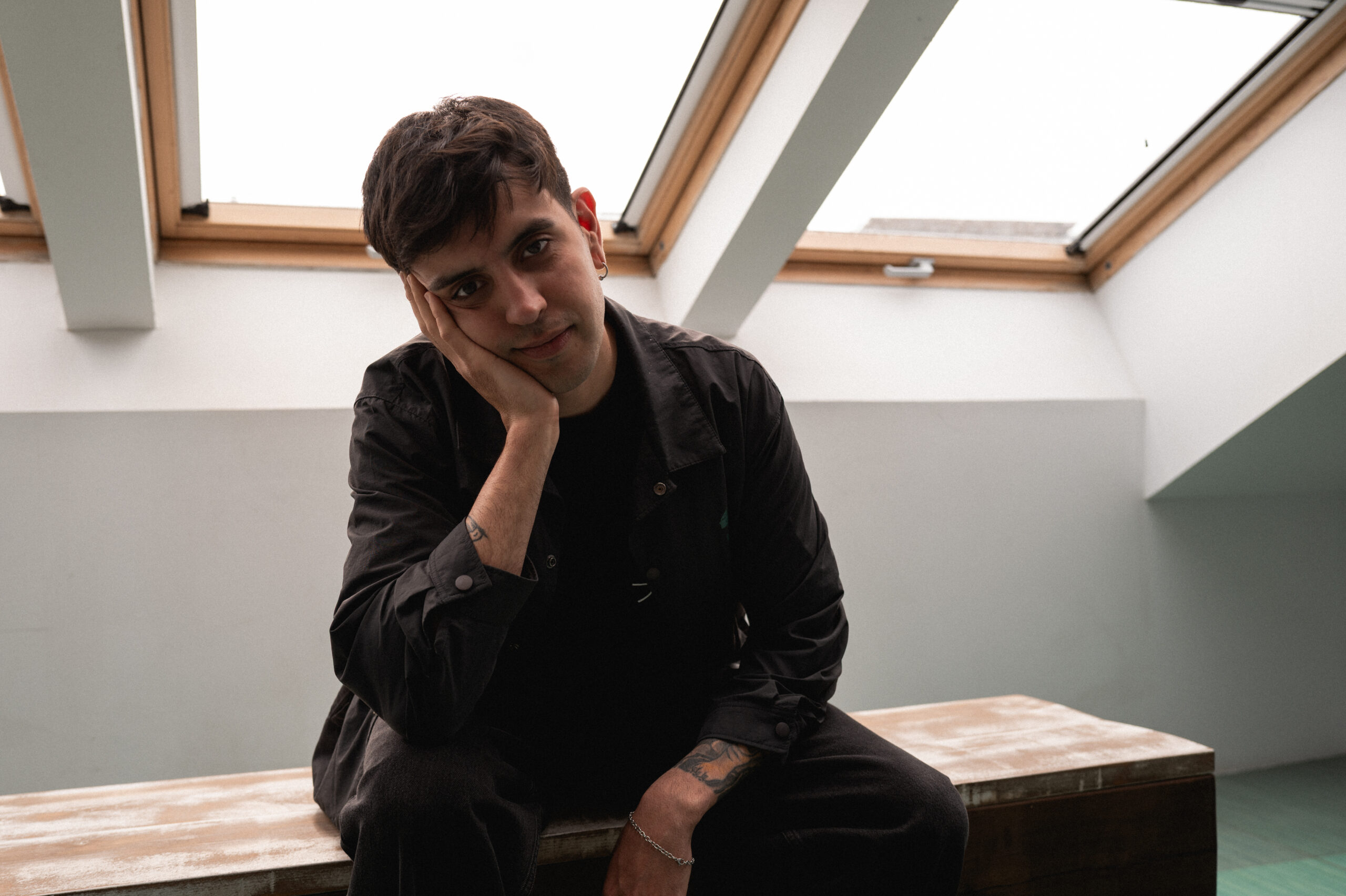

Racchiudere l’animo artistico di Rindeau sotto un solo cappello sarebbe impossibile. Le etichette non sono di certo parte del suo mondo, fatto piuttosto di musica, arte e cultura. L’abbiamo intervistato per farci raccontare un po’ del suo universo.
ENGLISH VERSION BELOW
Spingersi oltre i confini è spesso il modo più rappresentativo di abitare l’arte. Rindeau, nome d’arte di Federico Cortina, argentino di origine trapiantato a Barcellona da quattro anni, sa perfettamente come vivere questi spazi, trasformandoli da delimitazioni a opportunità.
La sua musica segue il suo spirito intraprendente, facendosi influenzare da sensazioni e da ogni forma artistica che incontra, da quella grafica alla scrittura. Oggi, con il suo party e label Strain, ha un progetto solido, con una direzione artistica chiara ma anche libera, che lo vede essere tra i protagonisti della scena underground di Barcellona.
Domenica 5 aprile sarà a Torino per la Pasqua di Outcast e noi ci abbiamo scambiato quattro chiacchiere per scavare un po’ più a fondo nella sua eclettismo. E per farlo, oltre all’intervista, quale modo migliore di un mixato? Lo trovate sulla nostra sezione di SoundCloud “Internal Selection”. Enjoy!
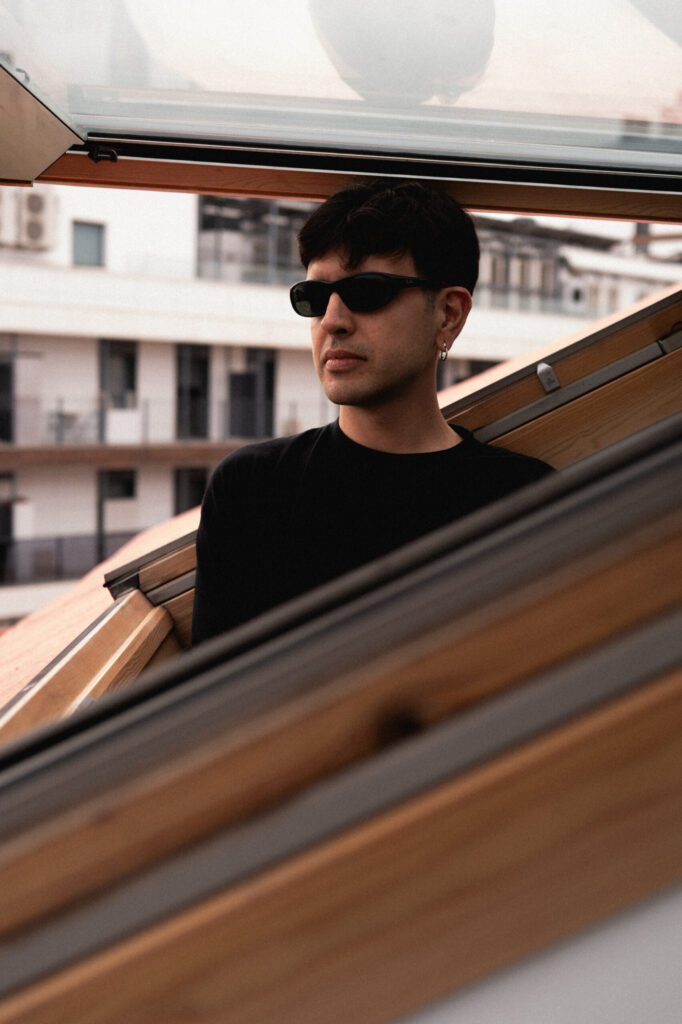
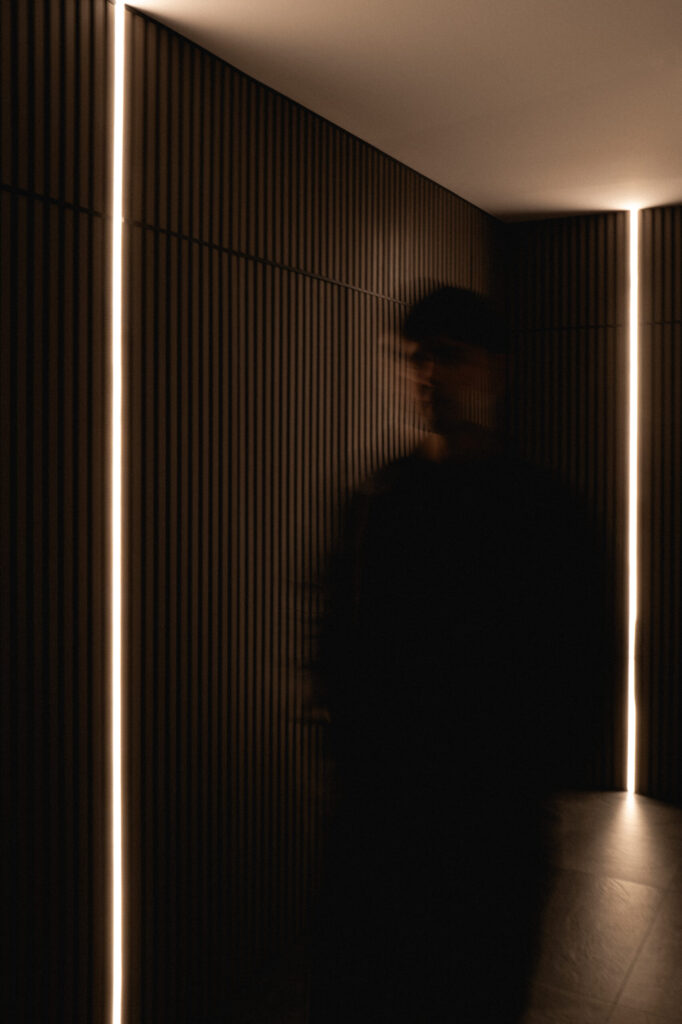
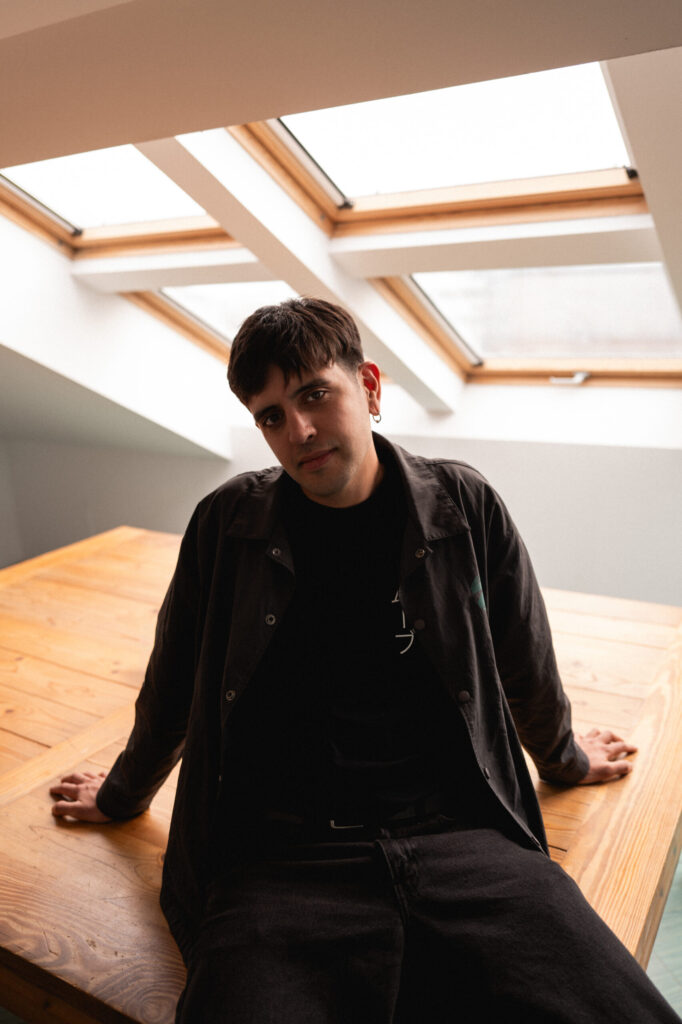
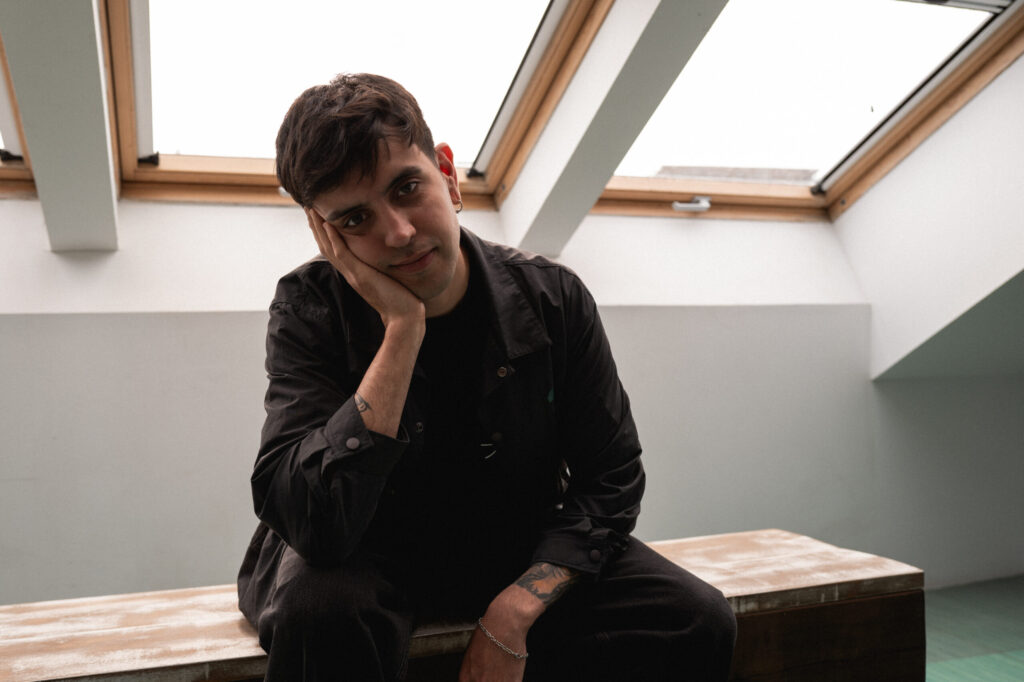
Photos © Carlos Peggo
Partiamo dalle basi: come ti sei avvicinato alla musica elettronica e quali sono state le tue influenze principali in questo mondo?
La musica è presente nella mia vita da quando ho memoria. Ricordo che quando avevo meno di 10 anni ascoltavo in loop CD hip-hop e compilation di elettronica che, per qualche motivo, finivano sempre nelle mie mani. Poi ho iniziato ad andare in un club del mio quartiere dove entravano con un falso documento d’identità. Aveva una sala di musica elettronica dove suonavano DJ classici argentini come Luis Nieva (Urban Groove), Romina Cohn, Diego Cid, ecc. A dire il vero, a quell’epoca non mi passava nemmeno per la testa di fare il DJ.
Finché un giorno, in vacanza con amici, vidi per la prima volta un DJ che girava dischi. Rimanetti ipnotizzato per tutta la notte a guardare cosa faceva, senza capire assolutamente nulla.
Dopo quelle vacanze, un amico mi prestò un controller e iniziammo a fare feste tra di noi in una sala per feste infantili della mia famiglia. Così, quasi senza saperlo, l’organizzazione di eventi e la musica si unirono fin dall’inizio.
Credo di non aver avuto “influenze” chiare finché non ho iniziato ad andare al Cocoliche, un club underground di Buenos Aires: un seminterrato per 200 persone guidato dalle mie prime reference, Udolph, Carla Tintoré e Mariano DC. Lì suonavano spesso DJ come Marcel Dettmann, Ben Klock o Sven Väth, tra molti altri che oggi sono leggende della techno. In quel luogo ho imparato veramente cosa fosse l’underground, come viverlo e cosa NON si deve fare ahahah.
Nel corso della tua carriera, hai attraversato diverse fasi come DJ: dai tuoi inizi fino ad oggi. Come descriveresti questa evoluzione e cosa è cambiato nel tuo modo di vivere il booth?
A 17 o 18 anni, il primo genere che ho iniziato a suonare è stata la techno berlinese, molto influenzata da Ostgut e Illian Tape e dai DJ che passavano per il Berghain e venivano a Buenos Aires.
Col tempo ho iniziato a connettermi con la techno-house, deep, minimal, electro, electro-techno/house o persino la trance psichedelica. Oggi sento che i miei set possono attraversare stati molto diversi, sempre guidati dall’energia. Mi interessa che le persone entrino in un unico flusso e che si creino momenti diversi: dal ballare con gli occhi chiusi al saltare o abbracciare un amico.
Con gli anni ho capito che il DJ ha il potere di far provare emozioni e di cambiare completamente l’energia di uno spazio, in meglio o in peggio. Oggi mi interessa di più costruire un viaggio ed essere veramente presente in ciò che accade in pista.
Per quanto riguarda il tuo processo creativo, come cerchi musica attualmente e quali criteri tieni in considerazione quando selezioni un disco per i tuoi set?
Mi piace molto passare il tempo in un negozio di dischi. Spesso sto diverse ore per trovare un solo disco che mi piace davvero, e altre volte succede esattamente il contrario. Credo che questa incertezza sia parte di ciò che lo rende speciale.
Compro anche da distributori e su Discogs. Quando seleziono musica, di solito penso al mio prossimo gig, cerco di visualizzare se il brano si adatta all’energia del momento/orario e a ciò che voglio generare quel giorno.
Ultimamente sto trovando musica incredibile anche in digitale, soprattutto su Bandcamp, di artisti degli anni ’90 che stanno caricando il loro catalogo completo. Mi sembra una cosa molto bella poter scoprire quel materiale e, allo stesso tempo, supportare direttamente chi lo ha creato.
Cosa significa per te essere un DJ?
Per me, essere DJ è uno stile di vita. Se parliamo di “far girare dischi”, è essere un creatore di momenti. È interferire in ciò che sente ogni persona che si trova sotto la soglia della tua musica. È trasmettere energia verso il pubblico e, in qualche modo, guidare ciò che accade, quasi come un rituale.
I DJ sono “momenti”, sono il presente. Quando ascolti qualcuno suonare in modo onesto, dando tutto se stesso, si sente. Si notano le ore che ci sono dietro.
La selezione musicale è energetica e intuitiva. Quando sto suonando e cerco un disco, mi lascio trasportare da quello che mi chiama, e quasi mai sbaglia. Quando invece scelgo con la ragione e non con l’intuito, di solito succede il contrario.
Per questo, quando suono, mi lascio guidare e lascio che la musica fluisca in me. In quel momento voglio divertirmi, ballare e far ballare la gente con tutto il lavoro che c’è stato prima.
Essere DJ è condividere, essere presenti e costruire qualcosa nel tempo. Per me, senza dubbio, è un atto comunitario che rispetto e per cui ho passione.
Oltre a essere un DJ, sei anche un graphic designer. Come ci sei arrivato?
Mi è sempre piaciuto disegnare e ho fatto graffiti per diversi anni quando ero piccolo, ma non avevo mai pensato di fare il “designer”. Nel bel mezzo della pandemia organizzammo una Strain (ndr. il suo party) super illegale con i nostri amici di Interdance. Facemmo fare un volantino che non ci piacque per niente, così inviai al designer uno schizzo in cui disegnai l’alieno che oggi ci rappresenta e le lettere della line-up. Piacque moltissimo e il designer praticamente lo digitalizzò. La festa uscì incredibile e, con i guadagni, comprai la mia prima tavoletta grafica.
Come fai in modo che l’arte visiva e la musica comunichino tra loro? C’è una forma di espressione che ti rappresenta più delle altre?
L’arte visiva è nata grazie alla musica. Faccio design solo per feste e per persone del settore. Ho avuto la fortuna di fare volantini per feste in tutto il mondo: Miami, New York, Parigi, Berlino, Ibiza, Barcellona, San Paolo e altri ancora.
Quello che mi rappresenta di più, al di sopra di tutto, è la musica. È il canale da cui mi diramo verso l’arte. Senza musica, il resto non avrebbe senso.
Parlaci del tuo momento attuale con la produzione. So che ora hai un nuovo studio e che sei stato molto concentrato sul diggin e sull’assorbire nuovi stimoli. Come sta influenzando questo il tuo sound e cosa puoi anticiparci su ciò che stai creando?
Qualche mese fa, Javier Carballo mi ha invitato a condividere lo studio con lui, e per me è stato un onore. Ho un profondo rispetto per lui come artista e come persona, e inoltre sono anni che supporta la mia musica, anche prima che io vivessi in Europa e lo conoscessi di persona.
Sono fortunato, perché mi piace esplorare generi e trame diverse, e trovare quel punto in comune dove tutto si connette.
Ci sono stati diversi mesi in cui non riuscivo a finire nessuna traccia, così ho deciso di fermarmi e riconnettermi con altri tipi di musica. Ora sono molto concentrato sulla produzione: ho appena finito un EP di 4 tracce che rappresenta abbastanza bene il sound in cui mi trovo ora. Non so ancora come definirlo — deep techno, trance, electro?… non lo so —, ma è abbastanza ipnotico, elettrico e alieno ahahah.
E, a proposito di questo nuovo studio e di questo periodo di immersione in nuove influenze, in che modo credi che questo approccio più profondo alla ricerca e alla produzione stia plasmando i tuoi prossimi passi artistici?
Sto lavorando a un sublabel o subpiattaforma di Strain che cerca un suono più maturo, muovendosi tra l’ambient, la deep techno e la trance. È una connessione che non cerca l’immediatezza, ma qualcosa di più profondo, con live e set immersivi, EP in digitale e vinile, eventi e altro. Molto presto ci saranno novità su questo 🙂
Ho deciso che sia una diramazione perché Strain è un label che si caratterizza per avere banger per la pista, brani funzionali e per supportare i produttori per la loro musica, non per il loro nome, anche se è la loro prima uscita.
Da alcuni anni fai anche parte del team di Mixmag Spain, inclusa la scrittura e il lavoro da copywriter nel tuo modo di relazionarti con la scena elettronica. Ci sono ostacoli difficili da superare per riuscire a incastrare tutto, o di solito fluisce abbastanza bene?
Fluisce in modo eccezionale. Mi piace scrivere, domandare e capire, mi considero una persona curiosa e questo si sposa molto bene con l’approccio editoriale di Mixmag. Inoltre, mi connette con tantissime persone dell’industria, ho avuto l’opportunità di intervistare artisti che ammiro come Nicolas Lutz, Robert Leiner e molti altri.
Mi permette anche di scoprire musica costantemente, investigare e avere una libertà di espressione piuttosto ampia. Cerco di riversare tutto ciò che ho imparato in questi anni e di fornire contenuti che abbiano valore.
Fortunatamente la risposta è molto buona e Mixmag Spain sta crescendo a passi da gigante. A partire da questo mese sono il nuovo direttore della rivista, quindi sono molto concentrato su questa nuova fase e su tutto ciò che verrà.
Credi che arriverà un momento in cui vorrai separare le tue carriere e dedicarti solo a un percorso? Oppure la tua identità artistica sarà inevitabilmente sempre formata da tutte queste sfaccettature?
Questo non lo so. Suppongo che la mia identità artistica sarà sempre guidata dalla musica. Non voglio mettermi un tetto. Mi piace condividere, esplorare gli angoli più profondi del suono e far provare alle persone che mi ascoltano, leggono o vedono le stesse emozioni che ho provato io nello scoprire o creare qualcosa.
Non mi considero il migliore in nessuno dei rami a cui mi dedico, ma so di lasciare la mia essenza in ognuno di essi.
Sembra ovvio che annoiarsi non sia il tuo forte; in effetti, come anticipato, hai anche un progetto a Barcellona che è sia label che festa, Strain. Raccontaci un po’ come è nato e quali piani futuri hai.
Strain è nato nel 2018 come un piccolo progetto che ho iniziato insieme ad alcuni amici. Eravamo a una festa in un posto molto piccolo, la musica era pessima e pensammo: “Perché non facciamo una festa noi?”
Il nome è uscito in modo molto naturale: cercammo la parola “extraterrestre” in diverse lingue finché in rumeno apparve “străin”.
La storia è lunghissima. Dopo 7 anni, più di 40 feste, 8 release, cambi di componenti, perdite e vittorie, sento che il progetto oggi è solido e senza pretese: solo migliorare, imparare e continuare a costruire.
Ho già realizzato diversi sogni che all’epoca vedevo molto lontani, come fare feste a Les Enfants (Barcellona), Cadavra (Madrid) o Parigi, e ce ne sono ancora molti altri da realizzare.
Per quanto riguarda l’immediato, il 24 aprile saremo a La Rítmica, un nuovo club a Valencia, in collaborazione con Nekoza Records, con Jesse You e Baldo come ospiti principali. Il 9 maggio esploreremo i meandri di una secret location a Barcellona con Trajano e il 23 maggio nella nostra residenza al 303 Audiophile Club.
Inoltre, abbiamo appena lanciato il nostro secondo vinile, The Space Hood, e stiamo già lavorando alle prossime uscite.
E cosa ci dici della Barcellona di questi ultimi tempi? Si ha la sensazione che ci sia un risveglio della scena underground, o mi sbaglio?
Vivo a Barcellona da solo 4 anni, anche se ero già venuto prima. Per me è sempre stata una città con un underground molto forte: tantissimi negozi di dischi di qualità e molta gente che si ingegna per fare feste e creare cose molto interessanti.
Per quanto riguarda i club, purtroppo non ci sono molti spazi con un buon soundsystem e una vera scommessa sull’underground. Fortunatamente ci sono posti come Les Enfants o Laut che supportano molto sia la scena locale che artisti e label internazionali. Ci sono anche spazi molto buoni come il 303 Audiophile Club o il 78/33, anche se con il limite orario delle 3 AM.
Da fuori può sembrare un “risveglio”, ma in realtà ci sono sempre più persone interessate alla vinyl culture, all’underground e alla musica di qualità. Non sono io a poter dire se la scena cresca o no, ma posso dire che qui ci sono migliaia di artisti e produttori, e che sempre più persone vengono a vivere a Barcellona: sia per il clima, la facilità di viaggiare o la possibilità di condividere con persone del tuo stesso settore.
Infine, se ti va, raccontaci quali sono le tue fonti di ispirazione in generale come artista?
Le mie ispirazioni cambiano continuamente, così come la musica che suono. Quello che mi motiva di più è trovare un suono nuovo, una sensazione o un’energia diversa nel mio corpo che mi faccia esplorare. A volte ascolto un DJ la cui musica lascia un segno nella mia percezione.
In questo momento sono in una ricerca più psichedelica, e ogni giorno trovo dischi o album che vanno dall’ambient al downtempo, passando per la trance e la techno, anche se nessuno rappresenta al 100% quel suono.
Un’altra ispirazione è la mia stessa frustrazione, che mi porta al miglioramento personale. Mi piace sorprendere me stesso e uscire dalla mia zona di comfort senza alimentare l’ego. Quando mi sento male per qualcosa legato alla mia carriera, so che sta per arrivare un cambiamento.
E c’è anche la mia ispirazione quotidiana: la mia compagna Alba, una persona che mi supporta, ha fiducia in me e mi dà forza anche quando non ne ho bisogno. La mia più grande sostenitrice, e parte di ciò che sono oggi lo devo a lei :))
ENGLISH VERSION
Pushing beyond boundaries is often the most representative way of inhabiting art. Rindeau, Argentine by birth and transplanted to Barcelona for four years, knows exactly how to live in those spaces, turning them from limitations into opportunities.
His music follows his enterprising spirit, allowing itself to be influenced by sensations and every art form he encounters, from graphic art to writing. Today, with his party and label Strain, he has a solid project with a clear yet free artistic direction, placing him among the protagonists of Barcelona’s underground scene.
On Sunday, April 5th, he’ll be in Turin for Outcast’s Easter celebration, and we had a chat with him to dig a little deeper into his eclecticism. And speaking of digging… what better way to get to know a DJ than through a mix? You’ll find an hour of Fede’s mixing in our SoundCloud section “Internal Selection”. Enjoy!
Let’s start with the basics: how did you get into electronic music and what were your main influences in this world?
Sequenced music has been present in my life for as long as I can remember. I recall being under 10 years old and listening to hip-hop CDs and electronic compilations on loop that, for some reason, always ended up in my hands. Then I started going to a club in my neighborhood where I got in with a fake ID. It had an electronic music floor where classic Argentine DJs like Luis Nieva (Urban Groove), Romina Cohn, Diego Cid, etc. played. Even so, back then it never crossed my mind to become a DJ.
Until one day, on vacation with friends, I saw a DJ spinning records for the first time. I was hypnotized all night watching what he did, without understanding absolutely anything.
After that vacation, a friend lent me a controller and we started throwing parties among ourselves in my family’s children’s party hall. So, almost without knowing it, event organizing and music programming came together from the beginning.
I think I didn’t have clear “influences” until I started going to Cocoliche, an underground club in Buenos Aires: a basement for 200 people run by my first references — Udolph, Carla Tintoré, and Mariano DC. There, DJs like Marcel Dettmann, Ben Klock, and Sven Väth used to play, among many others who are now techno legends. That’s where I truly learned what the underground is, how to live it, and what NOT to do hahaha.
Throughout your career, you’ve gone through different phases as a DJ: from your beginnings to today. How would you describe that evolution and what has changed in your understanding of the DJ booth?
At 17 or 18, the first genre I started playing was Berlin techno, heavily influenced by Ostgut and Ilian Tape and the DJs who passed through Berghain and came to Buenos Aires.
Over time, I began connecting with techno-house, deep, minimal, electro, electro-techno/house, or even psychedelic trance. Today I feel that my sets can go through many different states, always guided by energy. I’m interested in people entering the same flow and creating different moments: from dancing with eyes closed to jumping or hugging a friend.
Over the years I’ve understood that the DJ has the power to make people feel things and completely change the energy of a space, for better or worse. Today I’m more interested in building a journey and truly being present in what’s happening on the dancefloor.
Regarding your creative process: how do you currently search for music and what criteria do you take into account when selecting a record for your sets?
I really enjoy spending time in a record shop. Many times I spend several hours just to find one record I truly like, and other times the opposite happens. I think that uncertainty is part of what makes it special.
I also buy from distributors and on Discogs. When selecting music, I usually think about my next gig, trying to visualize whether the track fits the energy of the moment/time slot and what I want to generate that day.
Lately, I’ve also been finding incredible music digitally, especially on Bandcamp, from 90s artists who are uploading their entire catalog. I think it’s a beautiful thing to be able to discover that material and, at the same time, directly support those who created it.
What does being a DJ mean to you?
For me, being a DJ is a lifestyle. If we talk about “spinning,” it’s about being a creator of moments. It’s about interfering with what each person feels under the threshold of your music. It’s transmitting energy to the audience and, in a way, guiding what happens, almost like a ritual.
DJs are moments; they are the present. When you hear someone play honestly, giving it their all, you can feel it. You can tell the hours of work behind it.
Music selection is energetic and intuitive. When I’m playing and looking for a record, I let myself be guided by the one that calls me, and it’s almost never wrong. When I choose from reason rather than intuition, it usually goes the other way.
That’s why, when I play, I let myself be guided and flow. At that moment, I want to have fun, dance, and make people dance with all the previous work behind it.
Being a DJ is sharing, being present, and building something over time. For me, without a doubt, it’s a communal act that I respect and am passionate about.
And regarding the world of graphic design, how did you get into it?
I’ve always liked to draw and I did graffiti for several years as a kid, but I had never thought of being a “designer.” In the middle of the pandemic, we organized a super illegal Strain party with our friends from Interdance. We had a flyer made that we didn’t like at all, so I sent the designer a sketch where I drew the alien that represents us today and the letters of the line-up. People loved it, and the designer basically digitized it.
The party turned out amazing and, with the profits, I bought my first graphics tablet.
How do you get visual art and music to communicate with each other — if you do? Is there one form of expression that represents you more than others?
Visual art was born thanks to music. I only make designs for parties and for people in the industry. I’ve been lucky enough to make flyers for parties all over the world: Miami, New York, Paris, Berlin, Ibiza, Barcelona, São Paulo, and others.
What represents me the most, above all else, is music. It’s the channel from which I branch out into art. Without music, everything else would be meaningless.
Tell us about your current moment with production. I know you have a new studio now and you’ve been very focused on digging and absorbing new influences. How is this influencing your sound and what can you tell us about what you’re creating?
A few months ago, Javier Carballo invited me to share a studio with him, and it was an honor for me. I have deep respect for him as an artist and as a person, and he’s also been supporting my music for years, even before I lived in Europe and met him in person.
I’m lucky that I enjoy exploring different genres and textures, and finding that common ground where everything connects.
There were several months when I couldn’t finish any track, so I decided to stop and reconnect with other types of music. Now I’m very focused on production: I just finished a 4-track EP that represents quite well the sound I’m in right now. I don’t know how to define it yet — deep techno, trance, electro?… I don’t know — but it’s quite hypnotic, electric, and alien haha.
Precisely about this new studio and this period of immersion in new references, how do you think this deeper approach to digging and production is shaping your next artistic steps?
I’m working on a sublabel or subplatform of Strain that seeks a more mature sound, moving between ambient, deep techno, and trance. It’s a connection that doesn’t seek immediacy, but something deeper, with live acts and immersive sets, digital and vinyl EPs, events, and more. Very soon there will be news about this 🙂
I decided to make it a branch because Strain is a label characterized by having bangers for the dancefloor, functional tracks, and supporting producers for their music, not for their name, even if it’s their first release.
For a few years now, you’ve also been part of the Mixmag Spain team, including writing and copywriting work as part of your way of relating to the electronic scene. Are there difficult obstacles to overcome in order to fit everything together, or does it usually flow quite well?
It flows exceptionally well. I like to write, ask questions, and understand; I consider myself a curious person and that fits very well with Mixmag’s editorial approach. It also connects me with many people in the industry; I’ve had the opportunity to interview artists I admire like Nicolas Lutz, Robert Leiner, and many more.
It also allows me to constantly discover music, research, and have a fairly broad freedom of expression. I try to pour everything I’ve learned these years into providing valuable content.
Fortunately, the response is very good and Mixmag Spain is growing by leaps and bounds. As of this month, I am the new director of the magazine, so I’m very focused on this new stage and everything that’s coming.
Do you think there will come a time when you want to separate your careers and dedicate yourself to just one path? Or will your artistic identity inevitably always be shaped by all these facets?
I don’t know that. I suppose my artistic identity will always be guided by music. I don’t want to put a ceiling on myself. I like to share, explore the deepest corners of sound, and make people who listen to me, read me, or see me feel the same emotions I felt when discovering or creating something.
I don’t consider myself the best in any of the branches I dedicate myself to, but I know I leave my essence in each one.
It seems obvious that getting bored isn’t your thing; in fact, you also have a project in Barcelona that is both a label and a party, Strain. Tell us a bit about how it was born and what future plans you have.
Strain was born in 2018 as a small project that I started together with some friends. We were at a party in a very small place, the music was terrible, and we thought: “Why don’t we throw a party ourselves?”
The name came very naturally: we looked for the word “extraterrestrial” in several languages until we found “străin” in Romanian.
The story is very long. After 7 years, more than 40 parties, 8 releases, changes in members, losses and victories, I feel that the project is now solid and without pretension: just improve, learn, and keep building.
I’ve already fulfilled several dreams that at the time seemed very far away, like throwing parties at Les Enfants (Barcelona), Cadavra (Madrid), or Paris, and there are still many more ahead.
In the immediate future:
- On April 24th we will be at La Rítmica, a new club in Valencia, in collaboration with Nekoza Records, with Jesse You and Baldo as main guests.
- On May 9th at a secret location in Barcelona with Trajano.
- And on May 23rd at our residency at 303 Audiophile Club.
Also, we just released our second vinyl, The Space Hood, and we’re already working on the next releases.
And what can you tell us about Barcelona in recent times? Does it feel like there’s an awakening of the underground scene, or am I wrong?
I’ve been living in Barcelona for only 4 years, although I had come before. For me, it has always been a city with a very strong underground: many quality record shops and many people figuring things out to throw parties and create very interesting things.
Regarding clubs, unfortunately there aren’t many spaces with a good soundsystem and a real commitment to the underground. Fortunately, there are places like Les Enfants or Laut that support both the local scene and international artists and labels. There are also very good spaces like 303 Audiophile Club or 78/33, although with the 3 AM curfew.
From the outside it might seem like an “awakening,” but actually more and more people are interested in vinyl culture, the underground, and quality music. I’m not the one to say whether the scene is growing or not, but I can say that there are thousands of artists and producers here, and more and more people are coming to live in Barcelona: whether for the climate, the ease of travel, or the possibility of sharing with people from the same sector.
What are your general sources of inspiration as an artist?
My inspirations change all the time, just like the music I play. What motivates me the most is finding a new sound, a sensation, or a different energy in my body that makes me explore. Sometimes I listen to a DJ whose music leaves a mark on my perception.
Right now I’m on a more psychedelic quest, and every day I find records or albums that range from ambient and downtempo to trance and techno, although none represent that sound 100%.
Another inspiration is my own frustration, which leads me to self-improvement. I like to surprise myself and step out of my comfort zone without feeding my ego. When I feel bad about something related to my career, I know a change is coming.
And there’s also my daily inspiration: my partner Alba, a person who supports me, trusts me, and gives me strength even when I don’t need it. My biggest supporter, and part of who I am today I owe to her :))