
Dino Sabatini passa da Milano, tra live set, ricerca sonora e un approccio organico al low-end.
Dopo quasi un decennio, Dino Sabatini torna a Milano con un live set che segna un nuovo capitolo nel suo percorso artistico. In questa intervista racconta il suo approccio al suono, al low-end e al rapporto tra spazio e musica.
Ciao Dino, piacere. Benvenuto su Parkett! Come stai?
Piacere mio! Tutto a posto, grazie.
Sabato suonerai a Milano all’Amelia con Altéra. È un po’ che non ti esibisci in Italia, come mai?
Sì! In realtà è un po’ che mi muovo meno, non solo in Italia ma un po’ dappertutto. Negli ultimi anni ho sentito la necessità di rallentare e rimettere in discussione alcune cose. Questo live fa parte anche di quel processo, anche se non è un punto d’arrivo. Per quanto riguarda Milano, sono abbastanza felice, perché non è solo una città ma è un luogo dove negli anni si è costruita una certa idea di ascolto. Tornarci dopo tanto tempo ha molto senso, soprattutto se ci torno portando qualcosa di nuovo, non solo un set. L’ultima volta..non ricordo neanche quanti anni siano passati! Credo di aver fatto un DJ set ai tempi di Prologue, forse nel 2016.
È passato praticamente un decennio allora! E questa volta torni a Milano con un live, e non con un DJ set.
Sì, ma in realtà è sempre stata più una scelta dei promoter. Non sono mai stato io a decidere: adesso faccio DJ set, adesso live. Anche se preferisco quasi sempre il live, perché mi dà l’opportunità di lavorare su un suono che non sia solo funzionale al dancefloor. Cerco qualcosa che abbia una dimensione più profonda, quasi fisica. Il low-end per me non è solo energia, ma anche spazio e movimento, e con il live riesco molto di più a ottenere questa cosa. Col DJ set è un discorso completamente diverso.
Immagino che nel DJ set ci sia anche uno spazio più “sicuro”, in un certo senso, perché lavori con musica già prodotta. Nel live invece ci sei tu, con tutto il processo che c’è stato prima, ma anche con quello che poi succede e viene manipolato nel momento.
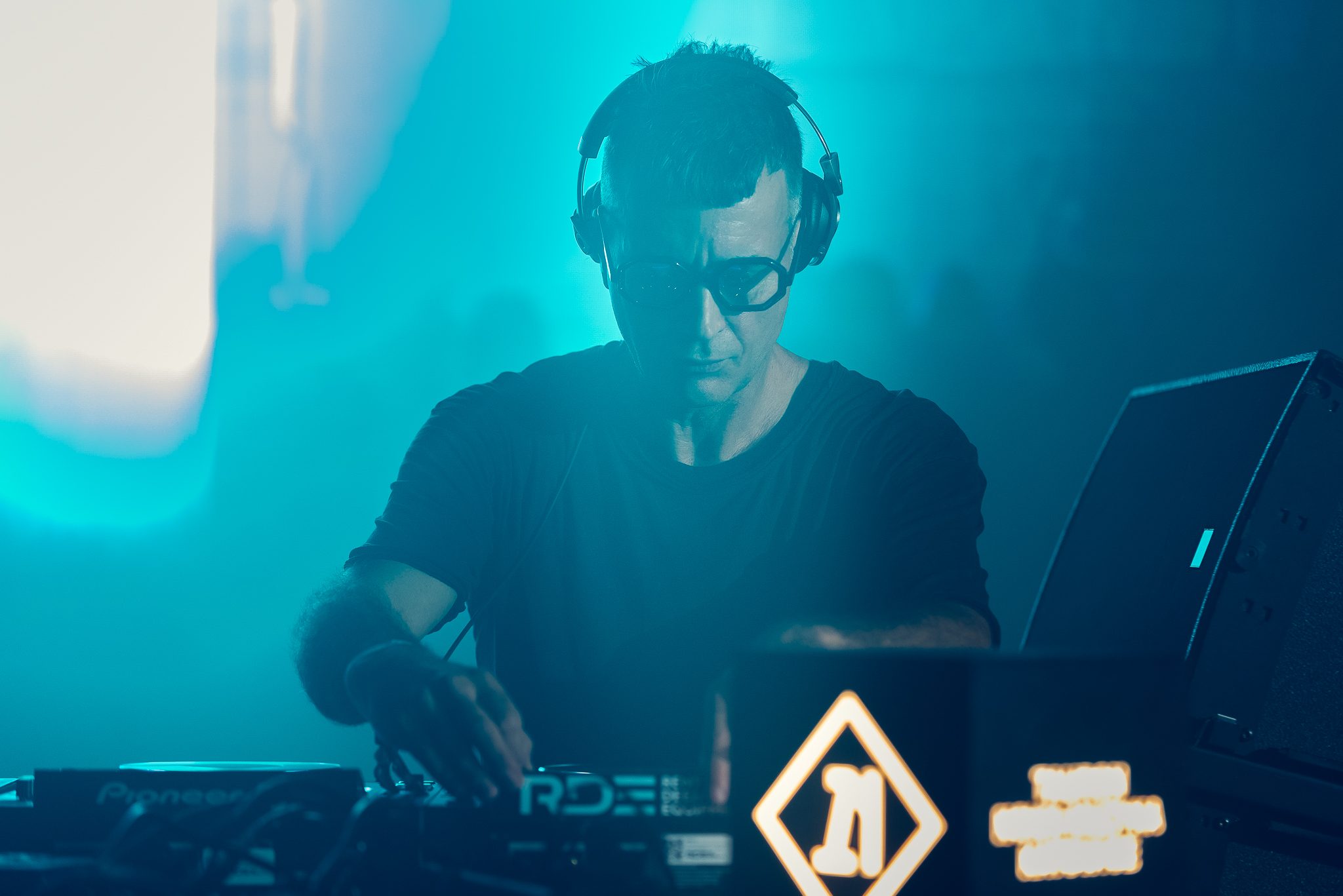
Quando faccio DJ set, anche lavorando con quattro deck, che comunque mi dà più spazio per loopare e girare sopra le tracce, mi manca sempre qualcosa. Mi manca qualcosa di più libero, qualcosa che posso davvero manipolare. Con il live questa cosa è quasi sempre possibile. Lavoro con delle parti audio, ma ho anche sintetizzatori virtuali e, a volte, se lo spazio lo permette, porto anche i modulari. Costruisco diverse patch con VCV e Reaktor, quindi è come se avessi già più modulari con me, pronti da usare. Questo mi dà la possibilità di interagire con il suono in maniera molto più libera. Diventa anche molto più divertente per me. Ovviamente il live è sempre molto legato al contesto in cui suono. Nei club piccoli tengo tutto più compatto e lavoro di più con controller e macchine ridotte, perché spesso ti ritrovi a suonare praticamente appoggiato sui CDJ! Nei festival o nei contesti più grandi la questione cambia perché c’è più spazio, e quindi c’è più spazio anche per gli strumenti. Poi, alla fine, tutto dipende sempre da quello che succede lì: dal posto, dalla gente, dalla vibe. Non è che vado e faccio sempre la stessa cosa.
Stavo pensando alla questione dello spazio di cui parlavi prima. Quando costruisci un suono, pensi anche allo spazio che andrà ad abitare?
Esatto, è un po’ quello che ti dicevo prima. Io lavoro su suoni che devono essere funzionali al dancefloor, però cerco sempre una dimensione profonda. Non riesco a soffermarmi solo sul beat, su quello che è fisico nel senso più immediato. Deve essere tutto collegato. Parlando del low-end, quella è la parte più fisica. Quello che cerco quasi sempre di creare è una sorta di low-end organico, qualcosa che si muove anche quando sembra statico, perché sotto, in realtà, si muove sempre. Nel low-end, soprattutto come lo concepisco io, esistono una serie di micro modulazioni che portano tutta questa massa organica a muoversi. E questo non crea solo energia, crea anche spazio e movimento. Poi, quando comincio a colorare tutto con suoni particolari fatti con Reaktor o con synth esterni, il discorso cambia ancora, perché quella è la base. Tutto il resto comincia a creare questo spazio mentale, una sorta di trip infinito. È quello che, di solito, mi attira di più come modo di interpretare il live.
Quindi anche una dimensione molto fisica del suono, soprattutto quando viene diffusa in certi spazi e con certi sound system.
Soprattutto. Dipende molto dal sound system. Io, per esempio, sono uno di quelli che non può suonare su un impianto senza subwoofer. Anche perché tutto il lavoro, in realtà, si svolge proprio su quelle frequenze lì, sulle basse, sui sub. Io quasi mai lavoro su una cassa dritta, statica, ferma. Tutto si muove in maniera differente. È proprio un low-end organico che si muove nel tempo. Non utilizzo quasi mai bassline. Tutto proviene da questo movimento di basse frequenze, mantengo quasi sempre tutto molto dentro, e questo dà un carattere differente. Uno dei grossi problemi che riscontro, per esempio, è quando un DJ prima di me suona a 135 o 140 BPM. Con il tipo di musica che faccio io, con questo tipo di disegno del low-end, a 140 non ha più senso, perché è come se fosse tutto raddoppiato. Diventerebbe una specie di tarantella inutile. Abbassando il BPM, invece, riesco a trovare un equilibrio giusto.
Visto che lavori tanto sul low-end, e questo richiede anche un certo tipo di diffusione audio, in studio come ci lavori?
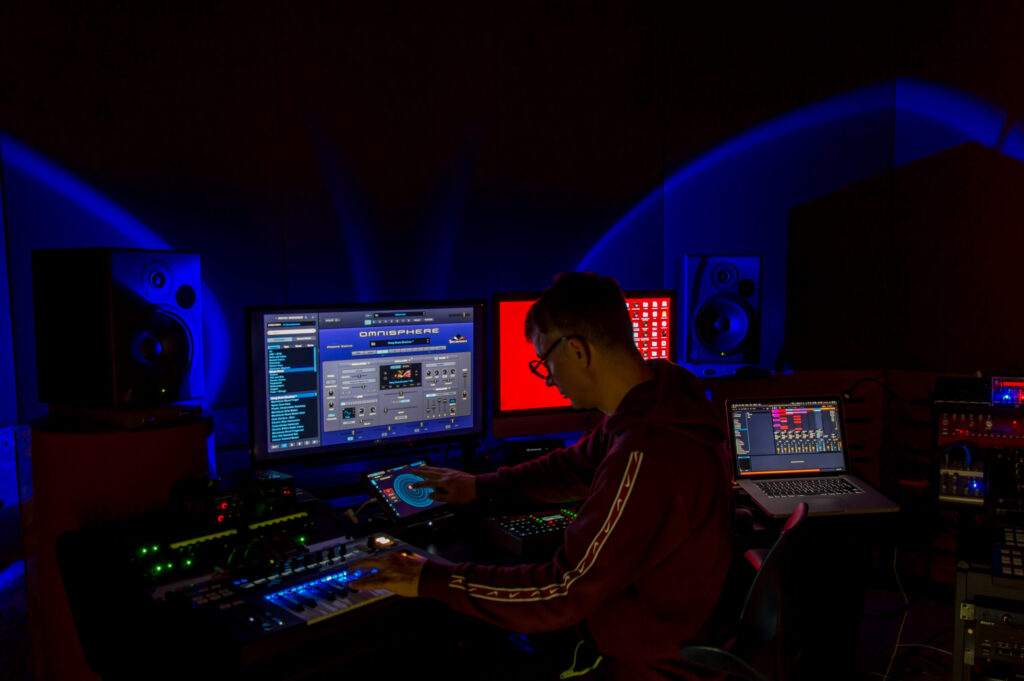
Quello in studio è il lavoro più delicato. Per fare cose che suonino bene anche nei grandi club devi fare molti test. Il mio impianto non è super professionale, però lo uso da tanto tempo, quindi ormai ho un orecchio abbastanza preciso sul low-end. Faccio spesso ascolti a basso volume, in mono, per capire cosa sparisce e cosa resta. Poi ascolto anche con diversi tipi di cuffie da quelle semiaperte a cuffie consumer, tipo le Beats. Ascoltando tanta musica su queste, riesco a capire subito se le basse stanno troppo fuori o meno. Il punto, più che altro, è la pressione delle basse che va regolata in maniera molto delicata, perché in ogni zona del low-end ci sono sempre quattro o cinque elementi che interagiscono tra loro. Missare tutte queste parti è un lavoro abbastanza impegnativo. Col tempo però ho affinato alcune tecniche. Per esempio lavoro molto con i gate per far uscire di più la cassa principale, e tutto il resto lo sposto in modo da creare uno spazio più pulito per il kick. Quando entra la cassa, la senti ma sotto c’è tutto il resto che si muove. Alla fine, l’ascolto più preciso rimane sempre quello in mono e a basso volume, è lì che capisci se tutto sta davvero dentro. Poi certo, ogni tanto si sbaglia pure.
In fondo anche le cuffie diventano uno strumento, perché è un mezzo di diffusione con caratteristiche proprie, proprio come un sound system. È interessante che ci siamo soffermati sul low-end, perché spesso quando si parla di hypnotic techno si pensa più alla ripetizione, ai loop.
Hai perfettamente ragione. Questo è anche uno dei motivi per cui, nel tempo, non mi sono mai fermato su un solo tipo di suono. Ho sempre avuto il bisogno di cambiare pelle. Ho appena finito un album con Luigi (Tozzi) che uscirà a ottobre, e lì siamo andati su un suono completamente organico, soprattutto sulla parte ritmica, non abbiamo quasi mai usato drum machine. Ci sono legni, shaker suonati a mano, e molti suoni che vengono dalla natura. Anche il beat l’abbiamo abbassato molto, stiamo intorno ai 110 BPM, proprio per uscire dalla zona club e muoverci altrove. In generale, non riesco a dire “faccio solo questo”. Ho bisogno di cambiare nel tempo, di sperimentare, di trovare altre formule. È questo che mi aiuta a non stancarmi. Perché, parlando di techno, io personalmente sono anche abbastanza stanco di molta techno che sento in giro, soprattutto quando devi fare DJ set. Cerco sempre qualcosa di nuovo, anche se diventa sempre più difficile. Non è una critica, è solo una mia sensazione. Però trovare alternative mi dà una nuova energia.
Stavo riflettendo sul concetto di ripetizione. Anche pensando al tuo rapporto con la mitologia, mi chiedevo se non ci sia una dimensione rituale in questo, nel fatto che la ripetizione nella musica venga spesso associata alla trance.
Ovviamente. Parlando di ripetitività, entriamo in un discorso abbastanza spirituale. Non siamo stati noi i primi a lavorare su questa cosa, pensa agli sciamani o ai monaci buddhisti. Parliamo di millenni. Questo concetto è stato usato nel tempo anche per rilassare, per curare. Guarda per esempio in Italia con la pizzica, anche lì parliamo di qualcosa di antichissimo. La funzione, in fondo, è sempre quella. La ripetitività porta la mente in una costante. Poi, certo, dipende da come la usi. Riprodotta con i nostri suoni e con la tecnica, cambia completamente. Ecco perché ti parlavo prima di un low-end che non deve mai essere statico, io lo vedo sempre come un flusso organico. Sì, c’è ripetitività, ma sotto succede sempre qualcosa, piano piano si muove. Io poi prendo molti spunti dalla musica tribale, da sonorità sporche, da strumenti fatti con cose trovate. Queste cose mi hanno sempre affascinato molto. E con l’elettronica tutto questo può diventare qualcosa di fantastico, come nel lavoro che abbiamo fatto con Luigi, riprendere quelle sonorità e portarle dentro la techno. Vedremo come andrà, siamo ancora in fase di mastering, però ecco questo lavoro uscirà ad ottobre!
Sarà qualcosa che si collega al live che farete assieme per Electric Theatre?
Sì, lo faremo lì. Invece a luglio presenteremo il live al Dekmantel. È un periodo molto bello, davvero, però anche un po’ stressante, perché devo stare dietro a duemila cose. Infatti in questo periodo non ho preso molte gigs. Poi tutto quello che succederà dopo è un altro discorso. Adesso voglio focalizzarmi esclusivamente su questo progetto, che per me è importante anche perché è un altro passo dentro quel cambio di pelle di cui parlavo prima. Per quanto ami la techno, ho bisogno di fare anche cose diverse. Vorrei trovare, o creare, dei canali che vadano più verso questa direzione. Il club vissuto solo come “vengo lì, suono e via” ci sta, ma fino a un certo punto.
Questo mi fa pensare alla tua label Outis, il cui nome rimanda a ‘nessuno’, come Ulisse con il Ciclope. Mi chiedevo che ruolo ha oggi questo ‘nessuno’, in un momento in cui sembra ci venga richiesto l’opposto. Di essere qualcuno, visibili, presenti ovunque..come si inganna il Ciclope oggi?
Guarda, io sono sempre partito un po’ dall’idea di fare cose, diciamo, timeless. Cose che fai oggi, ma che puoi ascoltare anche nel 2036, nel 2040. È sempre stato il concetto della label fin dall’inizio. Poi magari mi sono anche sbagliato. Però, se guardo ai miei lavori, ancora oggi la gente ascolta cose che ho fatto nel 2010, nel 2012. Il discorso che fai tu è giusto, fa parte proprio del momento storico che stiamo vivendo. Però quello che ho sempre pensato è che le cose di qualità rimangono lì. Io stesso torno continuamente ad ascoltare musica di vent’anni fa che ancora oggi mi crea emozioni fortissime. Ogni volta che ascolto Protection dei Massive Attack… cioè lavoro della Madonna, pazzesco! Ma ce ne stanno veramente tantissimi lavori fatti in quel modo come per esempio nel 2020 è uscito un album di Jean-Michel Jarre che si chiama Amazonia, io tutte le volte che lo riascolto mi casca la mascella perché sono quelle cose che non invecchieranno mai. Per cui sì, quello che dici è vero, però allo stesso tempo tutta questa cosa della visibilità diventa anche un po’… non lo so, un gossip legato al momento. Oggi è tutto gestito da promoter e agenzie. Si punta su un artista, lo si spinge, lo si riempie di date. Però alla fine dipende sempre da quello che lasci. E qui cambia il discorso, perché parliamo di produzioni, non solo di DJ. Secondo me oggi il producer è sempre più penalizzato. Per cui chi fa musica è quello che lavora di più e guadagna di meno. E forse sarebbe anche il momento di capire come ridare valore a questa cosa.
O fai anche il DJ… oppure come fai a stare dentro questo sistema?
Devi lavorare in tanti modi. Io sono fortunato, riesco a vivere di questo, ma molti artisti non hanno margine e devono fare altro. Si sta creando un distacco molto particolare nel nostro mondo. Vedremo dove va a finire. Spero non peggiori, però adesso siamo un po’… incastrati.
Qualche cambiamento arriverà, o in positivo o in negativo..
Dipende anche dall’orecchio delle persone. Io vengo da un periodo completamente diverso. C’era il negozio di dischi e si stava lì, si ascoltava, si discuteva, si facevano confronti, c’era un concetto completamente diverso da quello che è oggi. Oggi non lo so, molti ragazzi vanno sui social, vedono quello che gira e ovviamente dicono questo è figo perché sta sempre lì e sarà figo, però non riesci a bilanciare neanche con quello che c’è stato prima. Diventa veramente un po’ difficile creare col tempo quello che poi diventa una cultura reale. C’è troppa scelta e quindi anche molta confusione. Io stesso, a volte, guardo le correlazioni che Spotify propone con le mie tracce e penso “ma che c’entro io con questa musica?”. Immaginati un ragazzo che arriva lì e pensa che sia tutto la stessa cosa. È difficile. Bisognerebbe ripartire proprio dall’inizio. È complicato… però, non lo so, speriamo almeno di riuscire a salvare una nicchia!
Forse è proprio il fatto che ci sia una nicchia a permettere una certa qualità e un interesse più autentico. Anche perché oggi, con così tanta offerta, è difficile orientarsi. Immagino comunque che il punto di riferimento fosse dal negozio Remix, giusto?
Sì, era da Remix, ovviamente! Poi c’erano anche altri posti, ma alla fine si finiva sempre lì, da Sandro, Alessio… era proprio un punto di riferimento. A cavallo del 2000 è stato un periodo bellissimo per l’elettronica romana. Poi, nel giro di pochi anni, è cambiato tutto perché i dischi hanno iniziato a vendersi online, e tutto si è spostato in quella direzione. Roma, per quanto abbia sempre avuto una scena interessante, è anche una città un po’ ostica per lavorare con la techno. Per questo nel 2008 ho deciso di trasferirmi a Berlino, e ci sono rimasto per quindici anni. Poi è arrivato il Covid. Sono rimasto bloccato a Roma, e quello è stato un momento un po’ di stop forzato, anche fisico. A un certo punto ho capito che era il momento giusto per tornare definitivamente in Italia. Adesso sto bene, ho semplicemente ridimensionato un po’ i ritmi. Ora cerco di scegliere meglio le date, anche per avere più tempo per lo studio. E questa cosa, alla fine, mi ha riportato molto alla produzione e anche alla trasmissione. Negli ultimi anni ho iniziato a fare corsi e lezioni online, e funziona molto bene. È un modo diverso di stare dentro la musica, ma per me oggi è molto naturale.
Allora mi sa che prima o poi prenoto una lezione con te… che sul low-end ho ancora parecchie domande!
Certo, quando vuoi! Tanto lì si apre un mondo.
ENGLISH VERSION
Hi Dino, nice to meet you. Welcome to Parkett! How are you?
Nice to meet you too! All good, thanks.
You’ll be playing in Milan this Saturday at Amelia with Altéra. It’s been a while since you’ve performed in Italy, how come?
Yes! Actually, I’ve been moving around less for a while now. Not just in Italy, but more or less everywhere. In recent years I’ve felt the need to slow down and rethink a few things. This live set is also part of that process, even if it’s not really a point of arrival. As for Milan, I’m quite happy to be back, because it’s not just a city, it’s a place where over the years, a certain idea of listening has been built. Going back after so long makes a lot of sense, especially if I’m bringing something new, not just a set. The last time… I don’t even remember how many years have passed! I think I played a DJ set during the Prologue days, maybe around 2016.
So it’s been almost a decade then! And this time you’re coming back to Milan with a live set, not a DJ set.
Yes, but actually it’s mostly been a choice made by promoters. I’ve never really decided myself: now I do a DJ set, now I do a live. Even though I almost always prefer the live format, because it gives me the opportunity to work on a sound that isn’t just functional to the dancefloor. I’m looking for something with a deeper dimension, almost physical. For me, low-end isn’t just energy, it’s also space and movement, and with a live set I’m able to achieve that much more. With a DJ set, it’s a completely different approach.
I imagine that in a DJ set there’s also a kind of “safer” space, in a way, because you’re working with already produced music. With a live set, instead, it’s you—with everything that came before, but also with what happens in the moment and gets shaped there.
When I do DJ sets, even working with four decks (which gives me more space to loop and layer tracks) I always feel like something is missing. I miss something more open, something I can really manipulate. With a live set, that’s almost always possible. I work with audio parts, but I also have virtual synthesizers and, sometimes, if space allows, I bring modular gear. I build different patches with VCV and Reaktor, so it’s like already having multiple modular systems with me, ready to use. That gives me the possibility to interact with the sound in a much freer way. It also becomes much more fun for me. Of course, the live setup is always closely tied to the context I’m playing in. In smaller clubs I keep everything more compact and work more with controllers and smaller machines, because you often end up playing practically on top of the CDJs. In festivals or larger settings, it’s different because there’s more space, and therefore more room for the instruments as well. But in the end, everything depends on what happens there: the place, the people, the vibe. It’s not like I go in and do the same thing every time.
I was thinking about the idea of space you mentioned earlier. When you build a sound, do you also think about the space it will inhabit?
Yes, it’s more or less what I was saying before. I work with sounds that need to function on the dancefloor, but I’m always looking for a deeper dimension. I can’t focus only on the beat, on what’s physical in the most immediate sense. Everything has to be connected. When it comes to the low-end, that’s the most physical part. What I try to create, almost always, is a kind of organic low-end, something that moves even when it seems static, because underneath it’s always in motion. In the way I conceive it, the low-end is made up of a series of micro-modulations that make this whole organic mass move. And that doesn’t just create energy, it also creates space and movement. Then, when I start to color everything with specific sounds made with Reaktor or external synths, the whole thing shifts again, because that’s just the foundation. Everything else starts to build this mental space, almost like an infinite trip. That’s usually what attracts me the most in the way I approach a live set.
So there’s also a very physical dimension to the sound, especially when it’s played in certain spaces and through certain sound systems.
Absolutely. It depends a lot on the sound system. For example, I’m one of those people who can’t play on a system without subwoofers, it would be pointless. Because all the work really happens in those frequencies, in the low end, in the subs. I almost never work with a straight, static kick. Everything moves in a completely different way. It’s really an organic low-end that evolves over time. I hardly ever use basslines, everything comes from this movement of low frequencies. I tend to keep everything very contained, and that gives it a different character. One of the main issues I encounter, for example, is when a DJ before me plays at 135 or 140 BPM. With the kind of music I make, with this type of low-end structure, 140 BPM doesn’t make sense anymore, because it’s like everything gets doubled. It turns into a kind of pointless tarantella. By lowering the BPM, instead, I’m able to find the right balance.
Since you work so much on the low-end, and it requires a certain kind of sound system, how do you approach it in the studio?
In the studio, that’s the most delicate part of the work. To make things that translate well in large clubs, you have to run a lot of tests. My setup isn’t super high-end, but I’ve been using it for a long time, so by now I have a fairly precise ear when it comes to low-end. I often listen at low volume, in mono, to understand what disappears and what stays. I also check my mixes on different types of headphones, from semi-open to more consumer ones, like Beats. Since I listen to a lot of music on those, I can immediately tell if the low frequencies are too pronounced or not. The main thing, really, is the pressure of the low-end, which has to be balanced very carefully. In each area of the low-end there are usually four or five elements interacting with each other, so mixing all these parts becomes quite a demanding task. Over time I’ve developed a few techniques. For example, I use gates a lot to let the main kick come through more clearly, and I move everything else around it to create a cleaner space for it. When the kick hits, you hear it clearly, but underneath everything else is still moving. In the end, the most precise listening is always in mono and at low volume, that’s where you really understand whether everything sits properly. Of course, sometimes you still get it wrong.
In a way, even headphones become an instrument, because they’re a means of sound reproduction with their own characteristics, just like a sound system. It’s interesting that we’ve focused on the low-end, because when people talk about hypnotic techno, they often think more about repetition and loops.
You’re absolutely right. That’s also one of the reasons why, over time, I’ve never stuck to just one type of sound. I’ve always felt the need to shed my skin. I’ve just finished an album with Luigi (Tozzi) that will be released in October, and there we went for a completely organic sound—especially on the rhythmic side, we almost never used drum machines. There are wood sounds, hand-played shakers, and many sounds coming from nature. We also lowered the tempo quite a lot, we’re around 110 BPM, precisely to move away from the club zone and explore something else. In general, I can’t say “I only do this.” I need to evolve over time, to experiment, to find new formulas. That’s what keeps me from getting bored. Because, when it comes to techno, I have to say I’m also quite tired of a lot of what I hear around, especially when you have to play DJ sets. I’m always looking for something new, even though it’s becoming increasingly difficult. It’s not a criticism, it’s just my personal feeling. But finding alternatives gives me new energy.
I was reflecting on the concept of repetition. Also thinking about your relationship with mythology, I was wondering if there’s a kind of ritual dimension to it, in the way repetition in music is often associated with trance.
Of course. When we talk about repetition, we’re entering a fairly spiritual territory. We weren’t the first to work with this, think about shamans or Buddhist monks. We’re talking about thousands of years. This concept has long been used to relax, to heal. Take the pizzica in Italy for example, that’s also something very ancient. The function, in the end, is always the same. Repetition brings the mind into a steady state. Then, of course, it depends on how you use it. Recreated with our sounds and with technology, it becomes something completely different. That’s also why I was telling you earlier that the low-end should never be static, I always see it as an organic flow. Yes, there is repetition, but underneath something is always happening, slowly moving. I also take a lot of inspiration from tribal music, from rough textures, from instruments made with found objects. I’ve always been fascinated by that. And with electronic music, all of this can become something amazing—like in the work we did with Luigi, bringing those kinds of sounds into techno. We’ll see how it turns out, we’re still in the mastering phase, but the release is coming out in October.
Will it be something connected to the live you’ll be performing together for Electric Theatre?
Yes, we’ll do it there. And in July we’ll present the live at Dekmantel. It’s a really beautiful period, honestly, but also a bit stressful because I have a thousand things to take care of. In fact, I haven’t taken many gigs lately, because I want to focus on this project. Everything that comes after is another story. Right now I want to concentrate entirely on this, because it’s important to me, it’s another step in that “shedding skin” process I was talking about before. As much as I love techno, I also need to do different things. I’d like to find, or create, channels that move more in that direction. The club experienced only as “I show up, play, and leave” is fine… but only up to a certain point.
This makes me think of your label Outis, whose name refers to “no one,” like Odysseus with the Cyclops. I was wondering what role this “no one” has today, in a moment where it seems we’re asked to do the opposite, to be someone, to be visible, present everywhere…how do you outsmart the Cyclops today?
Well, I’ve always started from the idea of making things that are, let’s say, timeless. Things you make today, but that you can still listen to in 2036, 2040. That’s been the concept behind the label from the very beginning. Of course, sometimes you get it wrong. But if I look at my work, people are still listening to things I made in 2010, 2012. What you’re saying is true, it’s part of the time we’re living in. But I’ve always believed that quality work stays. I still go back and listen to music from twenty years ago that gives me incredible emotions. Every time I listen to Protection by Massive Attack… it’s just insane, an incredible record. And there are so many works like that. For example, Amazonia by Jean-Michel Jarre, released in 2020 — every time I listen to it, it blows my mind. Those are things that don’t age. So yes, what you’re saying is true, but at the same time all this focus on visibility becomes a bit… I don’t know, like gossip tied to the moment. Today everything is managed by promoters and agencies: they pick an artist, push them, fill their schedule with gigs. But in the end, it always comes down to what you leave behind. And here the conversation shifts, because we’re talking about production, not just DJing. In my opinion, the producer is increasingly penalized today. The one who makes the music is the one who works the most and earns the least. Maybe it’s time to start thinking about how to give value back to that.
Either you also become a DJ… or how do you stay within this system?
Yes, you have to work in many different ways. I’m lucky, I manage to make a living from this, but many artists don’t have that margin and have to do other things. There’s a very particular gap opening up in our world. We’ll see where it leads. I hope it doesn’t get worse, but right now we’re a bit… stuck.
Some kind of change will come, whether positive or negative..
It also depends on people’s ears. I come from a completely different time. There were record stores: you’d go there, listen, discuss, compare. There was a completely different approach than today. Now, I don’t know… a lot of young people go on social media, see what’s trending, and think “this is cool” because it’s always there, so it must be. But there’s no balance with what came before, with what’s behind it. It becomes really difficult, over time, to build what used to be an actual culture. There’s too much choice, and that creates a lot of confusion. Even for me, sometimes I look at the related artists Spotify suggests for my tracks and think, “what do I have to do with this?” Imagine a kid landing there and thinking it’s all the same thing. It’s hard. You’d have to start again from the beginning. It’s complicated… but I don’t know, hopefully we can at least manage to preserve a niche.
Maybe it’s precisely the fact that a niche exists that allows for a certain level of quality and a more genuine kind of interest. Also because today, with such a vast amount of music out there, it’s hard to find your way. I imagine the main reference point back then was the Remix record store, right?
Yes, it was Remix, of course. There were other places too, but in the end you always ended up there with Sandro, Alessio… it was a real meeting point. Around the early 2000s it was a beautiful period for the Roman electronic scene.Then, within a few years, everything changed. Records started being sold online, and everything shifted in that direction. Rome, even though it has always had an interesting scene, is also a bit of a difficult city to work in when it comes to techno. That’s why, in 2008, I decided to move to Berlin, and I stayed there for fifteen years. Then Covid happened. I got stuck in Rome, and that was a kind of forced pause, also physically. At a certain point I realized it was the right time to move back to Italy for good. Now I’m doing well, I’ve just scaled things down a bit. I try to choose gigs more carefully, also to have more time for the studio. And in the end, that brought me back to production and also to sharing knowledge. In recent years I’ve started doing online courses and lessons, and it’s working really well. It’s a different way of being involved in music, but for me today it feels very natural.
I guess sooner or later I’ll book a lesson with you… I still have quite a few questions about the low-end!
Of course, anytime! There’s a whole world to open up there.