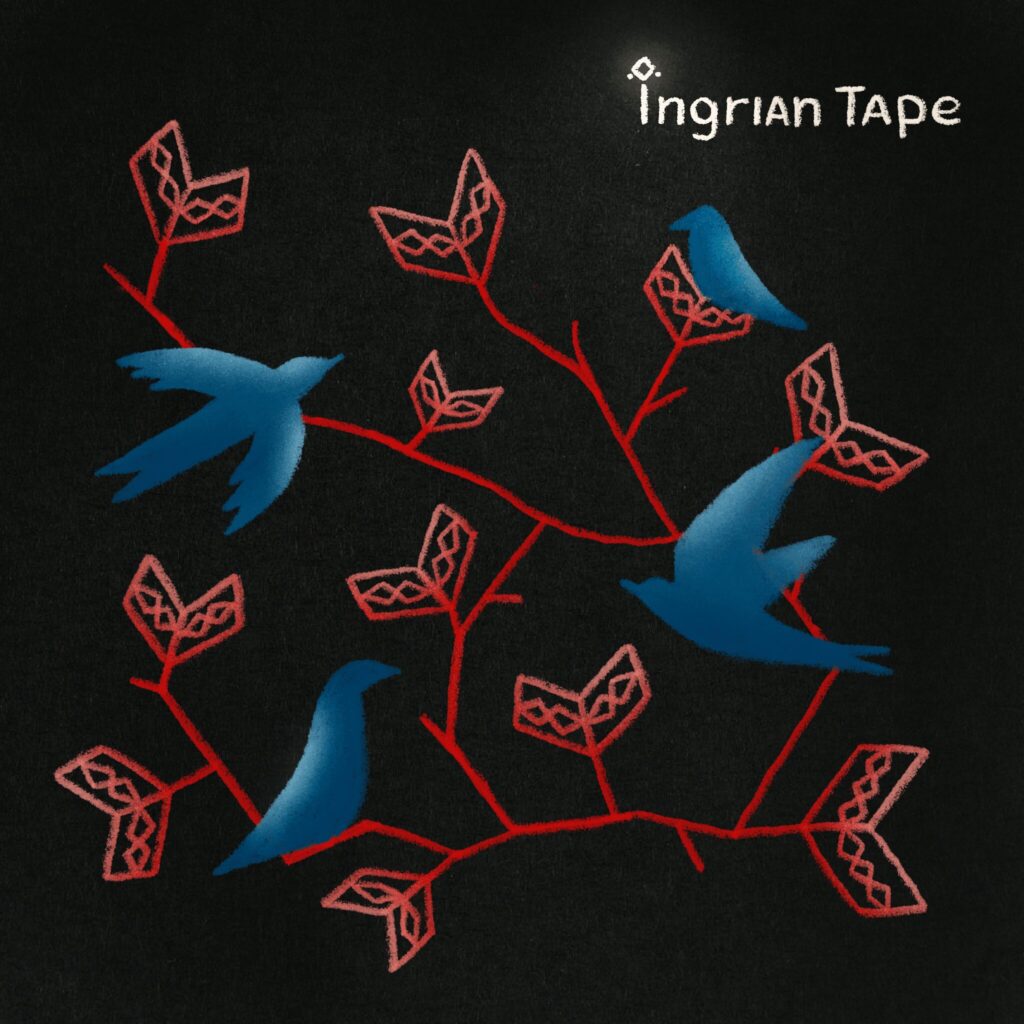

A dense and evocative reimagining of ritualistic sound, Dvara – Hafta As (Ullrson Remix) arrives with a clear sense of intent and a surprisingly cohesive artistic vision. Rather than settling for a straightforward club adaptation, Ullrson pushes the source material into a more expansive dimension, where techno structure and ancestral symbolism intertwine with unusual confidence.
At the core of the track lies a rhythmic framework that feels both grounded and ceremonial. The kick drum is firm, unrelenting, engineered for peak-time environments, yet it never dominates to the point of flattening the composition. Instead, it acts as a spine—steady, almost processional—around which layers of percussive detail rotate. Shamanic textures, metallic hits, and scattered high-frequency elements create a kind of circular motion, as if the rhythm itself is participating in a ritual rather than merely driving a dancefloor. The groove evolves subtly over time; small shifts in syncopation and density prevent repetition from becoming predictable.
Equally compelling is the treatment of synth work, which avoids the glossy tropes often associated with EDM. Ullrson opts for a darker, more textural palette. Pads stretch outward in long, melancholic waves, sometimes dissolving into near-ambient space before tightening again under the pressure of the beat. There’s a noticeable restraint in how melodic elements are introduced—nothing feels rushed or overly declarative. Instead, synth lines emerge gradually, often blending with organic instrumentation to the point where distinctions blur. This ambiguity works in the track’s favor, reinforcing its hybrid identity.
A defining feature of the remix is its integration of traditional and ancient sonic elements. Throat singing, ritual vocals, and string instruments like the tagelharpa or gusle are not treated as decorative samples; they are central to the track’s emotional architecture. The vocal phrases, especially, carry a haunting weight. Their repetition does not feel mechanical but incantatory, anchoring the listener in a space that feels distant from contemporary club culture, even as the techno backbone remains firmly modern. There’s a tension here—between past and present, organic and synthetic—that never fully resolves, and that’s precisely what gives the piece its depth.
Atmospherically, the track leans into a kind of controlled intensity. It doesn’t aim for constant escalation; instead, it builds and releases in measured waves. Moments of near-minimalism—where only a few elements remain—are followed by fuller, more imposing passages where percussion, synths, and vocals converge. These transitions are handled with care, avoiding abruptness while still maintaining a sense of unpredictability. The result is immersive rather than overwhelming, inviting repeated listening rather than relying solely on immediate impact.
What stands out, perhaps most of all, is the clarity of artistic direction. Ullrson seems less interested in conforming to current techno trends and more focused on carving out a distinct sonic identity. The so-called “Viking Techno” concept could easily drift into gimmick territory, yet here it feels surprisingly grounded. The choices—whether rhythmic, melodic, or textural—serve a coherent narrative. Even the more theatrical elements, such as war horn-like sounds or anvil strikes, are integrated with enough subtlety to avoid excess.
From a production standpoint, the balance between elements is carefully maintained. Low-end frequencies are powerful but controlled, allowing mid and high layers to breathe. Spatial design also plays a significant role; reverb and delay are used not just for depth but to shape the perceived environment of the track. It often feels as though the listener is positioned within a large, undefined space—somewhere between a cavern, a temple, and a warehouse.
Ultimately, this remix stands as a high-quality release that confidently bridges disparate worlds. It offers something more nuanced than a standard techno reinterpretation, leaning into atmosphere and narrative without sacrificing functionality on the dancefloor. For a webzine focused on forward-thinking electronic music, it’s an easy inclusion—one that invites discussion as much as it encourages movement.