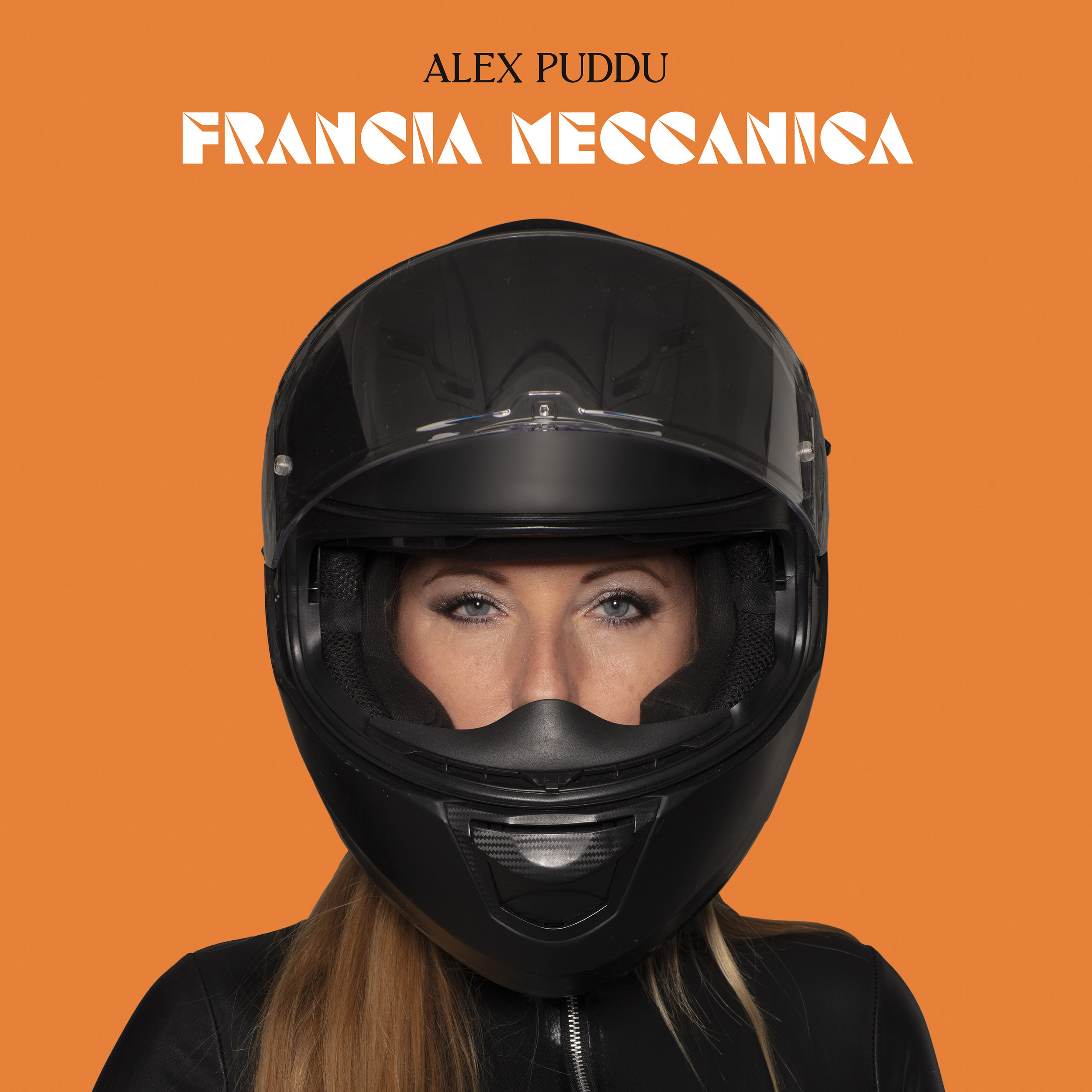

Bathed in neon reflections and late-night decadence, Francia Meccanica finds Alex Puddu refining the seductive language he has been shaping over the past several years. Released through Al Dente Music, the album moves with the confidence of an artist deeply familiar with the textures of disco, synth pop and Italo-inspired groove music, yet still interested in twisting familiar aesthetics into something strangely cinematic and emotionally unstable. Across nine tracks, Puddu builds a world where romance, nightlife and danger blur together under fluorescent skies.
The rhythmic backbone of the record is one of its strongest qualities. Nearly every track leans on tight drum programming and fluid basslines that feel indebted to late ’80s club culture without becoming nostalgic cosplay. The grooves are polished but never sterile. “Notte In Riviera,” the opening track, immediately establishes the album’s pulse with a sleek disco beat that glides rather than hits aggressively. Its movement is hypnotic, driven by a bouncing low-end and crisp percussion patterns that leave enough breathing room for the synth melodies to stretch outward. The result feels effortlessly nocturnal, as though the song exists permanently between sunset and sunrise.
Synth work plays a central role throughout Francia Meccanica, though Puddu avoids overcrowding the arrangements. Instead of flooding the mix with layers, he opts for carefully positioned textures: shimmering pads, sharp analog leads, and glassy melodic fragments that appear and disappear almost like passing lights on an empty coastal highway. On “L’Amour Dangereux,” colder synth tones interact with a darker house-oriented rhythm, creating tension beneath the track’s sensual surface. The production carries a slightly mechanical elegance, fitting the album’s title perfectly. Even at its most dancefloor-focused, the music retains an undercurrent of unease.
That atmosphere becomes even more pronounced on “Dolce e Violenta,” arguably one of the album’s moodiest moments. Here the minimal beat structure allows the saxophone lines to drift through the arrangement like smoke in a dimly lit nightclub. Puddu balances softness and menace with surprising precision. The synths remain restrained, almost distant, while the vocals add a detached emotional quality that strengthens the noir-like aesthetic. It is one of those tracks where production details matter more than obvious hooks, and repeated listens reveal subtle decisions hidden beneath the surface.
Elsewhere, the album embraces a brighter and more playful energy. “Trasgressiva” injects a dose of Italian funk into the sequence, carried by a warmer rhythmic approach and a particularly elastic groove. The drum patterns feel looser here, less robotic, while the lead guitar lines introduce a soulful flavor that briefly shifts the album away from its colder electronic atmosphere. Yet even during these lighter moments, Puddu never abandons the seductive tension that defines the record as a whole.
“St. Tropez” stands out for its balance between accessibility and sophistication. The duet structure works naturally against the shimmering synth-pop framework, while the bass-driven arrangement keeps the track firmly grounded in dance music tradition. Its melodic immediacy contrasts nicely with some of the album’s darker material, offering a moment of glossy escapism before the narrative descends again into stranger territory.
One of the most compelling aspects of Francia Meccanica is the way its atmosphere remains coherent from beginning to end. The sequencing feels deliberate, almost filmic. Tracks flow into one another through shared textures and emotional continuity rather than obvious stylistic repetition. “Il Piacere dei Vampiri” pushes the erotic tension toward acid disco excess, while “Parigi Perversa” closes the experience with a more reflective, emotionally bruised tone. The breakbeat-driven rhythm of the latter introduces a subtle shift in momentum, allowing the album to end on something more melancholic and human.
Puddu’s long experience as a composer and producer is evident in the album’s control and consistency. Nothing here feels accidental. Every synth accent, bass movement and rhythmic pause appears carefully placed to reinforce the record’s immersive nighttime aesthetic. At the same time, the album avoids becoming overly calculated. Small imperfections in the vocal delivery and arrangement choices preserve a sense of spontaneity that keeps the music alive.
With Francia Meccanica, Alex Puddu delivers a sophisticated and deeply atmospheric release that successfully merges disco sensuality, synth-pop elegance and cinematic storytelling. It is a record built for movement, but also for immersion — music that lingers long after the final beat fades into silence.