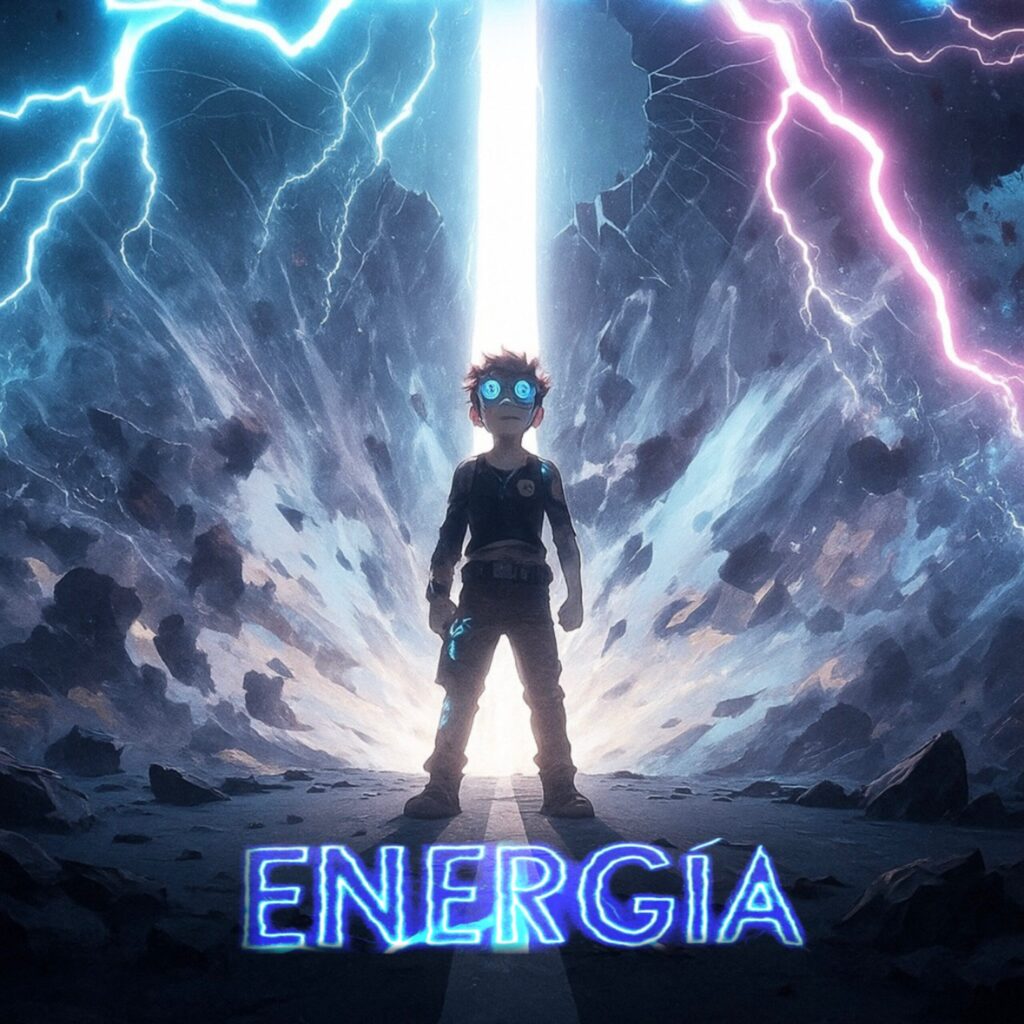

Pressure moves beneath the surface of “Self-luminescent,” the latest chapter in Garbage Garden’s evolving Still Being series. Built around a collision of electronic pop precision and drum n bass acceleration, the track carries an unusual emotional tension from the very beginning. It sounds polished, even inviting at times, yet something restless keeps pushing against that clean exterior. The result is a release that balances immediacy with discomfort in a way that feels intentional rather than decorative.
What stands out first is the rhythmic structure. The drum programming avoids predictability despite operating within a relatively familiar high-tempo framework. Fast breakbeat patterns drive the track forward with nervous momentum, but the percussion is never purely functional. Small interruptions, fragmented transitions, and carefully placed distortions create a sensation of instability that mirrors the thematic core of the song. Instead of offering catharsis through explosive drops or oversized refrains, Garbage Garden lets the rhythm breathe unevenly. Certain passages almost seem to hesitate before accelerating again, producing an atmosphere that feels psychologically charged rather than mechanically energetic.
The synth work plays an equally important role in shaping that dynamic. Layers of bright electronic textures initially suggest accessibility, perhaps even optimism, though the production gradually reveals more abrasive edges underneath. Sharp frequencies cut through the mix without overwhelming it, while softer melodic elements drift in and out almost like interrupted thoughts. This constant movement between clarity and fracture gives the song its identity. Nothing remains stable for too long. Harmonies emerge, dissolve, then reappear in altered forms, creating the impression of emotional language being repeatedly reconstructed in real time.
Part of the strength of “Self-luminescent” lies in how effectively it handles contrast. Garbage Garden uses pop structures as a framework, but rarely settles into them completely. Moments that could become conventionally uplifting are deliberately restrained or redirected. Familiar emotional slogans — ideas connected to self-love, reassurance, and positivity — are transformed into distant echoes rather than comforting statements. The track does not openly reject those messages, though it clearly questions the way they become standardized and emotionally flattened once filtered through digital culture and performative communication.
That thematic ambiguity is reflected beautifully in the production choices. The cleaner vocal passages feel exposed rather than reassuring, especially when surrounded by fragmented electronic textures and rapidly shifting percussion. At several points, the arrangement seems to split between intimacy and detachment, as if the song itself cannot fully decide whether it wants connection or isolation. It is precisely this unresolved quality that gives the release depth. Garbage Garden resists easy emotional framing and instead allows uncertainty to remain visible throughout the composition.
Atmosphere becomes the track’s real centerpiece. Even during its most energetic sections, “Self-luminescent” carries an undercurrent of exhaustion and emotional dislocation. The brightness within the mix never fully resolves into warmth. Synth melodies shimmer with a slightly artificial glow, reinforcing the idea of emotional narratives packaged into consumable forms. Yet the song never becomes cynical. Beneath the distortion and tension, there is still movement toward something personal and self-defined. The transition is subtle, almost difficult to notice on a first listen, but it gradually shifts the emotional gravity of the piece from external expectation toward internal persistence.
Within the broader Still Being series, the release feels like an important turning point. Where previous material explored invisible emotional labor and quiet forms of devotion, “Self-luminescent” appears more confrontational in tone, though not louder in a traditional sense. The confrontation happens internally — through fractured textures, unresolved pacing, and the refusal to deliver clean emotional conclusions. Garbage Garden understands restraint remarkably well, and the production benefits from that awareness at every stage.
Few contemporary electronic pop releases manage to sound this immediate while maintaining such conceptual precision underneath. “Self-luminescent” succeeds because it trusts atmosphere and structure as much as lyrical intention. It is a carefully assembled piece of work, rich in tension, detail, and emotional complexity, and one that confirms Garbage Garden as a project capable of pushing electronic music into more introspective territory without losing impact or momentum.