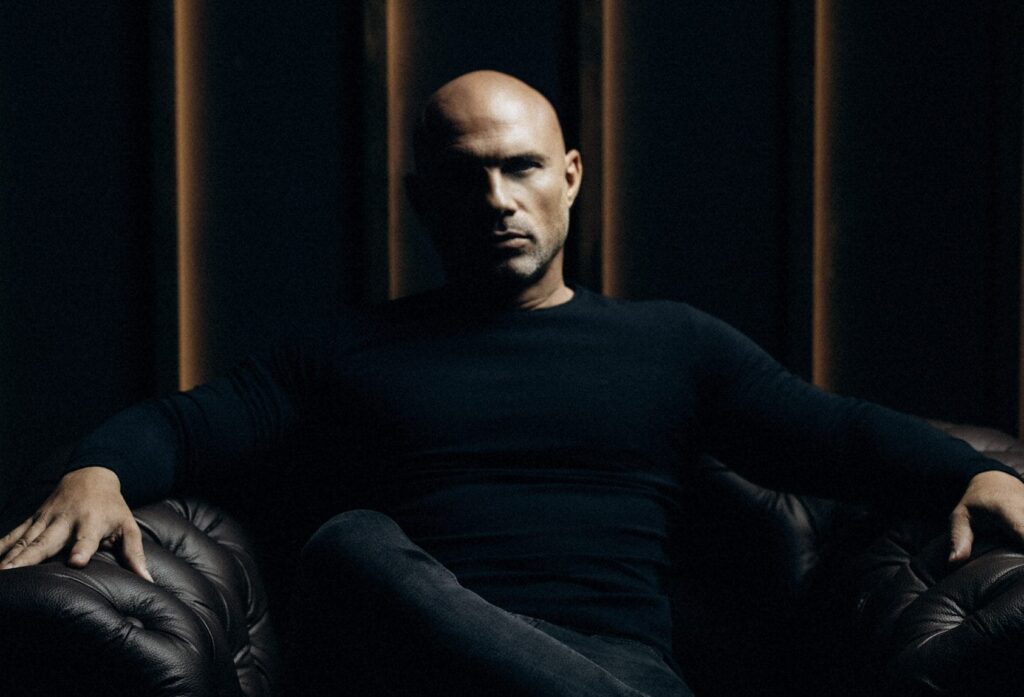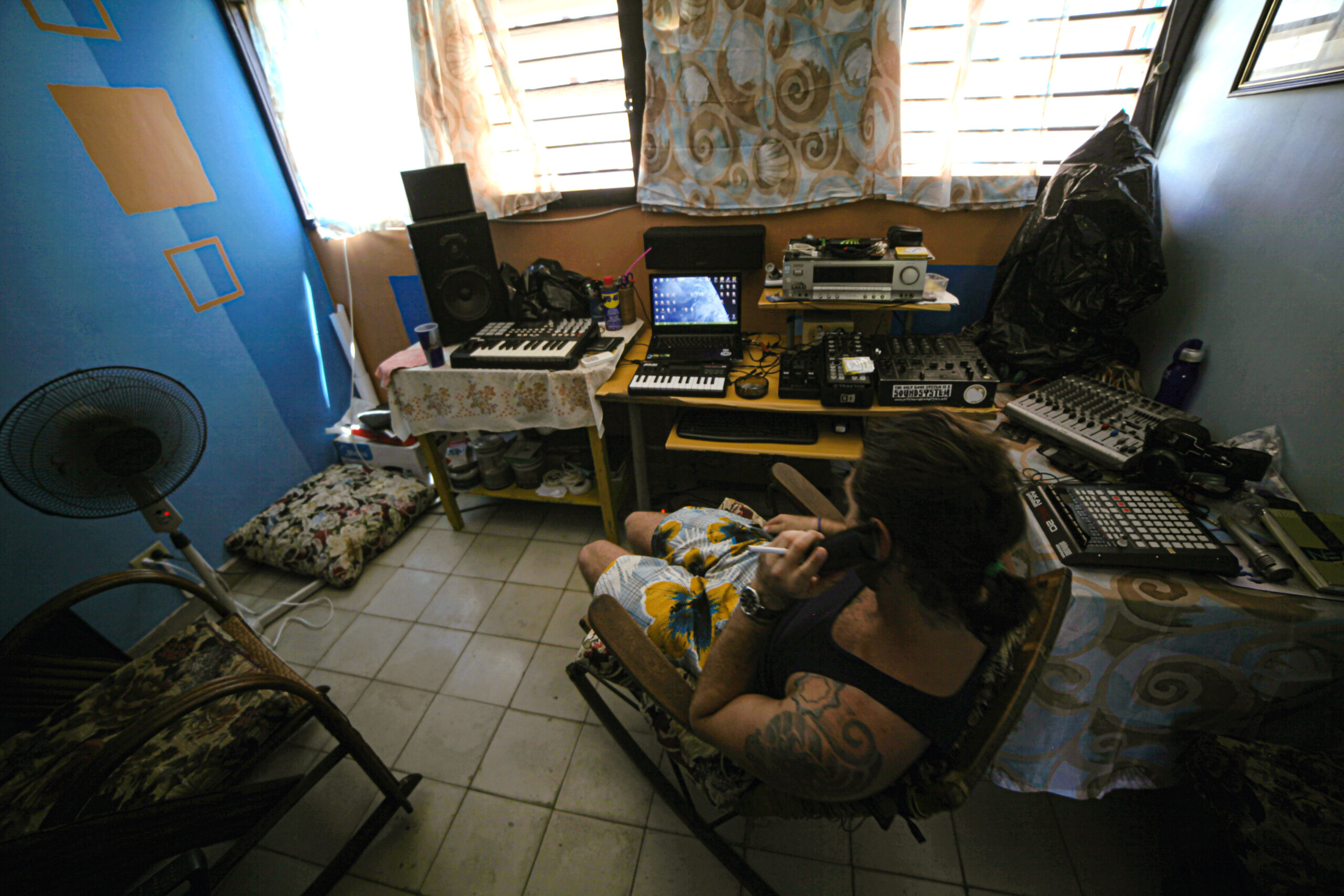

Dalla metafora dei cocuyos, insetti luminosi che emergono solo di notte, a un neorealismo fatto di persone, attese e quotidianità: il regista sceglie di raccontare la musica senza inseguire il clubbing in “Cuba Coocuyo Remix”. Disponibile su Plex, Biblio+, Relay, presto su Tubi e Future Today.
Prima di parlare di “Cuba Coocuyo Remix”, facciamo un passo indietro. Il tuo rapporto con Cuba nasce da un percorso lungo e personale: cosa ti ha portato lì la prima volta e in che momento hai capito che quello che stavi vivendo poteva diventare un film?
La prima volta a Cuba risale a molti anni fa, quando fui invitato a un festival di arte e letteratura. All’epoca la musica elettronica non era ancora qualcosa che associavo all’isola, almeno non in modo immediato.
Quel legame è arrivato dopo, a distanza di anni, attraverso una frequentazione sempre più diretta di Cuba. L’idea del film è nata mentre stavo girando il mio primo lungometraggio, “Ahora sí llego!“, sopra un sidecar. In quel momento ho iniziato a intuire che quella parte laterale, notturna e meno raccontata dell’isola poteva diventare un film.
C’è stato un momento preciso, magari anche molto semplice o quotidiano, in cui hai sentito quella scintilla, cioè la sensazione che quella scena, quelle persone, quella energia andassero raccontate?
L’istante preciso è stato su una spiaggia, mentre stavo girando “Ahora sí llego!”. Ero in un festival di musica e arte fuori dall’Avana. Parlando del più e del meno con un DJ, gli chiesi cosa si aspettasse dal futuro, o che lavoro “vero” avrebbe voluto fare.
Mi rispose senza esitazione: “Amo la musica, quiero hacer el DJ!”. Quella risposta, così diretta, quasi primordiale, mi colpì molto. In quel momento ho capito che, se fossi tornato, non avrei fatto un progetto solo su di lui, ma qualcosa di più ampio: sulla scena elettronica di Cuba.
“Cuba Coocuyo Remix” sembra muoversi più per immersione che per narrazione classica: quando hai deciso che non volevi spiegare quel mondo ma semplicemente starci dentro, lasciando che emergesse da solo?
Volevo vivere l’esperienza della musica passando direttamente dalle persone, dai dettagli, dai contesti. Non mi interessava “mettere la musica” al centro in senso didascalico, ma stare con i protagonisti dentro il loro ambiente.
Piccoli istanti, momenti semplici, situazioni quotidiane che, messe insieme, raccontano molto più di una spiegazione frontale. Lo definirei un ritratto collettivo.
Li ho chiamati cocuyos: insetti che si trovano solo a Cuba e che di notte si illuminano come lucciole, con due piccole luci dietro la testa, mentre di giorno sono praticamente impossibili da trovare. Per me era una metafora perfetta.
Racconti una scena elettronica underground che spesso non rientra nell’immaginario comune legato a Cuba: cosa ti ha colpito di più entrando in quel contesto e cosa secondo te la rende così viva?
La cosa che mi ha colpito di più, vivendola davvero dall’interno, è stata l’enorme voglia di creare. C’è entusiasmo, ma anche una capacità continua di arrangiarsi, di costruire qualcosa con risorse minime, senza aspettare che le condizioni siano perfette.
Spesso dall’esterno si tende ad associare Cuba a un immaginario musicale molto preciso, quasi a un solo genere o a una tradizione già codificata. In realtà la scena elettronica assorbe moltissimo: dai ritmi afro-cubani all’afro house, fino al techno berlinese.
Negli ultimi anni proprio quel suono più duro e notturno ha preso sempre più spazio, soprattutto in certi eventi underground che, per energia e precarietà, ricordano un po’ l’Europa dei primi anni Duemila.
In “Cuba Coocuyo Remix” la musica non è mai solo performance, ma sembra intrecciata alle relazioni, ai momenti di attesa e agli spostamenti: è una tua scelta narrativa o è proprio il modo in cui quella scena esiste nella realtà?
Volevo evitare l’idea di documentario esplicativo, o comunque qualcosa che definisse quella scena in modo troppo diretto. Mi interessava costruire un’esperienza più simbolica, a tratti astratta, capace di trasmettere qualcosa di meno legato al momento e più fuori dal tempo.
A volte il film si avvicina alla sensibilità della musica, altre volte se ne allontana. Ha un approccio neorealista e, proprio per questo, non sente sempre il bisogno di appoggiarsi a un sottofondo musicale.
Non volevo dare una definizione esatta di quella scena, ma mostrarla attraverso i corpi, le relazioni, le attese, gli spostamenti. In un certo senso volevo far vedere la musica senza necessariamente farla sentire.
Hai avuto la sensazione che in quel contesto fare musica sia più un gesto collettivo che individuale, e in che modo questo si riflette nell’energia che si crea tra le persone?
Il contesto che ho vissuto è in continua crescita e ha molto fermento. Però quando si parla di DJ e produzione musicale, il concetto di collettivo va dosato: non volevo trasformarlo in una retorica comunitaria troppo semplice.
Sicuramente la comunità dei cocuyos ha una propria identità, una vibrazione comune, un modo di riconoscersi. Allo stesso tempo, ognuno mantiene un carattere preciso e cerca di distinguersi personalmente: nel suono, nell’attitudine, nel modo di stare dentro la scena.
Credo che l’energia nasca proprio da questa tensione tra appartenenza e differenza.

Considerando anche le possibili limitazioni tecniche e materiali, hai visto emergere un approccio diverso alla produzione musicale, magari più istintivo o creativo, che contribuisce a definire un’identità sonora specifica?
Il fatto di avere meno risorse, in molti casi, li porta a essere più diretti e più onesti in quello che creano. Non voglio idealizzare la mancanza di mezzi, perché resta una difficoltà reale. Però spesso, quando hai troppo sul piano tecnico, rischi anche di nasconderti dietro la tecnica.
A Cuba, almeno per quello che ho visto io, questo accade molto meno. Se hanno 100, cercano di tirare fuori il 120 da quello che hanno. E questa necessità, quando incontra talento e visione, può portare a risultati sorprendenti.
Il fatto di osservare questo mondo nella luce del giorno, fuori dall’immaginario classico della notte e del clubbing, cambia il modo in cui percepiamo la musica e chi la vive?
Mi interessava soprattutto l’aspetto umano: l’amicizia, la connessione, i momenti senza filtro. Volevo che il film testimoniasse il mio punto di vista, il modo in cui io avevo vissuto quel mondo stando lì, non un’idea preconfezionata di clubbing o di scena elettronica.
Non mi sono mai chiesto troppo se una cosa del genere potesse “funzionare” oppure no. In molti casi ho semplicemente acceso la camera e ripreso il momento.
In “Cuba Coocuyo Remix” hai lavorato con persone reali e non attori. Come cambia il modo in cui la musica “accade” davanti alla camera, e quanto la fiducia costruita nel tempo ha influenzato quello che poi vediamo nel film?
Essere lì con o senza telecamera, a un certo punto, non cambiava molto. Dopo molte frequentazioni, tutto è diventato abbastanza naturale. Non c’era più quella distanza tra chi filma e chi viene filmato.
Credo che la fiducia sia entrata nel film proprio così, senza essere dichiarata. Le persone non stavano “recitando” la propria scena davanti alla camera: continuavano semplicemente a esserci, a parlare, a muoversi, ad aspettare, a vivere la musica nel loro modo.
Per me era importante non forzare nulla.
Il titolo richiama i cocuyos, queste presenze luminose che emergono nel buio: per te questo elemento è più una chiave poetica, simbolica o un modo per raccontare una forma di esistenza discreta ma resistente?
Il cocuyo è un elemento unico, e mi è sempre piaciuta molto questa chiave poetica. Mi sembrava perfetta perché non identifica solo un personaggio, ma un contesto, una comunità, una radice.
Per me i cocuyos sono presenze luminose, a volte quasi invisibili, che appaiono nel buio e poi magari scompaiono, si spostano, cercano un altro luogo.
In questo senso il titolo riguarda anche molti DJ e producer che hanno deciso di lasciare Cuba per inseguire i propri sogni, portandosi dietro però quella luce, quella identità, quel modo di resistere.

Nel film si percepisce anche una certa ironia, molto naturale: secondo te nasce dalla musica, dal contesto umano o dal tuo modo di osservare e stare dentro le situazioni?
Quando si parla di Cuba, per me l’ironia è quasi inevitabile. Non la vedo come una cosa costruita o aggiunta dopo, ma come un ingrediente naturale del modo di stare nelle situazioni.
L’isola è unica anche per questo: per la capacità di attraversare difficoltà, assurdità e contraddizioni senza perdere completamente il gioco, la battuta, il doppio senso.
Nel film l’ironia nasce soprattutto dal contesto umano e dal mio modo di osservarlo senza forzarlo. Non volevo cercare la battuta, ma lasciare che emergesse quella comicità naturale, a volte involontaria, che a Cuba può convivere con tutto.
A livello personale, che rapporto hai avuto tu con la musica durante questo progetto, e quanto ha influenzato il ritmo, il montaggio e il modo stesso di costruire “Cuba Coocuyo Remix”?
La musica elettronica è sempre stata una parte di me. Non è qualcosa che ho incontrato solo attraverso questo progetto: è sempre stata dentro il mio modo di lavorare.
Insieme alla regia e all’arte, fa parte di un linguaggio che ho sempre cercato di tenere unito.
Nel montaggio ho cercato di dare al film un ritmo suo, anche quando la musica non c’è. Non volevo usare la musica come appoggio o come decorazione. Mi interessava che il ritmo uscisse dalla presenza, dai silenzi, dai tempi morti. In questo senso tutto è venuto fuori in modo abbastanza naturale.
Hai vissuto momenti particolarmente forti o memorabili all’interno di questa scena, magari legati a una serata, a un incontro o a una situazione, che ti sono rimasti addosso e che in qualche modo hanno guidato il film?
Un momento molto forte è arrivato quando avevo praticamente ultimato le riprese del film. Prima di rientrare in Italia fui invitato come DJ alla prima edizione di un festival in una provincia fuori dall’Avana. Arrivai in questa piazza completamente buia: c’era il palco, c’era l’impianto, ma non c’era nessuno. Chiesi: “Ma la gente?”. Mi risposero, con totale naturalezza, che stavano tutti guardando la telenovela.
Mi girai un attimo per sistemare alcune cose e, quando tornai a guardare la piazza, si era riempita di migliaia di persone. La telenovela era finita.
Fu una follia. Ecco, per me quella scena racconta molto: l’ironia, l’attesa, il cortocircuito tra quotidiano e festa, e quella capacità improvvisa di accendere tutto.
Il film avrà un percorso tra festival e piattaforme: secondo te troverà più risonanza in contesti legati al cinema d’autore o in ambienti più vicini alla cultura musicale?
“Cuba Coocuyo Remix” ha già avuto un primo percorso nei festival internazionali: otto selezioni, tra cui una menzione d’onore. Sicuramente ha una struttura molto autoriale e non racconta la musica in modo classico o promozionale.
È disponibile su Plex e su altre piattaforme in arrivo. Credo che possa trovare risonanza in entrambi i mondi: nel cinema d’autore, per il suo approccio visivo e narrativo, e nella cultura musicale, per il mondo che attraversa.
Probabilmente sarà il tempo a dire quale ambiente lo sentirà più vicino.
Se qualcuno si avvicina per la prima volta a questa scena attraverso il tuo film, qual è la cosa più importante che speri riesca a cogliere davvero?
Il film è uno sguardo silenzioso che osserva piccoli momenti, senza voler spiegare troppo. Spero che chi lo vede riesca a cogliere proprio questo: non solo una scena musicale, ma la sua energia.
Mi piacerebbe che il film portasse a incuriosirsi, magari a cercare i suoi protagonisti, i cocuyos di notte, quando accendono le loro grandi luci verdi.
Non solo nelle strade di Cuba, ma anche altrove, ovunque continuino a portare la loro musica nel mondo.
What first brought you to Cuba, and when did you realize that what you were experiencing could become a film?
The first time I went to Cuba was many years ago, when I was invited to an arts and literature festival. At the time, electronic music was not something I immediately associated with the island, at least not in any obvious way.
That connection came later, years afterward, through a much more direct and ongoing relationship with Cuba. The idea for the film emerged while I was shooting my first feature-length film, “Ahora sí llego!”, riding on a sidecar. That was the moment I began to sense that this more lateral, nocturnal, and lesser-told side of the island could become a film.
Was there a specific moment, maybe something simple or ordinary, when you felt that spark – the feeling that those scenes, those people, that energy needed to be told?
The exact moment happened on a beach while I was shooting “Ahora sí llego!”. I was at a music and arts festival outside Havana. While casually chatting with a DJ, I asked him what he expected from the future, or what “real job” he might want to do.
Without hesitation, he replied: “I love music, quiero hacer el DJ!” (“I want to be a DJ!”).
That answer, so direct and almost primal, struck me deeply. In that moment, I realized that if I came back, I wouldn’t make a project just about him, but something broader: about Cuba’s electronic music scene.
“Cuba Coocuyo Remix” seems to move more through immersion than classical storytelling: when did you decide that you didn’t want to explain that world, but simply inhabit it, letting it emerge on its own?
I wanted to experience the music directly through people, details, and contexts. I wasn’t interested in putting the music at the center in a didactic way, but rather in staying with the protagonists within their own environment.
Small moments, simple situations, everyday fragments that, when put together, reveal far more than a direct explanation ever could. I would define it as a collective portrait.
I called them cocuyos: insects found only in Cuba that light up at night like fireflies, with two tiny lights behind their heads, while during the day they are almost impossible to find. To me, it felt like the perfect metaphor.
You portray an underground electronic scene that often falls outside the common imagination of Cuba: what struck you the most when entering that environment, and what do you think makes it so alive?
What struck me the most, truly living it from the inside, was the enormous desire to create. There is enthusiasm, but also a constant ability to improvise, to build something with minimal resources, without waiting for perfect conditions.
From the outside, people often associate Cuba with a very specific musical imagery, almost limited to one genre or already codified traditions. In reality, the electronic scene absorbs a huge range of influences: from Afro-Cuban rhythms to Afro house, all the way to Berlin techno.
Recently, that darker and more nocturnal sound has increasingly taken space, especially in certain underground events that, in terms of energy and precariousness, somewhat resemble Europe in the early 2000s.
In “Cuba Coocuyo Remix”, music is never just performance – it seems intertwined with relationships, waiting, and movement: was this your narrative choice, or is it simply how that scene exists in reality?
I wanted to avoid the idea of an explanatory documentary, or anything that defined the scene too directly. I was interested in creating a more symbolic experience, at times abstract, capable of conveying something less tied to a specific moment and more outside of time.
Sometimes the film moves close to the sensibility of music, while other times it distances itself from it. It has a neorealist approach and, for that very reason, does not always feel the need to rely on a musical background.
I didn’t want to give an exact definition of that scene, but to show it through bodies, relationships, waiting, and movement. In a way, I wanted to show music without necessarily making it heard.
Did you feel that making music in that context is more of a collective gesture than an individual one, and how is that reflected in the energy created between people?
The environment I experienced is constantly growing and full of momentum. But when speaking about DJs and music production, the idea of collectivity has to be approached carefully: I didn’t want to turn it into an overly simplistic communal narrative.
Certainly, the cocuyos community has its own identity, a shared vibration, a way of recognizing one another. At the same time, each person maintains a distinct character and tries to stand out individually: through sound, attitude, and the way they position themselves within the scene.
I believe the energy comes precisely from this tension between belonging and individuality.
Considering the possible technical and material limitations, did you notice a different approach to music production – perhaps something more instinctive or creative – that contributes to shaping a specific sonic identity?
Having fewer resources, in many cases, pushes them to be more direct and more honest in what they create. I don’t want to romanticize the lack of means, because it remains a real challenge. But often, when you have too much technically, you also risk hiding behind technique.
In Cuba, at least from what I saw, this happens much less. If they have 100, they try to get 120 out of it. And when that necessity meets talent and vision, it can lead to surprising results.
Does observing this world in daylight, outside the classic imagery of nightlife and clubbing, change the way we perceive the music and the people who live it?
What interested me most was the human aspect: friendship, connection, moments without filters. I wanted the film to bear witness to my own point of view – the way I experienced that world while being there – rather than a pre-packaged idea of clubbing or electronic music culture.
I never asked myself too much whether something like this could “work” or not. In many cases, I simply turned on the camera and captured the moment.
In “Cuba Coocuyo Remix”, you worked with real people rather than actors. How does the music “happen” differently in front of the camera, and how much did the trust built over time influence what we ultimately see in the film?
At a certain point, being there with or without the camera no longer made much difference. After many visits, everything became quite natural. That distance between the person filming and the person being filmed gradually disappeared.
I believe trust entered the film exactly in this way, without ever being explicitly stated. People were not “performing” their own scenes in front of the camera: they simply kept existing, talking, moving, waiting, living music in their own way.
For me, it was important not to force anything.
The title references the cocuyos, these luminous presences emerging in the dark: for you, is this more of a poetic key, a symbol, or a way of describing a discreet yet resilient form of existence?
The cocuyo is something unique, and I’ve always loved this poetic key. It felt perfect because it doesn’t identify just one character, but rather a context, a community, a root.
To me, the cocuyos are luminous presences – sometimes almost invisible – appearing in the darkness and then perhaps disappearing, moving elsewhere, searching for another place.
In this sense, the title also refers to the many DJs and producers who have decided to leave Cuba to pursue their dreams, while carrying with them that light, that identity, that way of resisting.
There’s also a certain natural irony in “Cuba Coocuyo Remix”: do you think it comes from the music, the human context, or your own way of observing and inhabiting situations?
When talking about Cuba, irony feels almost inevitable to me. I don’t see it as something constructed or added later, but as a natural ingredient of the way people inhabit situations.
The island is unique for this reason as well: for its ability to move through hardship, absurdity, and contradictions without completely losing playfulness, humor, or double meanings.
In the film, irony mainly comes from the human context and from my way of observing it without forcing anything. I didn’t want to chase jokes, but rather allow that natural, sometimes involuntary comedy – which in Cuba can coexist with everything – to emerge.
On a personal level, what relationship did you have with music during this project, and how much did it influence the rhythm, editing, and overall construction of the film?
Electronic music has always been part of me. It’s not something I encountered only through this project – it has always been embedded in the way I work.
Together with directing and art, it forms part of a language I’ve always tried to keep interconnected.
During editing, I tried to give the film its own rhythm, even when music was absent. I didn’t want to use music as support or decoration. I was interested in rhythm emerging from presence, silences, and moments of stillness. In that sense, everything came together quite naturally.
Did you experience particularly powerful or memorable moments within this scene – perhaps linked to a night, an encounter, or a situation – that stayed with you and somehow guided the film?
One particularly powerful moment came when I had almost finished shooting the film. Before returning to Italy, I was invited as a DJ to the first edition of a festival in a province outside Havana. I arrived in this completely dark square: there was the stage, the sound system – but nobody was there. I asked, “Where is everyone?”
They answered, with total naturalness, that everyone was watching the telenovela.
I turned around for a moment to sort a few things out, and when I looked back at the square, it had filled with thousands of people. The telenovela had ended.
It was madness. To me, that scene says a lot: the irony, the waiting, the short circuit between everyday life and celebration, and that sudden ability to ignite everything.
The film will have a journey through festivals and platforms: do you think it will resonate more in auteur cinema contexts or in environments closer to music culture?
“Cuba Coocuyo Remix” has already had an initial journey through international festivals: eight selections, including an honorable mention. It certainly has a very auteur-driven structure and does not tell music in a classic or promotional way.
It is available on Plex, with other platforms coming soon. I believe it can resonate in both worlds: auteur cinema, for its visual and narrative approach, and music culture, for the world it explores.
Most likely, time will tell which environment feels closer to it.
If someone encounters this scene for the first time through your film, what is the most important thing you hope they truly grasp?
The film is a quiet gaze observing small moments, without wanting to explain too much. I hope viewers can grasp precisely this: not only a music scene, but its energy.
I would love for the film to spark curiosity – perhaps leading people to look for its protagonists, the cocuyos at night, when they turn on their big green lights.
Not only in the streets of Cuba, but elsewhere too, wherever they continue carrying their music into the world.