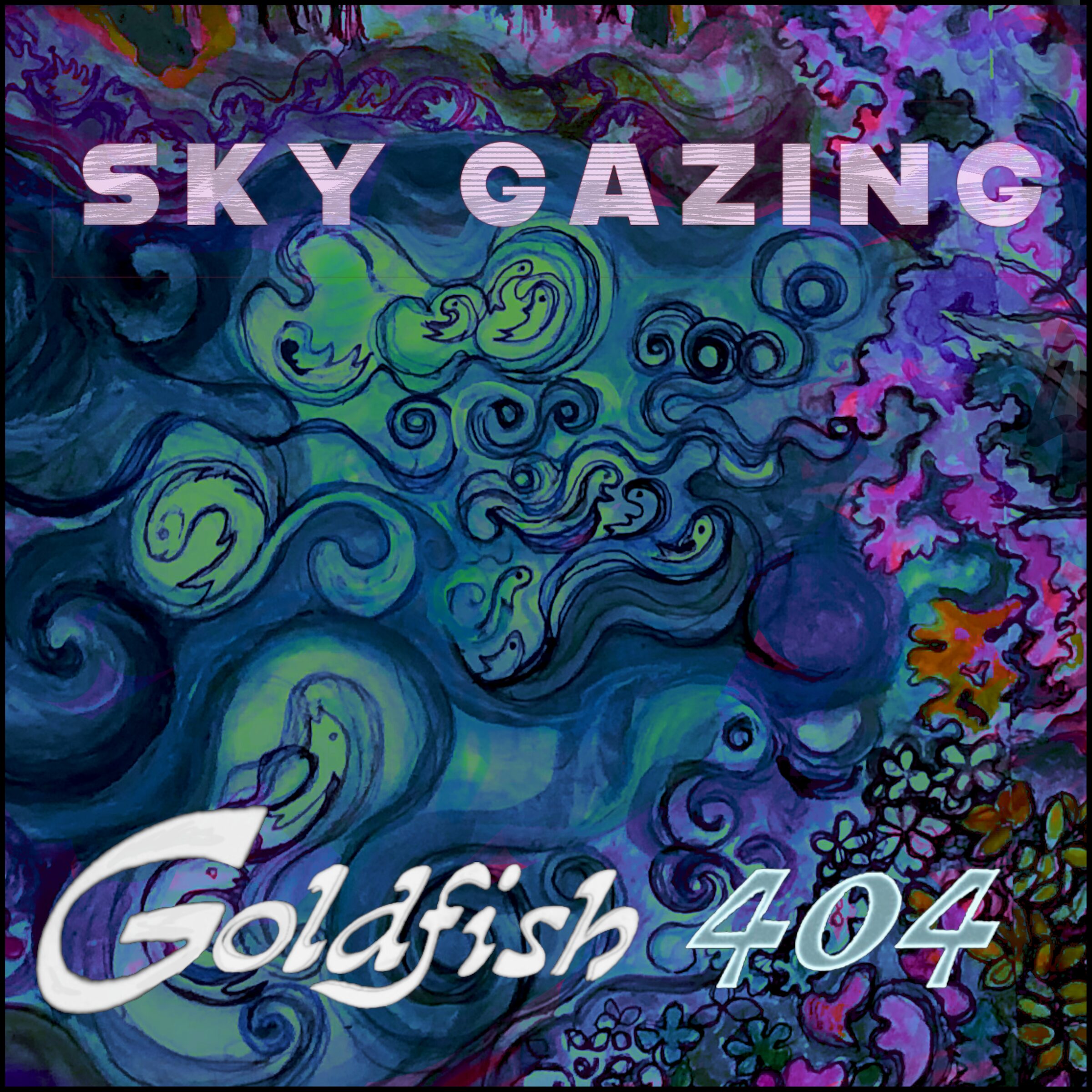

Few records manage to create a sense of movement while remaining deeply rooted in stillness, yet Sky Gazing finds a compelling balance between those two states. The latest album from Goldfish 404 represents a notable evolution for the long-running collaboration between Steven Twery and Lynn Schumann, moving away from the more structured electronic pop framework of previous releases and embracing a freer, more atmospheric approach. Across its duration, the album unfolds as a collection of interconnected sonic environments where rhythm, texture, and poetic expression take precedence over conventional songwriting formulas.
At the center of the project is the creative chemistry between the duo’s contrasting strengths. Lynn Schumann’s background in poetry brings a reflective and evocative quality to the vocal performances, while Steven Twery’s experience in electronic composition shapes the album’s expansive sonic architecture. Rather than relying on predictable verse-chorus structures, the songs develop gradually, allowing individual elements to emerge, dissolve, and transform throughout each composition. This fluidity gives the record a cinematic quality that feels intentional from beginning to end.
The rhythmic foundation of Sky Gazing plays a significant role in defining its identity. Instead of functioning merely as a framework for melodies, the beats often become central narrative devices. Downtempo grooves pulse steadily beneath layers of ambient instrumentation, creating momentum without urgency. The percussion is measured and immersive, encouraging listeners to settle into the evolving landscapes rather than chase immediate hooks. At times the rhythms feel hypnotic, drawing inspiration from long-form electronic traditions while maintaining an organic and human presence.
Synth work throughout the album is particularly effective in establishing mood. Layers of electronic textures drift across the stereo field, creating a sense of depth that continuously expands the listening experience. Some passages feel weightless and celestial, while others introduce subtle tension through darker tonal colors and evolving harmonic structures. The production rarely seeks dramatic impact through volume or density. Instead, it relies on careful layering, allowing sounds to breathe and interact naturally. This approach gives the album a richness that reveals additional details with repeated listens.
The project’s origins in what the duo describes as their “Isle of Lost Songs” can be felt in the music’s exploratory nature. Fragments appear, develop, and re-emerge in unexpected forms, creating an impression that the material has been patiently assembled from ideas that were allowed to mature over time. Rather than sounding fragmented, however, the record maintains remarkable cohesion. Each piece contributes to a broader atmosphere, reinforcing the album’s dreamlike character while preserving its individual identity.
Tracks such as “Snakecharmer,” which played a formative role in shaping the album’s direction, demonstrate Goldfish 404’s willingness to merge contrasting elements. Beat-driven foundations coexist with expressive vocal lines and unconventional textures, producing a sound that feels simultaneously intimate and expansive. Elsewhere, moments like those described in “Milk White” highlight the duo’s fascination with layered sonic experimentation, combining nostalgic undertones with unusual processed voices and atmospheric effects. These creative decisions add character without distracting from the album’s overall flow.
A strong sense of space permeates the entire release. The remote collaboration between Leeds, Massachusetts and North Wales, Pennsylvania appears to have encouraged an approach centered on texture and imagination. Ideas seem to communicate across distances, resulting in compositions that feel less concerned with technical precision than with emotional resonance. The production captures this quality effectively, allowing imperfections and unexpected interactions to become part of the artistic statement rather than something to be corrected.
Influences ranging from Underworld and Björk to Stereolab can be detected in the album’s broader aesthetic, yet Sky Gazing never feels derivative. The record filters these inspirations through Goldfish 404’s own creative language, blending ambient electronics, poetic lyricism, and rhythm-focused arrangements into something distinctly personal. The result is a listening experience that rewards patience and attention, inviting immersion rather than demanding it.
With Sky Gazing, Goldfish 404 present a thoughtful and carefully crafted collection of downtempo compositions that prioritizes atmosphere, texture, and emotional depth. The album’s combination of hypnotic rhythms, immersive synth work, and cinematic pacing creates a distinctive sonic world, one that reflects the duo’s continued artistic evolution while remaining deeply connected to the collaborative spirit that has defined their partnership for decades. It is a release whose layered construction and evocative mood make it a welcome addition to today’s ambient and chill-out landscape.