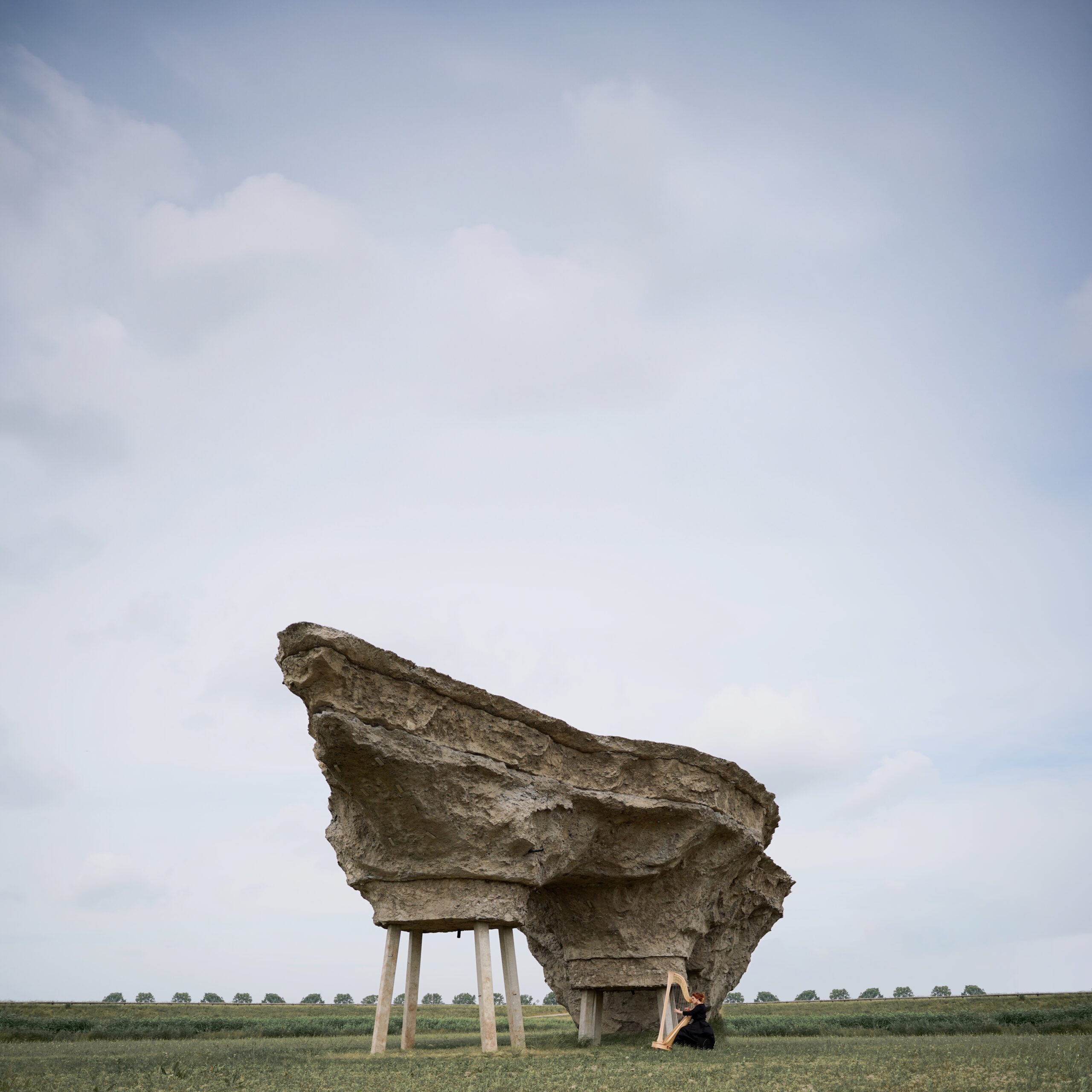

Emerging from a dialogue between sound, landscape, and memory, RIFF finds Anne Vanschothorst exploring the expressive possibilities of transformation through a deeply immersive ambient composition. Inspired by Bob Gramsma’s land art monument Riff, PD#18245, the piece unfolds as a contemplative journey where acoustic origins gradually dissolve into an expansive sonic environment. Rather than functioning as a conventional ambient work, the track develops as a reflection on place, history, and the subtle relationship between physical space and imagination.
At the center of the composition lies a harp recording that serves as both foundation and catalyst. What begins as an acoustic gesture is carefully reshaped through layers of processing, spatial manipulation, and delicate electronic treatment. The result is a soundscape that feels suspended between contemporary classical music, ambient composition, and sound art. The harp never disappears entirely; instead, it remains embedded within the texture, surfacing in fragments, resonances, and harmonic traces that continue to influence the piece as it evolves.
The rhythmic structure avoids traditional patterns and embraces a more fluid sense of movement. There is no obvious pulse guiding the listener through predictable sections. Instead, the rhythm emerges through gradual shifts in density, the appearance and disappearance of harmonic elements, and the natural breathing of the arrangement itself. This approach creates a feeling of slow motion, as if the music is responding to geological processes rather than human measures of time. The pacing encourages careful listening, allowing every sonic detail to occupy its own space within the broader composition.
Equally significant is the role played by the electronic textures introduced throughout the track. These elements are never intrusive or dominant. They function as atmospheric extensions of the harp, expanding its timbral possibilities and creating a sense of depth that reaches far beyond the boundaries of the original recording. Soft drones, distant resonances, and subtle harmonic layers blend seamlessly with the acoustic source material, generating a sonic environment that feels organic despite its technological construction.
The influence of the Flevoland landscape can be felt throughout the piece. The monument that inspired the work preserves the imprint of an excavated space within a reclaimed landscape, and this idea of absence becoming presence resonates strongly within the music. Sounds seem to emerge from hidden locations before dissolving back into silence, creating a constant interplay between material form and empty space. The composition mirrors the conceptual framework of the sculpture by transforming what was once a singular acoustic performance into something that exists between memory and physical reality.
Much of the track’s emotional impact comes from its evolving harmonic language. Rather than relying on dramatic shifts or obvious climaxes, RIFF develops through subtle changes in color and texture. Harmonies unfold gradually, sometimes lingering for extended periods before gently transitioning into new shapes. This slow evolution enhances the meditative quality of the work while reinforcing its connection to natural processes and environmental observation.
Producer and sound designer Thijs de Melker plays a crucial role in shaping the final sonic identity of the release. The production demonstrates remarkable restraint, allowing every element to breathe while maintaining a strong sense of cohesion. The spatial dimension of the mix is particularly striking. Sounds appear to drift across an imagined landscape, creating an immersive listening experience that rewards both focused attention and quiet contemplation.
What distinguishes RIFF is its ability to translate visual and spatial concepts into sound without sacrificing musicality. The piece functions simultaneously as a composition, an atmosphere, and an extension of the artistic dialogue initiated by Gramsma’s sculpture. Anne Vanschothorst succeeds in creating a work that feels deeply connected to its source of inspiration while maintaining its own independent identity.
Through its carefully sculpted textures, patient development, and evocative atmosphere, RIFF offers a compelling listening experience that highlights the creative potential of ambient music when approached as both artistic inquiry and sonic exploration. It is a refined and thoughtfully constructed release that demonstrates a remarkable sensitivity to space, transformation, and the enduring relationship between sound and place.