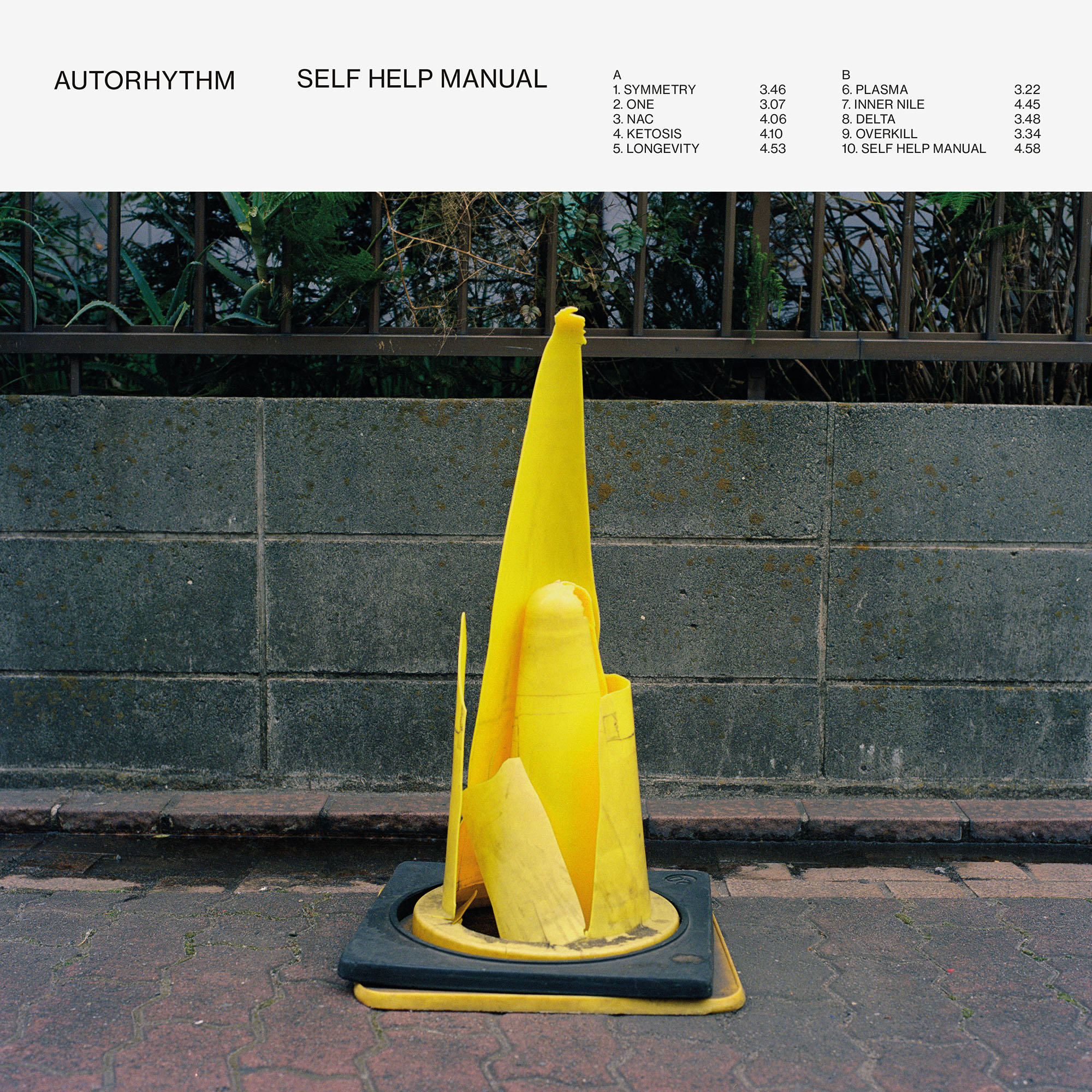

Few records manage to transform personal experience into something so universal without relying on obvious emotional cues. On Self Help Manual, AUTORHYTHM presents an album that feels remarkably intimate while remaining firmly rooted in experimental electronic music. Blending elements of post-punk, techno and kraut-inspired textures, the Swedish artist constructs a collection of pieces that explore movement, repetition and atmosphere with impressive confidence. Rather than seeking immediate impact, the album gradually unfolds, revealing its character through patience and careful listening.
Rhythm naturally becomes the driving force throughout the record. Percussion rarely follows a conventional dancefloor formula, instead developing through evolving patterns that continuously shift the listener’s expectations. Mechanical grooves coexist with organic imperfections, creating a fascinating push and pull between discipline and spontaneity. Every beat seems deliberately positioned, yet nothing ever feels rigid or over-programmed. This constant dialogue between precision and freedom gives the album an unmistakable identity, allowing each composition to breathe while maintaining a hypnotic sense of momentum.
The synthesizers deserve particular attention. Their presence is never overwhelming, instead acting as architectural elements that define the emotional landscape of every track. Vintage tones, subtle drones and shimmering melodic fragments intertwine with spacious production, resulting in a sound palette that feels rich without becoming crowded. The prominent bass work adds further depth, often taking the lead instead of simply supporting the arrangements. Together, these elements generate a listening experience that is immersive and surprisingly warm despite its electronic foundations.
Atmosphere is arguably the album’s greatest strength. There is a persistent feeling of reflection running through the entire project, yet it never slips into melancholy for its own sake. Instead, the music projects resilience through restraint. Spacious reverbs, carefully controlled dynamics and understated melodic development allow tension to build naturally before dissolving into moments of quiet clarity. The result is an album that feels cinematic without becoming theatrical, constantly inviting listeners deeper into its carefully constructed world.
Knowing the personal circumstances surrounding the creation of Self Help Manual inevitably adds another layer of appreciation. Much of the material was completed during an extraordinarily challenging period for Joakim Forsgren, whose long recovery from neurological illness shaped not only the emotional context of the record but also the practical way it was composed. Rather than becoming the album’s central narrative, however, this experience quietly informs the music itself. The listener can sense determination, vulnerability and optimism woven into the compositions without ever feeling that the story overshadows the music.
Several highlights demonstrate the project’s remarkable versatility. “Symmetry” opens the journey with striking minimalism, establishing a calm yet commanding atmosphere from the very beginning. “One” introduces playful rhythmic interactions that subtly recall classic electronic pioneers while maintaining a thoroughly contemporary perspective. Tracks such as “Inner Nile” and “Delta” broaden the sonic vocabulary even further, incorporating rhythmic inspirations that expand the album’s already diverse palette without sounding forced or derivative. Meanwhile, “Longevity” showcases how a simple arpeggiated figure can become emotionally engaging through thoughtful arrangement alone.
Production quality remains consistently impressive throughout the album. Every instrument occupies its own space within the mix, allowing details to emerge naturally with repeated listens. The balance between clarity and texture is particularly satisfying, preserving the raw character of the performances while delivering a polished final result. This careful production enhances the immersive qualities of the music without removing the subtle imperfections that give the record its unmistakably human presence.
Ultimately, Self Help Manual is an accomplished release that succeeds on multiple levels. It functions as an engaging exploration of rhythm and sound design, an atmospheric listening experience and a deeply personal artistic statement without becoming self-indulgent. AUTORHYTHM demonstrates an exceptional ability to transform limitation into creative opportunity, producing an album that feels both intellectually stimulating and emotionally rewarding. It is a release of outstanding quality, and one that we are genuinely pleased to feature on our webzine through this review. For listeners drawn to adventurous electronic music that values atmosphere as much as structure, Self Help Manual offers a rewarding experience that continues to reveal new details long after the first listen.