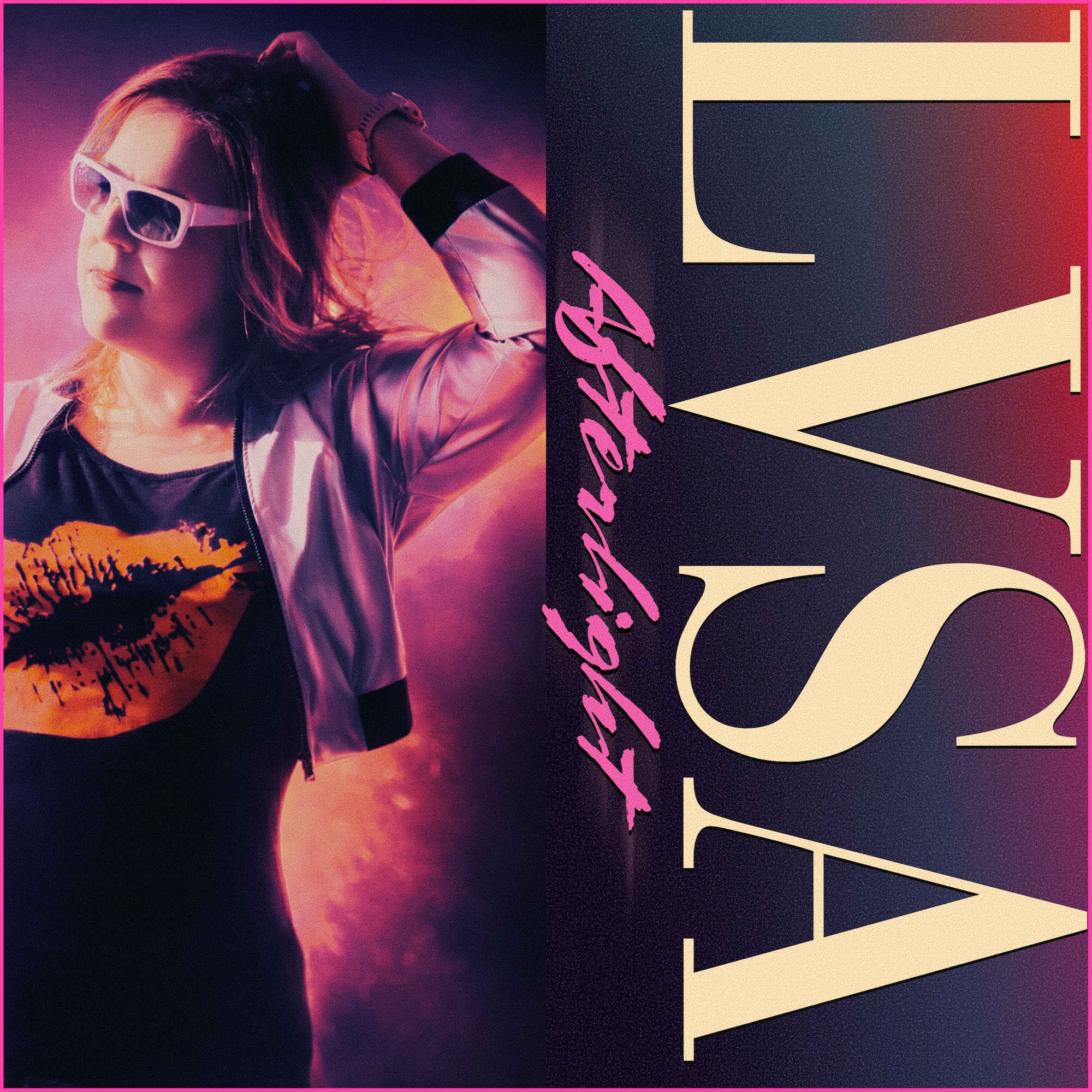

LVSA’s AFTERLIGHT arrives with the feeling of a record that has been waiting for the right moment to exist. Rather than treating synth pop and synthwave as exercises in retro reconstruction, the Colorado artist uses their familiar colours as a language for something considerably more personal. The result is a five-track EP steeped in the atmosphere of the 80s and 90s, but never trapped there, balancing cinematic nostalgia with a modern electronic sensibility.
The rhythmic foundation is one of the record’s most convincing elements. LVSA’s background as a professional drummer is particularly evident in the way the electronic grooves move. Even when the drums are heavily programmed, there is a physical quality underneath them, an instinct for where a beat should land and how much space it needs to breathe. “Getaway” establishes this approach immediately, combining a propulsive pulse with bright synthesizer layers and a sense of forward motion. It feels energetic without becoming unnecessarily busy, allowing the melodic components to remain at the centre.
The title track, “Afterlight”, shifts the emotional temperature. Its synth textures have that distinctive widescreen quality associated with classic electronic soundtracks, creating an impression of lights passing through a city at night or the final scenes of a film that refuses to end completely. The production is polished, but the atmosphere is not sterile. There is warmth in the arrangement, particularly in the interaction between the synths, rhythm section and vocal presence. The track also carries the significance of being the first composition LVSA created for this project, and that sense of rediscovery seems embedded in its emotional character.
“Hold The Lane” brings another variation to the formula, leaning into groove and momentum while retaining the EP’s nostalgic identity. LVSA understands that synth-driven music depends as much on texture as melody, and the arrangement is populated by details that reward attention without demanding it. The synthesizers provide both harmonic structure and atmosphere, sometimes pushing forward, sometimes functioning almost like scenery behind the rhythm.
“Acropolis, Pt II” feels more reflective, expanding the cinematic dimension of the EP. There is a sense of open space in the production, as though the music is deliberately leaving room for images and memories to form around it. This is where LVSA’s affection for the soundtracks and visual culture of the 80s and 90s becomes especially apparent. The nostalgia is less about recreating a specific decade than about recreating an emotional sensation associated with it.
The closing “In Another Life”, featuring The Bad Dreamers, brings the EP’s central ideas into particularly sharp focus. Written and produced jointly, the collaboration feels natural rather than ornamental. The song carries a stronger pop immediacy while maintaining the atmospheric synthwave character of the rest of the release. Its subject matter, centred around separation and the possibility of another life after a breakup, gives the polished production a vulnerable core. Jesse Molloy’s saxophone adds another layer of colour, reinforcing the track’s connection between contemporary synth pop and its classic influences.
Across AFTERLIGHT, LVSA demonstrates a clear understanding of how nostalgia can be transformed rather than simply reproduced. The synthesizers evoke familiar decades, the rhythms retain a genuine musician’s sense of groove, and the arrangements consistently aim for emotional impact. Behind the polished surfaces is an artist reconnecting with a musical identity built over years of playing, programming and listening.
AFTERLIGHT is therefore more than a collection of retro-inspired electronic songs. It is a personal return to music, shaped by experience but driven by instinct. Its cinematic atmosphere, strong rhythmic foundations and carefully layered synth work make it a high-quality release, and one we are genuinely happy to host on Parkett with this review.