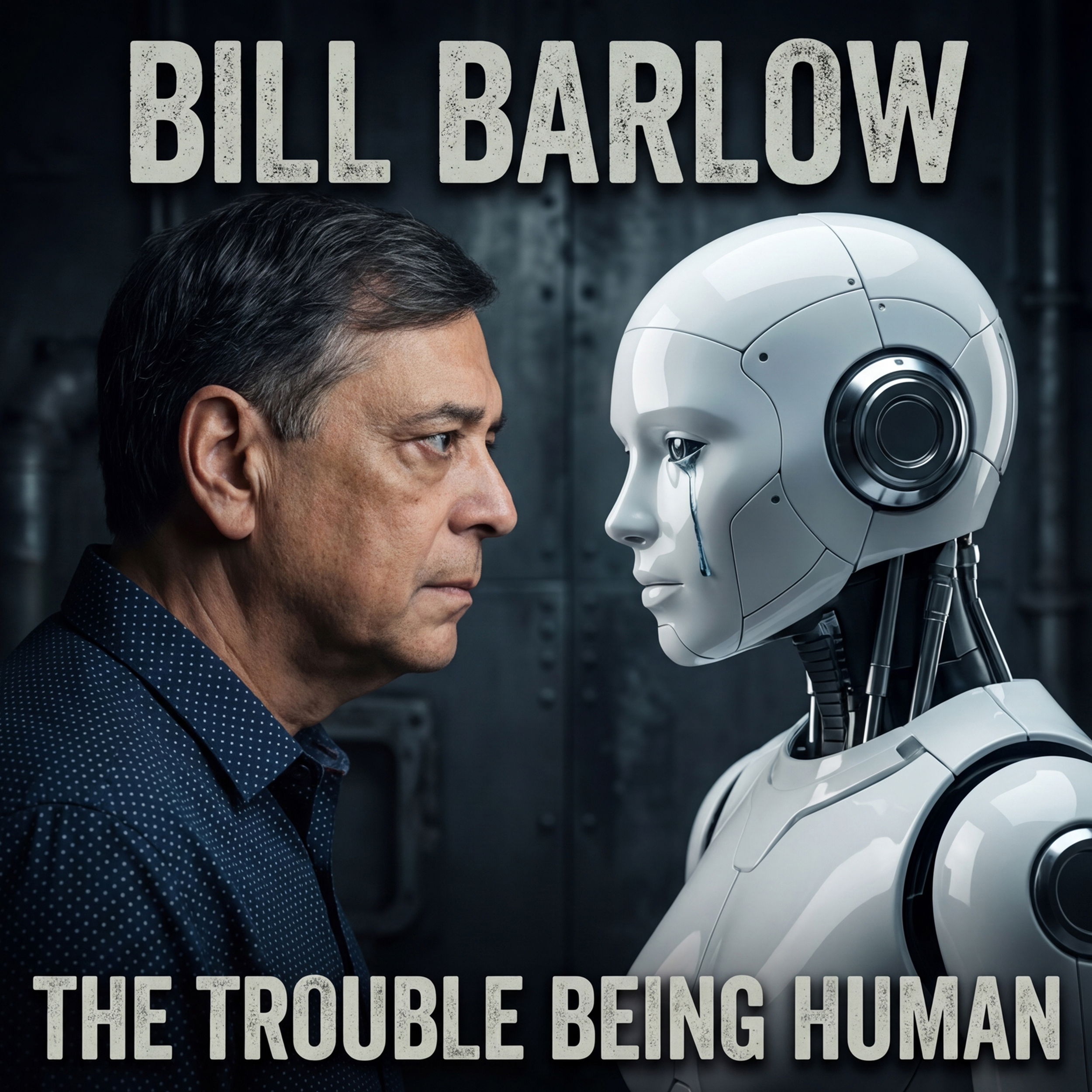

A quiet tension runs beneath the surface of The Trouble Being Human, the latest full-length release from Bill Barlow, and it rarely lets go. Across its 18 tracks, the Tampa-based songwriter and digital composer constructs a body of work that feels both intimate and wide-reaching, as if each song were written in a small room but meant to echo far beyond it. The result is a record that leans into alternative pop and house sensibilities while never settling comfortably into either category.
Rhythm plays a central role here, often acting as the emotional spine rather than just a structural tool. Several tracks hinge on pulsing, almost hypnotic beats that flirt with house music’s repetitive nature, yet they’re softened by organic imperfections. There’s a subtle push-and-pull—mechanical precision versus human looseness—that mirrors the album’s overarching theme. On songs like “Don’t Stop,” the percussion drives forward with a kind of urgency, sharp and insistent, while elsewhere, such as “Chillin’ in Zanzibar,” the grooves relax into something warmer, more fluid, almost sunlit in tone.
The synth work deserves particular attention. Barlow avoids overly polished, sterile textures in favor of something more tactile. Many of the synth layers feel slightly worn at the edges, with analog warmth bleeding through even when the arrangement leans digital. Pads swell and recede like slow breaths, while lead lines occasionally cut through with a brighter, more immediate presence. This contrast—between hazy atmospheres and clearer melodic hooks—creates a dynamic listening experience that rewards attention without demanding it.
At the center of the album sits its title track, “The Trouble Being Human,” which functions as both thematic anchor and emotional pivot. Here, the production tightens, the rhythm becomes more deliberate, and the synths take on a colder hue. It’s a track that wrestles openly with the anxiety of existing in an era where technology can replicate creativity itself. Yet, rather than collapsing into cynicism, it burns with a quiet defiance. There’s a sense that imperfection, however fragile, still carries weight.
Lyrically, Barlow continues to balance passion with a kind of understated sarcasm. Lines often arrive with a conversational ease, occasionally veering into ambiguity, as if the meaning is intentionally left just out of reach. This approach works particularly well in tracks like “Social Butterfly,” where familiar narratives are reframed with a slightly skewed perspective, and “Dream Girl,” which leans more toward accessible pop structures while retaining a subtle emotional undercurrent.
Atmosphere is where the album truly finds its identity. Even at its most rhythmically driven, there’s an ever-present sense of space. Tracks rarely feel overcrowded; instead, elements are given room to breathe, to linger. This restraint allows small details—an echoing vocal fragment, a delayed synth note, a faint percussive texture—to emerge gradually. Over time, these details accumulate, creating a layered sonic environment that feels cohesive without becoming predictable.
The sequencing also plays its part. Moving from the reflective tones of “Time Stands Still” and “Unhappy” into more assertive moments like “The Harder You Push,” the album maintains a careful balance between introspection and outward energy. By the time it reaches its closing track, “Truth In a Bottle (Live Studio Session),” the shift in texture—stripped back, more immediate—feels earned. It’s a reminder of the human presence behind the production, unfiltered and direct.
What stands out most, perhaps, is the consistency of vision. Despite blending elements of pop, R&B, rock, folk, and blues, the album never feels fragmented. Instead, it unfolds as a continuous reflection on identity, creativity, and the uneasy relationship between human expression and technological evolution.
It’s a release that holds attention not through spectacle, but through nuance. Subtle choices in rhythm, careful sculpting of synth textures, and an atmosphere that hovers between warmth and detachment all contribute to a listening experience that deepens over time. High-quality in both concept and execution, this is the kind of record that fits naturally within a curated webzine space—one that invites repeated listens and, more importantly, quiet consideration.