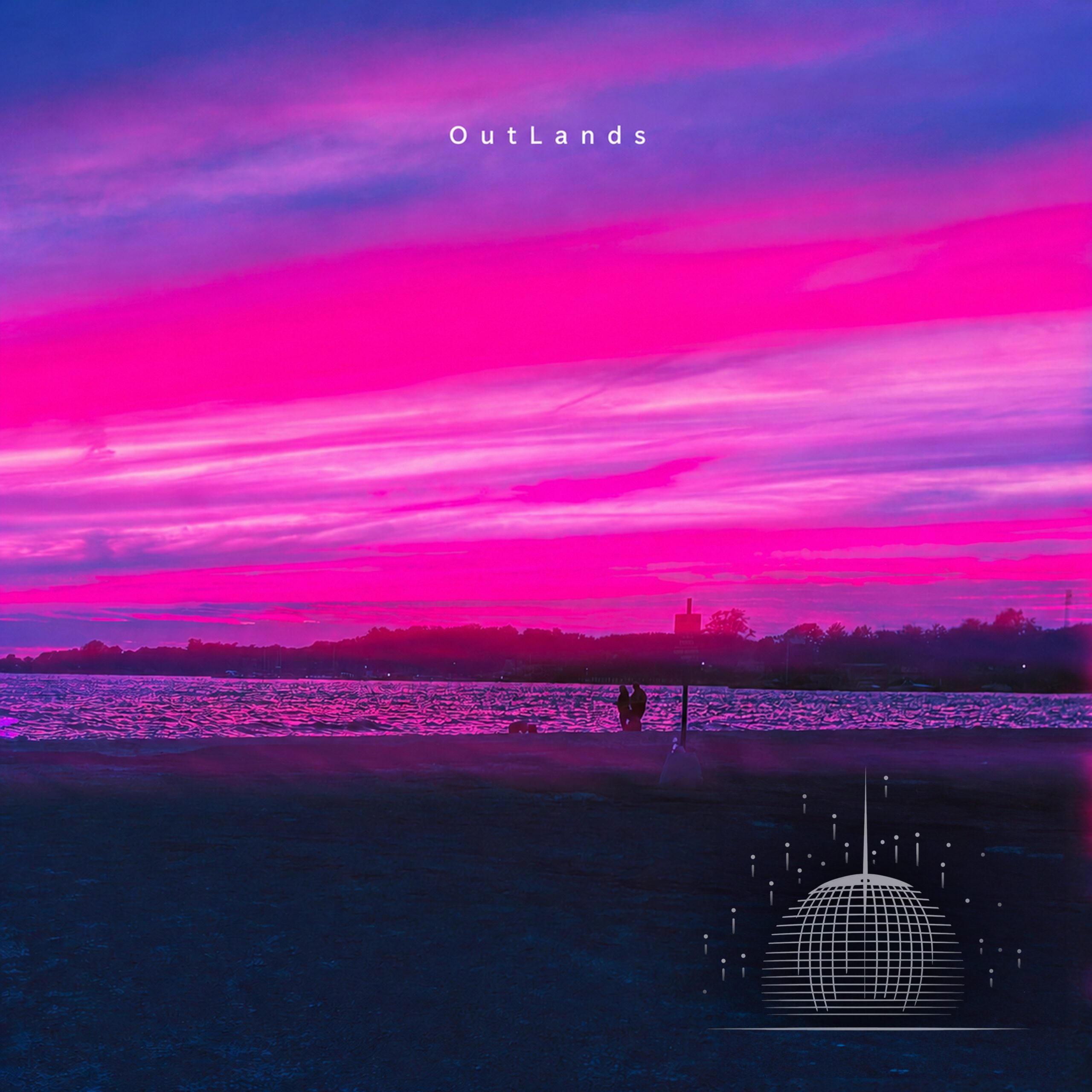

There is an immediate sense of movement in “OutLands”, a track that understands how much can be achieved through restraint. Rather than relying on an oversized arrangement or an obvious peak, Disco Dreams builds its identity through a measured downtempo pulse, soft electronic layers and a persistent feeling of forward motion. The result is a piece that sits comfortably between chillwave’s nostalgic vocabulary and a more contemporary approach to electronic production, without becoming trapped in either one.
The rhythmic structure is arguably where the track finds its strongest character. The groove remains deliberately controlled, giving the music a relaxed pace while still maintaining enough momentum to prevent the arrangement from drifting into passivity. There is a subtle physicality to the beat: it does not demand attention, but it continually reinforces the track’s internal movement. Small rhythmic details contribute to this effect, allowing the percussion to function as both a structural element and part of the atmosphere.
This balance is particularly effective because “OutLands” does not treat rhythm as something separate from its melodic environment. The beat provides a foundation for the surrounding textures, while the synth work gradually expands the track’s emotional dimension. Disco Dreams has a clear understanding of how electronic sounds can suggest space without filling every available frequency. The production leaves room for individual layers to breathe, creating an arrangement that feels open rather than crowded.
The synth palette carries much of the nostalgic quality associated with chillwave, but there is a modern clarity in the way these elements are presented. Instead of simply reproducing the aesthetics of an earlier electronic era, Disco Dreams uses familiar textures as a starting point for something more personal. The sounds have a slightly hazy quality, yet the overall production remains defined enough for the rhythmic components to retain their presence. That contrast between softness and precision becomes one of the track’s most appealing characteristics.
Atmosphere is, naturally, central to the experience. “OutLands” seems designed less as a conventional destination than as a sonic environment, somewhere the listener can remain for a few minutes without being pushed toward a predetermined emotional response. The spacious production and dreamy textures create an introspective quality, while the groove keeps the track connected to the physical side of electronic music. It is this coexistence of contemplation and movement that gives the single its personality.
There is also a convincing sense of continuity between Disco Dreams’ stated interest in psychedelic melodies, nostalgic textures and modern pop-focused electronica. Those influences are not presented as isolated references. Instead, they appear to have been absorbed into a sound that values melody, atmosphere and accessibility without sacrificing its electronic character. “OutLands” therefore feels approachable on first listen while leaving enough textural detail to reward closer attention.
As the first single from an upcoming second studio album, the track also works as an effective introduction to the direction Disco Dreams appears to be pursuing. Its production suggests an artist interested in developing atmosphere through carefully chosen elements rather than excess. The downtempo foundation gives the music patience, while the synth textures provide the colour and emotional depth necessary to sustain that approach.
“OutLands” is ultimately a high-quality electronic release with a strong sense of identity. Its rhythmic restraint, carefully shaped synth work and immersive atmosphere come together naturally, creating a track that can function equally well as background for reflection or as a focused headphone listen. Disco Dreams succeeds in making nostalgia feel contemporary rather than purely retrospective, and that is perhaps the track’s most convincing achievement. We are happy to host “OutLands” on our webzine and to give space to a release whose quiet confidence proves that electronic music does not always need to be loud to leave an impression.