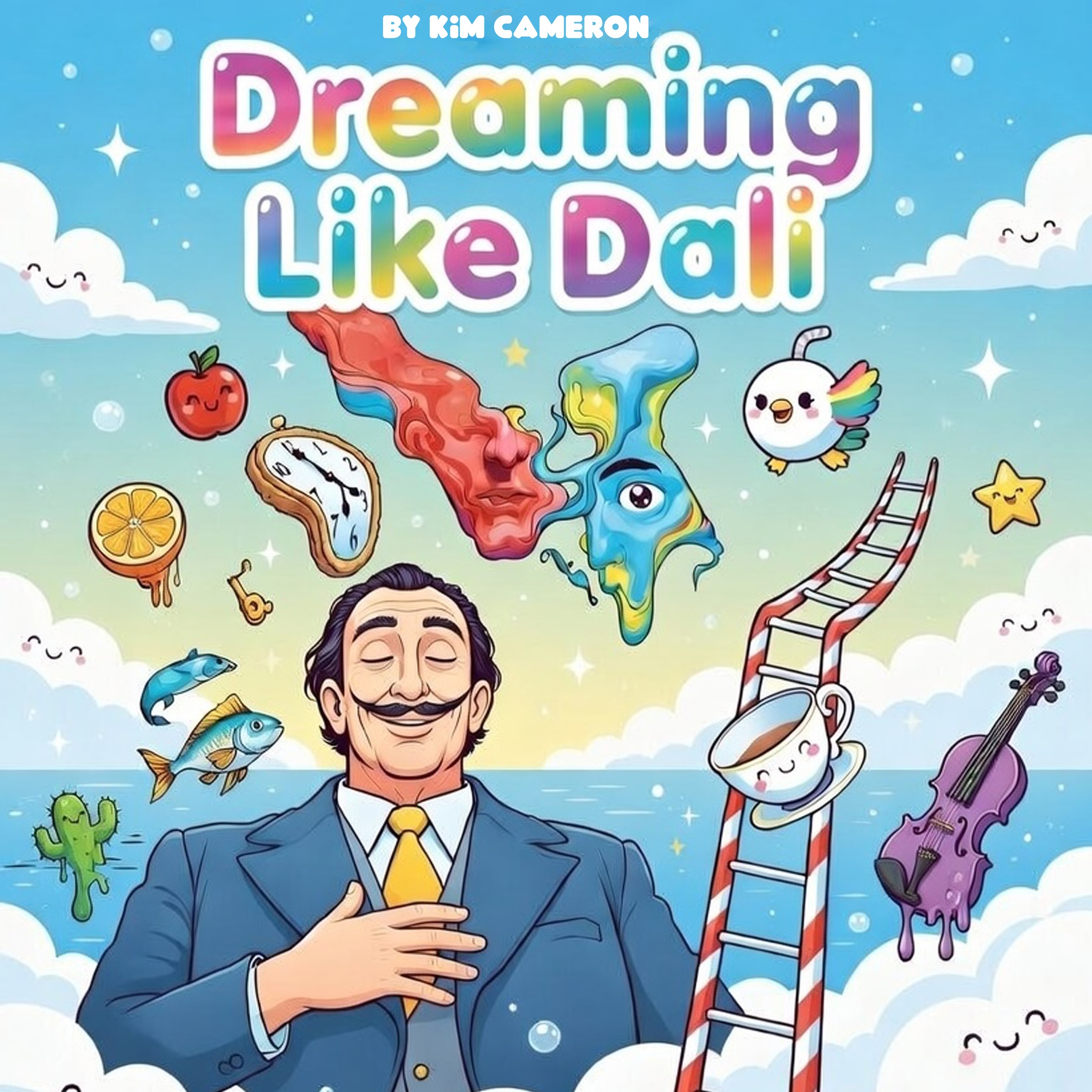

Between luminous synth textures and an instinctive pop sensibility, “Dreaming Like Dali” by Kim Cameron arrives as one of those releases that immediately reveals a carefully shaped artistic vision. Built around commercial vocal dance foundations yet colored by playful conceptual layers, the single transforms what could have been a straightforward club-oriented track into something more imaginative and unexpectedly cinematic. Scheduled for release on May 10th, 2026, the song acts as an introduction to Cameron’s upcoming album Who Drew That?, a project inspired by iconic visual artists and designed to bridge electronic music with childhood creativity.
What stands out first is the rhythmic construction. The beat does not overwhelm the listener with aggressive EDM mechanics; instead, it maintains a fluid, buoyant pulse that feels intentionally accessible without losing sophistication. The percussion carries a polished dance-pop energy, but underneath the bright surface lies a subtle layering technique that gives the groove movement and elasticity. Syncopated accents appear briefly and disappear just as quickly, creating a sensation of motion that mirrors the surrealist references embedded within the song’s concept. Even in its lighter moments, the production remains tightly controlled.
The synth work deserves particular attention. Rather than relying on oversized festival-style drops, “Dreaming Like Dali” leans into airy melodic phrasing and colorful electronic textures. Certain synth lines shimmer with a dreamlike softness, almost resembling watercolor brushstrokes translated into sound, while others introduce sharper digital contours that keep the arrangement dynamic. This contrast becomes one of the song’s most engaging qualities. The production never feels static. Small details continuously emerge in the background — filtered pads, flickering arpeggios, distant vocal effects — contributing to an atmosphere that feels playful yet strangely immersive.
Cameron’s vocal performance fits naturally into this environment. Her delivery avoids excessive theatricality, choosing clarity and warmth instead. That decision proves effective because it allows the thematic elements of the track to remain approachable. The vocal melodies are memorable without sounding formulaic, and the hooks settle in gradually rather than demanding immediate attention through repetition alone. In many modern commercial dance releases, vocals often function purely as structural devices leading toward drops; here, they retain narrative character and emotional texture.
An important dimension of “Dreaming Like Dali” lies in its conceptual ambition. Inspired by Salvador Dalí’s fascination with colors, shapes, and unconventional perspectives, the single channels those surrealist impulses into a family-friendly electronic framework. It would have been easy for this idea to become overly literal or educational in tone, yet Cameron manages to maintain a genuine musical identity throughout. The references to art history never interrupt the momentum of the song. Instead, they operate almost subconsciously, influencing the atmosphere more than dictating it.
Recorded in Miami Beach overlooking the ocean, the track carries a certain coastal openness within its sonic architecture. The mix breathes naturally, leaving space between the instrumental layers rather than compressing everything into a dense wall of sound. That spaciousness becomes essential to the listening experience. It gives the music an airy quality that reinforces the sensation of imagination and freedom at the center of the project. At times, the production even hints at late-night chill-pop aesthetics before returning to its brighter dance-oriented core.
What also makes this release notable is its refusal to separate children’s entertainment from contemporary production values. Cameron approaches younger audiences without simplifying the musical language itself. The song remains polished, rhythmically engaging, and stylistically modern while still embracing accessibility and wonder. That balance is difficult to achieve convincingly. Many projects aimed at younger listeners either dilute the music too heavily or rely entirely on novelty concepts. “Dreaming Like Dali” avoids both traps through confident songwriting and thoughtful arrangement choices.
As an early glimpse into Who Drew That?, the single suggests a project driven by genuine creative curiosity rather than trend-chasing. The collaboration with co-producer Carl Simeon Fernandes results in a soundscape that feels cohesive, bright, and emotionally light without becoming disposable. More importantly, the track succeeds because it treats imagination as something expansive rather than childish.
With its polished rhythmic structure, carefully layered synth design, and vibrant atmosphere, “Dreaming Like Dali” confirms Kim Cameron as an artist willing to explore unconventional intersections between pop culture, education, and dance music. It is a release crafted with precision, personality, and a refreshing sense of openness — qualities that make it an easy addition to the pages of any contemporary music webzine focused on forward-looking pop releases.