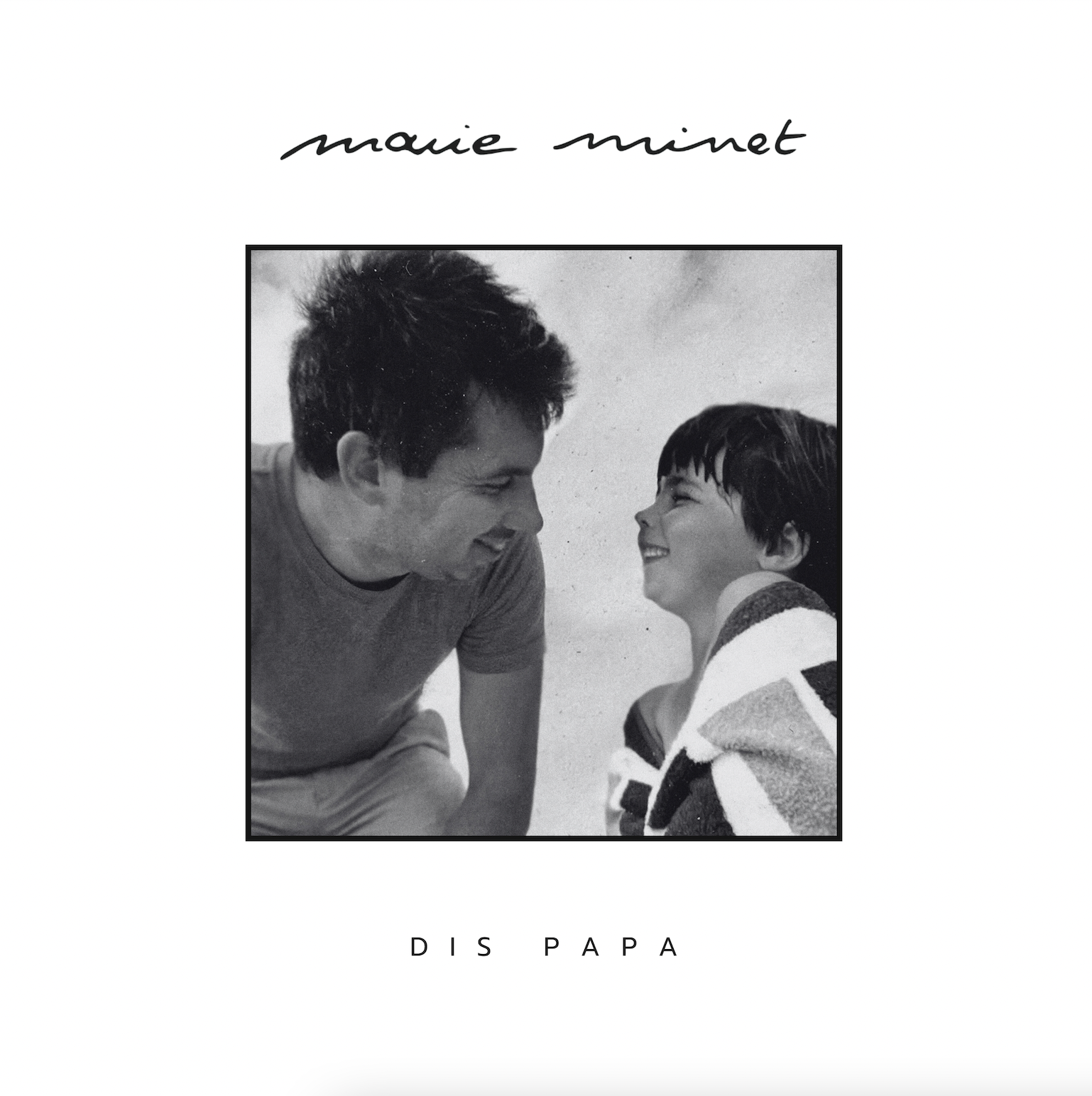

Marie Minet’s Dis Papa arrives with a quiet confidence that immediately sets it apart. Framed within an afrobeat sensibility yet shaped by chanson restraint, the single unfolds as a careful balance between rhythm and reflection. It does not rush to make its point. Instead, it breathes, allowing space for emotion to surface naturally, almost reluctantly, which makes its impact linger longer than expected.
At the rhythmic core of Dis Papa lies a pulse that feels both grounded and gently uplifting. The afrobeat influence is present without ever becoming dominant or demonstrative. Percussion patterns move in soft cycles, steady but never rigid, creating a sense of forward motion that mirrors the song’s thematic idea of transmission rather than closure. There is no percussive excess here; the groove is measured, human, and slightly imperfect in the best sense. It feels played rather than programmed, as if each rhythmic accent were placed with intention rather than precision.
The synth work plays a discreet yet essential role in shaping the track’s atmosphere. Rather than leading the composition, the synths operate as a subtle emotional undercurrent. Warm, rounded tones drift in and out of focus, sometimes barely noticeable, sometimes opening small windows of light. They never overwhelm the organic elements, but they gently modernize the sound, giving it a quiet contemporary edge. This restraint allows the track to remain timeless rather than anchored to a specific trend.
Atmospherically, Dis Papa exists in a space that feels suspended between intimacy and openness. The production avoids dramatic peaks, opting instead for a continuous emotional line that feels honest and unforced. There is a softness in the arrangement that invites close listening, as if the song were meant to be heard at low volume, late in the evening, when details reveal themselves slowly. The overall mood is luminous without being naïve, tender without slipping into sentimentality.
Marie Minet’s vocal approach is central to this balance. Her voice moves fluidly between melody and something closer to spoken word, carrying a natural fragility that feels intentional rather than stylized. There is a sense that the words are being discovered as they are sung, not recited from a fixed place. This vocal delivery reinforces the song’s emotional core: a farewell seen through a child’s eyes, where understanding is partial, feelings are large, and hope exists alongside sadness without explanation.
Lyrically, Dis Papa addresses the theme of death with unusual clarity and restraint. The text avoids dramatic declarations, choosing instead simple phrases that resonate through repetition and space. Death is not framed as an ending, but as a passage, a quiet handing over of dreams, tenderness, and memory. This perspective gives the song its particular emotional weight. It speaks of loss, but also of continuity, suggesting that what is transmitted may be more enduring than what is left behind.
Within Marie Minet’s broader artistic journey, Dis Papa feels like a natural yet meaningful step forward. Her background in blending French lyricism with West African musical influences is clearly present, but here it is refined, almost distilled. The highlife and afrobeat elements do not function as stylistic markers, but as emotional tools, shaping the song’s warmth and openness. The result is a piece that feels transcultural without ever announcing itself as such.
Dis Papa stands as a release of high quality, marked by coherence, sensitivity, and a rare sense of emotional honesty. It is the kind of song that does not seek immediate impact, but rewards attentive listening. For these reasons, it is a pleasure to host Marie Minet on our webzine with this review, and to spotlight a track that approaches universal themes with humility, care, and a quietly radiant musical language.