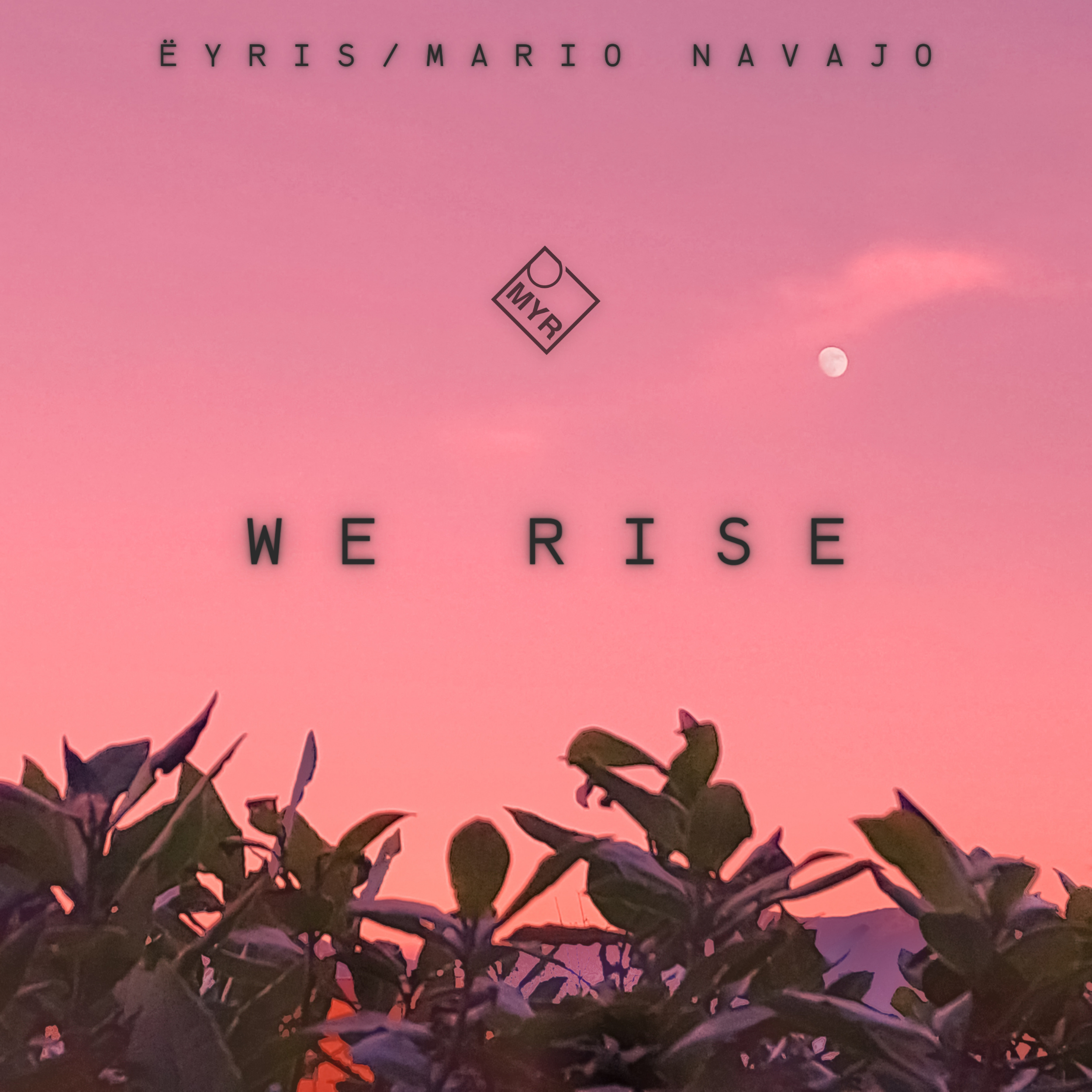

A sense of quiet momentum runs through We Rise, the collaborative EP by Mario Navajo and Ëyris, shaping an experience that feels both intimate and expansive. Rooted in afrobeat influences yet clearly orbiting the deeper ends of house music, the release doesn’t rush to impress—it unfolds, patiently, with a kind of understated confidence that ultimately defines its character.
At the core of the EP lies a carefully constructed rhythmic identity. The percussion leans into afro-inspired patterns, but avoids cliché: instead of overwhelming the listener with density, it opts for space and subtle syncopation. Each drum element seems deliberately placed, allowing the groove to breathe. The kick remains warm and grounded, acting as a steady anchor, while layered shakers and organic hits introduce a fluid, almost conversational quality to the rhythm. It’s not about impact alone—it’s about continuity, about movement that feels natural rather than imposed.
This rhythmic foundation opens the door for the synth work, which proves to be one of the most compelling aspects of the record. Textures evolve gradually, often starting with minimal melodic hints before expanding into fuller harmonic structures. Pads stretch across the stereo field with a cinematic softness, while lead lines emerge and recede without ever dominating the mix. There’s a noticeable restraint here: instead of chasing immediacy, the production embraces slow development. In doing so, it rewards attentive listening.
Particularly striking is the way the synths interact with the low-end. The basslines carry a certain warmth—rounded, never aggressive—yet they maintain a presence that subtly drives the tracks forward. This interplay between bass and melody creates a sense of cohesion that ties the EP together, even as individual sections shift in tone. It’s a balancing act that reflects a clear understanding of deep house aesthetics, while still leaving room for the afrobeat undercurrent to shape the groove.
Vocally, the contribution adds an additional layer of emotional depth without becoming overly explicit. The delivery floats rather than commands, blending into the instrumental fabric rather than sitting on top of it. Harmonies appear almost like distant echoes, reinforcing the atmospheric dimension of the project. There’s an ambiguity in the phrasing that works in favor of the overall mood—it allows listeners to project their own interpretations, rather than guiding them too rigidly.
Atmosphere, in fact, is where We Rise finds its strongest voice. The EP carries a duality that is hard to ignore: it feels equally suited for solitary listening and for shared spaces. In quieter moments, there’s a reflective quality—something introspective, almost meditative. Yet as the tracks develop, a subtle sense of uplift emerges, hinting at collective energy without ever tipping into overt euphoria. This tension between inward focus and outward movement gives the release a certain depth.
The progression within each track deserves attention as well. Instead of relying on traditional build-and-drop structures, the music grows incrementally. Layers are introduced, adjusted, sometimes removed, creating a dynamic flow that keeps the listener engaged without resorting to predictable peaks. It’s a compositional choice that aligns with the broader ethos of the EP: evolution over impact, texture over spectacle.
From a broader perspective, the collaboration between Mario Navajo and Ëyris feels coherent and purposeful. There’s a shared vision at play, one that prioritizes emotional resonance and sonic detail. You can sense the background influences—hip hop roots, electronic exploration—but they are filtered through a refined, contemporary lens. The result is a sound that feels both familiar and distinct, grounded yet forward-looking.
We Rise stands as a high-quality release, one that resonates beyond immediate listening. It’s the kind of project that reveals more over time, inviting repeated engagement rather than offering instant gratification. For that reason, it fits naturally within a curated editorial space—exactly the kind of work a webzine is genuinely pleased to spotlight and explore in depth.