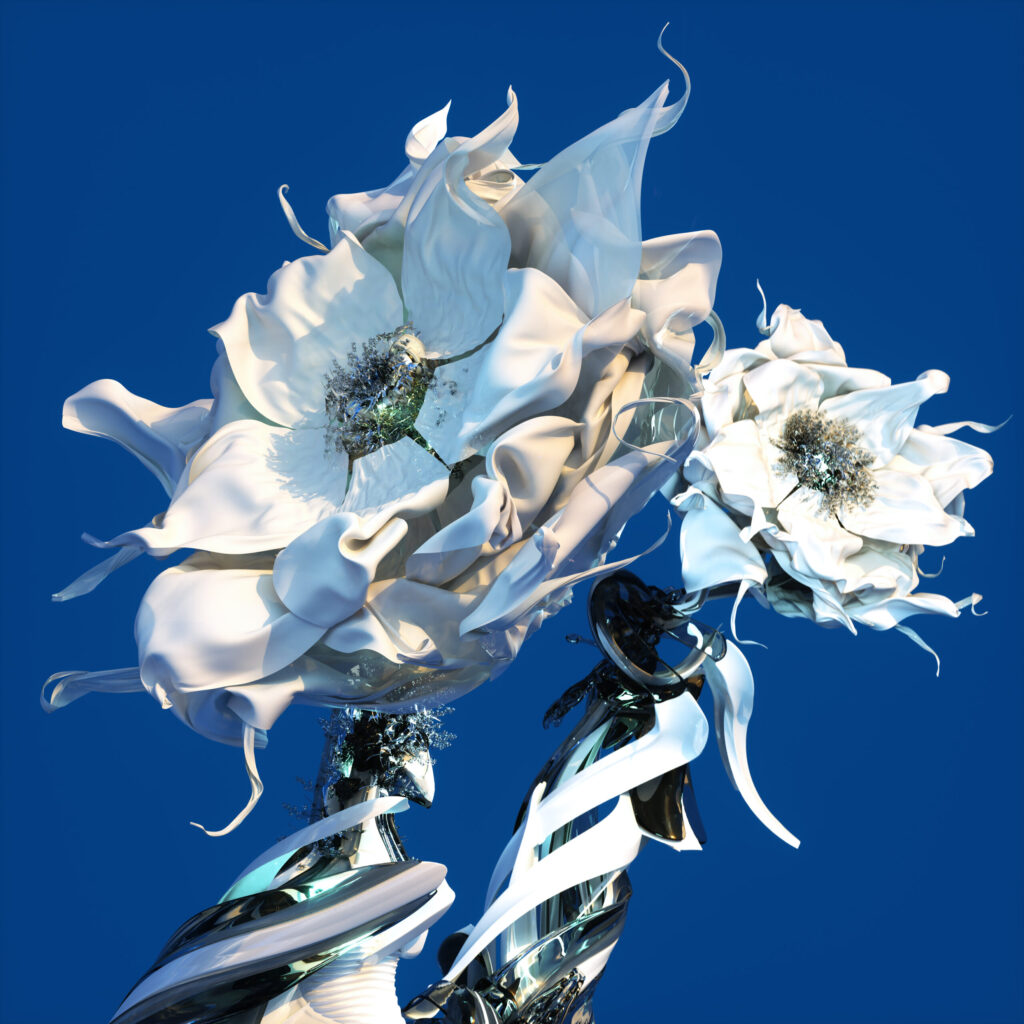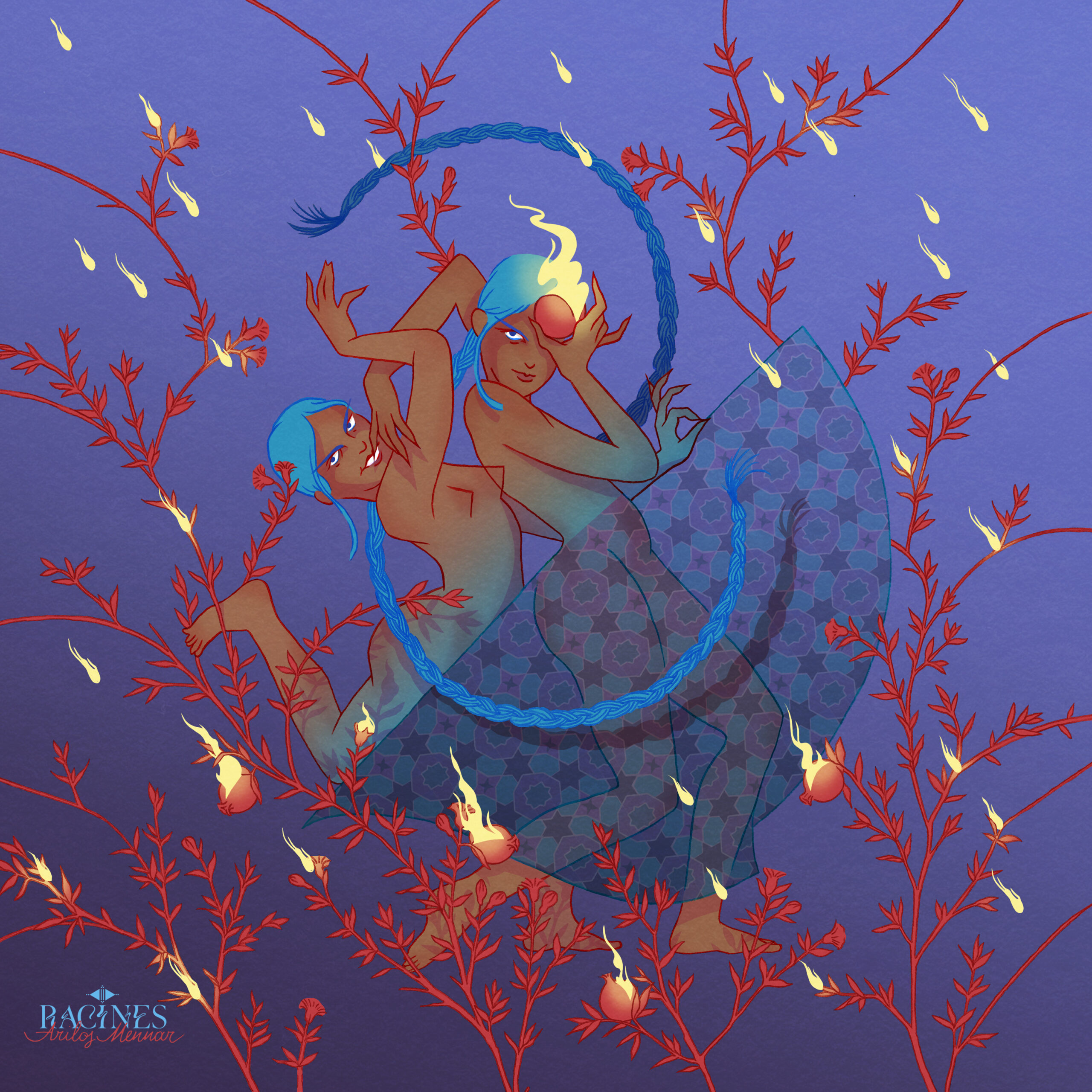

A rich exchange between memory and innovation shapes the foundation of Arilos Mennar, the debut album from Racines. Formed by Rokeya and Anissa, the duo explores the meeting point between electronic production and ancestral musical traditions, creating a work that feels both deeply rooted and remarkably fluid. Across nine tracks, the record develops as a continuous journey through cultures, languages, and sonic landscapes, bringing together diverse influences without ever forcing them into a single framework.
From the opening moments of Market Miracolo, the album establishes its distinctive character. Pulsating rhythms provide momentum while layers of organic instrumentation unfold around carefully crafted electronic textures. The track functions as an invitation into the wider universe of the album, where movement becomes both a physical and symbolic act. Percussion plays a central role throughout the composition, generating a sense of ritual energy that remains present across the entire record.
The rhythmic architecture of Arilos Mennar deserves particular attention. While the project is associated with Future Bass, Racines approach the genre from an unconventional angle. Rather than relying exclusively on familiar festival-driven dynamics, the duo integrates traditional percussion patterns and organic grooves into contemporary electronic structures. This creates a rhythmic language that constantly evolves, balancing hypnotic repetition with subtle shifts in intensity. The result is music that encourages movement while maintaining a strong narrative dimension.
Tracks such as Meken Merteh and Nari illustrate this balance especially well. In Meken Merteh, rhythmic progression becomes a vehicle for themes of resilience and transformation. The production gradually expands, allowing electronic elements to interact with vocal textures and acoustic timbres. Nari, featuring Borda, introduces a darker atmosphere, where tension and release are carefully managed through layered synth work and driving percussion. The track’s hypnotic quality emerges from the interplay between deep rhythmic foundations and increasingly immersive electronic details.
The album’s synthesizer work contributes significantly to its identity. Rather than dominating the arrangements, the synths often function as connective tissue between different musical worlds. Warm pads, evolving textures, and atmospheric melodic fragments create depth without overwhelming the more traditional instruments. This approach allows the electronic elements to enhance rather than replace the cultural and instrumental references that define the project. Throughout the album, synthesizers are used with precision, helping shape environments that feel expansive and emotionally resonant.
Language itself becomes an instrument within the album’s broader design. Arabic, Italian, Spanish, French, Greek, and Ladino appear not as separate entities but as interconnected sonic materials. Voices move through the arrangements with a natural fluidity, emphasizing the musicality of words alongside their meanings. This multilingual dimension reinforces the album’s central idea of exchange and coexistence, transforming each track into a meeting place for different histories and perspectives.
Atmosphere remains one of the strongest aspects of Arilos Mennar. Pieces such as Fluir and Zorahayda reveal the duo’s ability to create immersive environments that feel cinematic without becoming overly dramatic. In Fluir, flowing textures and carefully layered instrumentation evoke constant motion and renewal. Zorahayda, the album’s focus track, develops around a sense of longing and unresolved desire, using subtle production details to maintain emotional tension while preserving a feeling of openness.
The contributions of guest musicians further enrich the listening experience. The percussion of Taha Ennouri and Ali Belazi strengthens the ritualistic character of the compositions, while the wind instruments performed by Carmelo Colajanni expand the album’s tonal palette. The presence of duduk, bansuri, arghul, zampogna, and overtone flute introduces colors that broaden the sonic horizon. Meanwhile, Simone Santarelli’s oud playing adds warmth and depth, reinforcing the dialogue between tradition and contemporary production.
As the album progresses toward its conclusion, tracks like Aman and Taqfiz continue exploring themes of persistence, joy, memory, and movement. The closing composition, Rumman, strips the arrangement back to its essentials, allowing voice and oud to carry the emotional weight of the final moments. It serves as a reflective ending that brings the album’s various threads together while maintaining the sense of openness that characterizes the entire work.
With Arilos Mennar, Racines construct a compelling musical narrative where electronic innovation and cultural heritage exist in constant conversation. Through intricate rhythms, thoughtful synth design, and a consistently evocative atmosphere, the duo delivers a debut album that transforms plurality into a cohesive and engaging sonic experience.