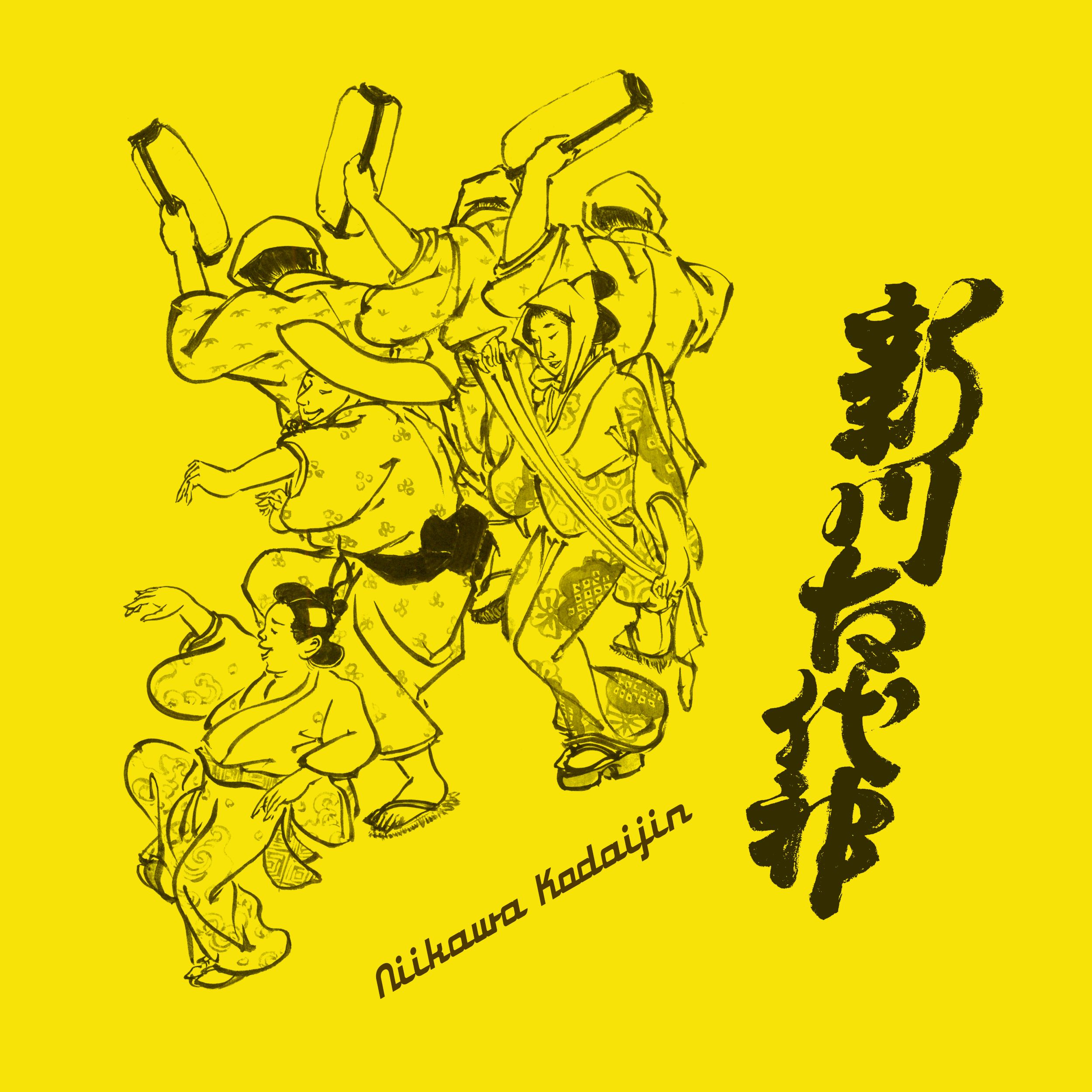

Movement becomes the real language of “Niikawa Kodaijin,” a release that carries centuries of cultural memory while sounding unexpectedly alive inside a contemporary alternative pop framework. Remon Nakanishi approaches the traditional Japanese folk song not as a museum object to preserve behind glass, but as a living structure capable of transformation, tension, and celebration. The result feels deeply rooted and strangely futuristic at the same time, a track that opens space rather than simply revisiting the past.
Built around the folk tradition of Toyama Prefecture, “Niikawa Kodaijin” gains remarkable energy through its rhythmic architecture. The percussion work immediately stands out, especially with Daniel Baeder’s drumming, which introduces grooves inspired by northeastern Brazilian music without flattening the original identity of the composition. Instead of forcing a fusion for novelty’s sake, the arrangement allows both traditions to breathe naturally together. The drums pulse with elasticity, constantly pushing forward while leaving enough air for the vocals and melodic phrases to unfold with clarity.
Gennnoshin Yasuda’s percussion adds another layer of physicality to the piece. The pandeiro patterns create subtle shifts inside the groove, making the track feel communal and almost processional. At moments, the rhythm section behaves less like accompaniment and more like a collective body moving in circles, which fits perfectly with the bon dance origins behind the song. That sensation of circular movement becomes central to the listening experience. Even during quieter passages, the rhythm never disappears entirely; it lingers underneath everything like a distant crowd continuing to dance somewhere beyond the speakers.
Nakanishi’s vocal performance carries a fascinating duality. His voice remains expressive and soaring, yet never theatrical in an exaggerated sense. There is warmth in the delivery, but also restraint. He understands how to preserve the narrative and emotional weight embedded in folk singing traditions while adapting them to a modern production context. Certain melodic phrases arrive almost conversationally before expanding into something more ceremonial. This constant fluctuation between intimacy and collective expression gives the track much of its emotional pull.
The arrangement itself deserves attention for the way it handles structure. One of the most striking aspects of “Niikawa Kodaijin” is the dramatic rhythmic transition in the middle section, where the song suddenly shifts gears without losing coherence. The beat change functions as a genuine turning point rather than a decorative trick. It transforms the atmosphere of the track, briefly destabilizing the listener before rebuilding momentum through layered percussion, bass movement, and vocal interplay. In lesser hands, such a transition could have felt fragmented; here, it becomes the emotional center of the composition.
Although the track is rooted heavily in percussion and acoustic instrumentation, the production subtly introduces atmospheric textures that widen its sonic landscape. The synth presence is understated but important. Instead of dominating the arrangement, electronic elements hover around the edges, creating a hazy backdrop that expands the emotional dimension of the piece. These textures add depth without interrupting the organic quality of the performance. The balance between analog warmth and synthetic ambience is handled carefully, allowing the song to remain immersive from beginning to end.
The contribution from Suzumeno Tears on backing vocals also enriches the atmosphere considerably. Their harmonies appear almost like echoes emerging from within the rhythm itself, reinforcing the communal spirit of the song. Combined with Kohsuke Nakamura’s clean but natural engineering work, the production maintains remarkable transparency. Every instrument occupies space without sounding isolated. The mix feels dense yet breathable, detailed without becoming overly polished.
What makes “Niikawa Kodaijin” particularly compelling is the absence of nostalgia as an aesthetic shortcut. Many contemporary reinterpretations of traditional music rely too heavily on reverence, becoming static in the process. Nakanishi avoids that trap entirely. His approach feels active, curious, and emotionally immediate. The song does not ask listeners to admire tradition from a distance; it invites them inside the movement of it.
As part of the ongoing series leading toward Nakanishi’s upcoming album, this release further confirms the uniqueness of his artistic direction. Few artists working within alternative pop today are exploring vernacular traditions with this level of imagination and sincerity. “Niikawa Kodaijin” succeeds because it trusts rhythm, atmosphere, and collective emotion more than spectacle. It is a sophisticated and vibrant release, one we are genuinely pleased to feature on our webzine.