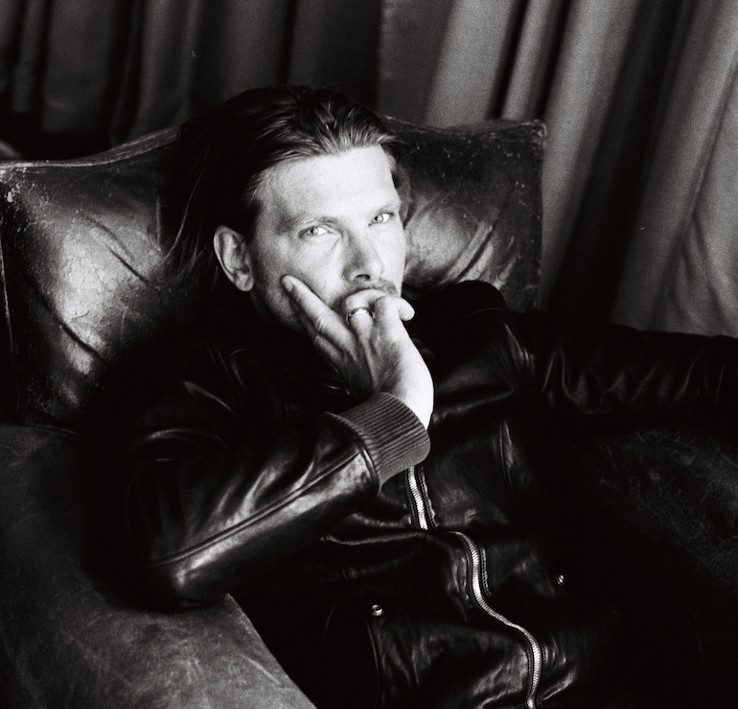

In Proverò a descriverti, Solidoro refines his alternative pop language into something quietly disarming, a song that feels lived-in rather than designed. The track doesn’t announce itself with grand gestures or obvious hooks; instead, it unfolds with a natural pace, trusting the listener to step inside its world without being led by the hand. From the first seconds, there is a sense of restraint that works as a statement of intent: every element seems placed to serve the emotional core rather than to impress.
Rhythm plays a crucial role in shaping that intimacy. The beat never pushes forward aggressively, nor does it dissolve into pure ambience. It sits in a liminal space, steady but slightly elastic, giving the impression of time stretching and contracting as memories do. There is a subtle pulse underneath, more felt than heard, that mirrors the uncertainty at the heart of the song. It’s a rhythm that allows the vocals to breathe, creating room for pauses, half-sentences, and unspoken thoughts. In this balance between movement and suspension, Solidoro finds a tempo that feels human, imperfect, and therefore credible.
The synth work follows the same philosophy of essentiality. Rather than dominating the arrangement, the synthesizers operate as an emotional contour, outlining the song’s inner landscape. Soft pads and restrained melodic figures appear and disappear, never lingering too long, as if aware of their own fragility. The timbre choices lean toward warmth, but with a slight grain that prevents them from becoming purely comforting. There is a constant dialogue between clarity and blur, a sonic equivalent of trying to describe a feeling that keeps shifting shape the moment it is put into words.
Atmospherically, Proverò a descriverti is built on proximity. The production feels close to the listener’s ear, almost confessional, yet it avoids the trap of oversharing. Urban references and domestic images emerge not as narrative anchors but as emotional coordinates, places that carry weight because of what has been imagined there. Streets and squares stop being physical locations and turn into inner rooms, populated by photographs, clothes left on a bed, traces of a life that could exist. The atmosphere remains suspended between presence and absence, never fully resolving into either.
At the center of the song lies a question that quietly shapes everything around it, one that speaks of aging together without demanding an answer. This uncertainty is not framed as weakness but as honesty. Solidoro’s writing deliberately avoids closure, choosing instead to remain in that moment before certainty arrives, or perhaps never does. The melody follows this logic, rising gently without ever reaching a definitive peak, as if aware that emotional truth often lives in what is left unfinished.
There is a refined melancholy throughout the track, but it is never heavy-handed. It doesn’t collapse into nostalgia or regret; rather, it acknowledges that some connections are meaningful precisely because they remain unresolved. The houses imagined and rebuilt within the song become a clear metaphor for relationships that are provisional, fragile, yet deeply formative. This is alternative pop that understands subtlety as a strength, not a limitation.
With Proverò a descriverti, Solidoro confirms a trajectory marked by subtraction and focus. His background in composition and years of collaboration surface in the careful handling of harmony and dynamics, but nothing feels academic or distant. The song breathes, hesitates, and lingers in the same way real emotions do. It is a release of notable quality, one that resonates not through excess but through attention, and it earns its place as a compelling chapter in Solidoro’s evolving artistic identity.