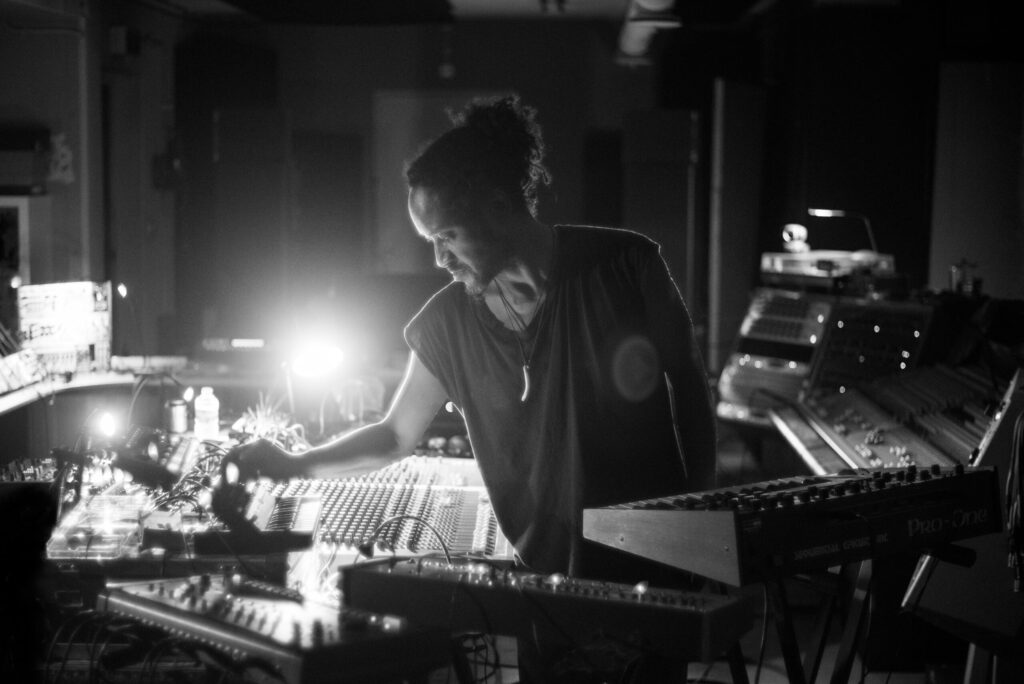

Abbiamo incontrato il duo torinese, Boston 168 in occasione del lancio della nuova label “Your Acid Mate” e dell’uscita dell’EP “Your Acid Mate 001”.
C’è una linea sottile che collega le fabbriche dismesse di Torino ai dancefloor di oggi. Una linea fatta di rumore, macchine e trasformazione. È da lì che prende forma il suono dei Boston 168, nome che rimanda a Via Boston 168, indirizzo del loro primo studio, dove Sergio Pace e Vincenzo Ferramosca hanno iniziato a produrre insieme. Negli anni, il duo ha assorbito e rielaborato la cultura underground della città, intrecciandola con diverse influenze, tra cui l’acid techno di Chicago, i suoni di Detroit, in un soundscape analogico e viscerale.
Il duo torinese ha costruito un’identità riconoscibile attraverso live set interamente hardware, acid lines ipnotiche e un approccio quasi “scientifico” alla produzione. Drum machine come la TR-909, sequencer e sintetizzatori come la TB-303 diventano strumenti vivi, centrali in un linguaggio sonoro che loro stessi descrivono come un vero e proprio laboratory of sound.
Con il lancio della loro nuova label “Your Acid Mate” e l’uscita dell’EP (quasi) omonimo “Your Acid Mate 001”, i Boston 168 entrano in un nuovo capitolo del loro percorso musicale, più indipendente, diretto e personale. L’etichetta nasce come estensione della loro visione sonora, spinta dal desiderio di esprimere la propria arte in modo più libero. Li abbiamo intervistati per parlare di questo ultimo traguardo, del loro legame con Torino e del processo creativo che definisce Boston 168.
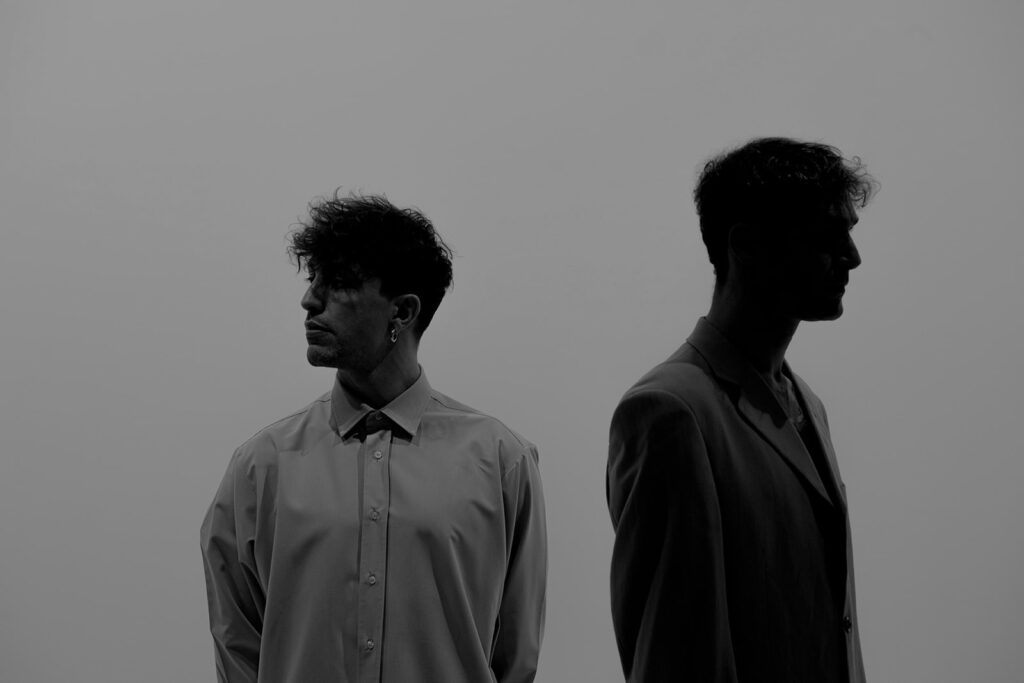
Ciao Sergio, ciao Vincenzo, benvenuti su Parkett Channel. Congratulazioni per l’ultima release ” Your Acid Mate 001″ e per il lancio dell’omonima label. Siete soddisfatti della ricezione che ha avuto l’EP?
Siamo molto felici della ricezione che ha avuto l’EP, è stato davvero incoraggiante vedere il supporto e l’interesse attorno al progetto. Non vediamo l’ora di continuare su questa strada e far crescere sempre di più questa nuova avventura con la label.
Vi ho scoperti con “Nightcall (Instrumental)” nel Bicep Guest Mix per BBC Radio 6 del 2020, che apriva proprio con la vostra traccia. Mi chiedevo: quanto sono importanti per voi i DJ set e i mix di altri artisti nel far circolare la vostra musica? E c’è stato qualche supporto o momento che ricordate come particolarmente significativo nella vostra carriera?
Grazie per averci fatto scoprire questo supporto dei Bicep, non sapevamo di quel mix! Per noi è un grande onore. I DJ set e i mix sono fondamentali per far circolare la musica, perché permettono ai brani di raggiungere contesti e pubblici diversi. Però dobbiamo dire che i veri supporter, per noi, restano i DJ emergenti: quelli che suonano nelle loro camere o per gli amici, proprio come facevamo noi all’inizio. Il loro supporto è spesso ancora più significativo, perché nasce da una scelta genuina e, nella maggior parte dei casi, acquistano la musica senza riceverla in promo.
Brani come “Jack Reborn” e “Circuit 8” virano verso l’industrial. Quanto pensate che Torino – una città così industriale, posti come Parco Dora, Mirafiori – abbia influenzato il vostro modo di pensare e fare musica?
Non tanto i luoghi in sé, ma il culto della musica underground che Torino custodiva ci influenza ancora oggi. Abbiamo avuto la fortuna di crescere musicalmente anche grazie a negozi di dischi come Ultrasuoni, che ci hanno aperto a nuove visioni e sonorità.
Restando su Torino, come si è evoluta la scena musicale, in particolare quella underground, da quando avete iniziato a suonare fino a oggi?
Per quanto riguarda la scena musicale, Torino è cambiata moltissimo. Ai nostri inizi era probabilmente la città migliore d’Italia per lo stile e i party underground: c’erano molti piccoli promoter e spazi dove esprimersi liberamente. Oggi, invece, molti club hanno chiuso e la scena è fortemente influenzata dal mercato, che predilige ciò che vende, spesso a scapito della qualità musicale. I giovani fanno meno cultura musicale propria, perché molto viene dettato dalle tendenze mainstream.
Torniamo alla vostra label “Your Acid Mate”. Cosa potete dirci su questo progetto? Come mai avete deciso di lanciare una vostra etichetta? Pubblicherete solo musica vostra oppure anche di altri artisti? E se sì, ci sarà un criterio preciso nella selezione delle release?
Il progetto della nostra label, Your Acid Mate, è nato da una volontà condivisa: avere uno spazio dove poter pubblicare la nostra musica senza dover aspettare mesi come spesso accade con le altre etichette. Volevamo una piattaforma libera, che ci permettesse di far uscire ciò che ci piace, quando ci piace.
Non pubblicheremo solo nostra musica: ad esempio, il secondo EP sarà di Titta. Non abbiamo un criterio fisso per le release, vogliamo semplicemente far uscire tutto ciò che sentiamo che rappresenti lo spirito di Your Acid Mate.
Il sound di Boston 168 è fortemente legato a macchine analogiche iconiche come TR-909 e TB-303. Cosa vi affascina ancora oggi dell’hardware rispetto alla produzione completamente digitale?
Ci affascina soprattutto il fatto di poter toccare gli strumenti: per noi è molto più divertente suonare un synth o una drum machine che lavorare solo in digitale. In studio ci sentiamo come due bambini con i loro giocattoli, e negli anni abbiamo ampliato la nostra collezione, che continuerà a crescere sempre di più 🙂
I vostri live set sono molto diversi da un DJ set tradizionale. Quanto cambia una performance di Boston 168 da una notte all’altra? E vi è mai capitato che un’improvvisazione live diventasse poi una traccia in studio?
Ci capita spesso di creare pezzi apposta per il live che, col tempo, diventano tracce in studio. A volte un’improvvisazione nata sul palco diventa il nucleo di un brano definitivo. Il nostro live è molto variabile: da una serata all’altra può cambiare tutto oppure restare simile, dipende dal soundcheck, dall’esecuzione e soprattutto dal pubblico, che spesso ci spinge in direzioni diverse.
In press release, su Bandcamp, descrivete Boston 168 come un vero e proprio “laboratory of sound”. Sembra quasi un processo fatto di chimica, ricerca e precisione. Come nasce solitamente una traccia di Boston 168 quando entrate in studio insieme?
Non abbiamo un metodo fisso: come dicevamo prima, il nostro obiettivo principale è divertirci con la musica e con le macchine. A volte lavoriamo anche separati in studio, per via degli impegni quotidiani, ma se uno di noi ha un’idea interessante la mette giù e poi insieme cerchiamo di svilupparla e migliorarla. Per noi, prima di tutto, fare musica è una passione.
Domanda finale: Who’s “My Acid Mate”? 🙂
“My Acid Mate” siete voi, che ci supportate e condividete il nostro viaggio sonoro. Senza di voi, la musica resterebbe solo un suono in una stanza vuota: siete voi a darle vita e colore.

ENGLISH VERSION
Inside Boston 168’s “Laboratory of Sound”: The Interview
We spoke with Boston 168 around the launch of their new label “Your Acid Mate” and the release of the EP “Your Acid Mate 001.”
There’s a thin line connecting the abandoned factories of Turin to today’s dancefloors. A line made of noise, machines and transformation. This is where the sound of Boston 168 takes shape — a name that traces back to Via Boston 168, the address of their first studio, where Sergio Pace and Vincenzo Ferramosca began producing together . Over the years, the duo has absorbed and reworked the city’s underground culture, weaving it together with a range of influences — including Chicago acid techno and Detroit’s sound — into a deeply analog and visceral soundscape.
The Turin-based duo has developed a distinctive identity through fully hardware-based live sets, hypnotic acid lines and an almost “scientific” approach to production. Drum machines such as the TR-909 and synthesizers like the TB-303 become living instruments, central to a sonic language they themselves describe as a true laboratory of sound.
With the launch of their new label “Your Acid Mate” and the release of the (almost) self-titled EP “Your Acid Mate 001,” Boston 168 step into a new chapter of their artistic identity — more independent, direct and personal. The label emerges as an extension of their sonic vision, driven by the desire to express themselves more freely. We spoke with them about this latest milestone, their connection to Turin, and the creative process that defines Boston 168.
Hello Sergio, hello Vincenzo, welcome to Parkett Channel. Congratulations on your latest release “Your Acid Mate 001” and on the launch of your label “Your Acid Mate“. Are you satisfied with the reception the EP has received?
We’re very happy with the reception the EP has had. It’s been really encouraging to see the support and interest around the project.
We can’t wait to keep moving in this direction and continue growing this new adventure with the label.
I discovered you through “Nightcall (Instrumental)” in the Bicep Guest Mix for BBC Radio 6 in 2020, which opened with your track. I was wondering: how important are DJ sets and mixes by other artists in helping your music circulate? And has there been any particular support or moment that you remember as especially significant in your career?
Thanks for pointing out that support from Bicep — we didn’t know about that mix! For us, it’s a great honor.
DJ sets and mixes are fundamental for circulating music, because they allow tracks to reach different contexts and audiences. That said, we have to say that our real supporters are emerging DJs — the ones playing in their bedrooms or for friends, just like we did at the beginning. Their support is often even more meaningful, because it comes from a genuine choice and, in most cases, they actually buy the music instead of receiving it as promo.
Tracks like “Jack Reborn” and “Circuit 8” lean towards an industrial sound. How much do you think Turin — a city with such a strong industrial identity, with places like Parco Dora or Mirafiori — has influenced the way you think about and make music?
Not so much the places themselves, but the culture of underground music that Turin preserved still influences us today. We were lucky to grow musically also thanks to record stores like Ultrasuoni, which opened us up to new visions and sounds.
How have you seen the Turin’s music scene — especially the underground one — change from when you first started playing until today?
Turin has changed a lot. When we started, it was probably the best city in Italy for style and underground parties: there were many small promoters and spaces where you could express yourself freely. Today, many clubs have closed, and the scene is heavily influenced by the market, which tends to favor what sells, often at the expense of musical quality. Younger generations build less of their own musical culture, because much of it is dictated by mainstream trends.
Let’s go back to your label Your Acid Mate. What can you tell us about it? Why did you decide to launch your own label? Will you only release your own music, or also that of other artists? And if so, will there be a specific criterion guiding the selection of releases?
The idea for our label, Your Acid Mate, came from a shared desire: to have a space where we can release our music without having to wait months, as often happens with other labels. We wanted a free platform that allows us to release what we like, when we like.
We won’t only release our own music; for example, the second EP will be by Titta. We don’t have a fixed selection criterion — we simply want to release everything that we feel represents the spirit of Your Acid Mate.
Your sound is strongly tied to iconic analog machines like the TR-909 and TB-303. What still fascinates you today about hardware compared to fully digital production?
What fascinates us most is the ability to physically interact with the instruments. For us, it’s much more fun to play a synth or a drum machine than to work only digitally. In the studio, we feel like two kids with their toys, and over the years we’ve expanded our collection — and it will keep growing.
Your live sets are very different from a traditional DJ set. How much does a Boston 168 performance change from one night to the next? And has it ever happened that a live improvisation later became a studio track?
It often happens that we create pieces specifically for the live set that, over time, become studio tracks. Sometimes an improvisation born on stage becomes the core of a final track.
Our live set is very variable: from one night to another, everything can change or stay similar. It depends on the soundcheck, the execution, and above all the crowd, which often pushes us in different directions.
In press releases and on Bandcamp you describe Boston 168 as a true “laboratory of sound.” It almost sounds like a process involving chemistry, research and precision. When you enter the studio together, how does a Boston 168 track usually come to life?
We don’t have a fixed method. As we said before, our main goal is to have fun with music and with the machines. Sometimes we also work separately in the studio due to daily commitments, but if one of us has an interesting idea, they sketch it out and then together we try to develop and improve it. For us, making music is first and foremost a passion.
Final question: Who’s “My Acid Mate”?
“My Acid Mate” is you — the people who support us and share our sonic journey. Without you, music would just remain a sound in an empty room: it’s you who give it life and color.