

Shaleen è la nostra ospite di oggi in occasione della sua ultima release, “Treatise On A Narcissist EP”, pubblicata lo scorso 11 marzo su SpellBound. Leggi l’ intervista.
Shaleen rappresenta sicuramente una delle voci più autentiche della scena techno europe. Nei suoi set in vinile in cui la modulazione analogica è protagonista vi è un incontro tra corpo, emozione e tecnica. Il suo linguaggio sonoro ha attraversato club iconici come Tresor, Tresor West, Radion, Fuse e Distillery.
Fondatrice di progetti culturali come SpellBound e ideatrice della serie Surd, Shaleen unisce ricerca sonora e sperimentazione, ridefinendo il modo in cui la musica elettronica dialoga con identità e comunità. Il suo ultimo lavoro, “Treatise On A Narcissist”, trasporta l’ascoltatore nel mito di Eco e Narciso, traducendo tensioni emotive e dinamiche relazionali in suoni concreti.
Le quattro tracce originali fondono bassline potenti, percussioni dettagliate e atmosfere sospese, mentre i remix di Fiedel, Mareena, Rosati e JakoJako esplorano nuovi territori sonori, dalla techno berlinese più cruda a interpretazioni ipnotiche e stratificate. Il progetto si completa con artwork e video, creando un universo immersivo dove musica, narrazione e immaginazione si intrecciano in un’unica esperienza sensoriale.
Nell’intervista, Shaleen ci accompagna nel cuore della sua ricerca artistica, raccontando come abbia trasformato esperienze personali e traumi emotivi in musica, il suo rapporto profondo con strumenti analogici e modulari, e l’importanza di Tresor West e della scena di Berlino nello sviluppo della sua identità sonora e del suo percorso creativo. Buona lettura!
Ciao Shaleen, benvenuta su Parkett! In che modo trasformare il trauma in musica ha cambiato sia il tuo processo di produzione che il tuo rapporto con la pista da ballo?
La pista da ballo è sempre stata il mio spazio di guarigione, un luogo sicuro per la comprensione, la crescita e la consapevolezza di sé. Attraverso la cultura club ho imparato molto su chi sono, ho superato paure, convinzioni limitanti e dubbi, e ho anche iniziato a elaborare traumi dell’infanzia. Tutto questo è avvenuto sia dietro che davanti alla consolle. Il mio ultimo EP, “Treatise On A Narcissist”, affronta una delle esperienze più complesse che abbia vissuto. È stato difficile da elaborare, ma mi ha anche insegnato molto: come amarmi meglio, stabilire confini sani, fidarmi del mio intuito e andarmene quando qualcosa non è giusto.
Ho scritto l’EP dopo aver lasciato la relazione più intensa e tossica della mia vita. Sono stati quasi tre anni di picchi altissimi seguiti dai momenti più bassi. Guardando indietro, non vorrei perdere l’insegnamento, ma allo stesso tempo non vorrei mai più vivere un attaccamento così tossico.
Quando finalmente sono uscita da quel ciclo e ho capito cosa stava succedendo, mi sono chiusa in studio. Il dolore era travolgente e sapevo che l’unico modo per elaborarlo era trasformarlo in arte. Di solito faccio fatica a finire le tracce, ma questo EP è nato in un flusso continuo — sembrava che la musica si scrivesse da sola. Quando i brani erano pronti, i titoli mi sono venuti subito in mente.
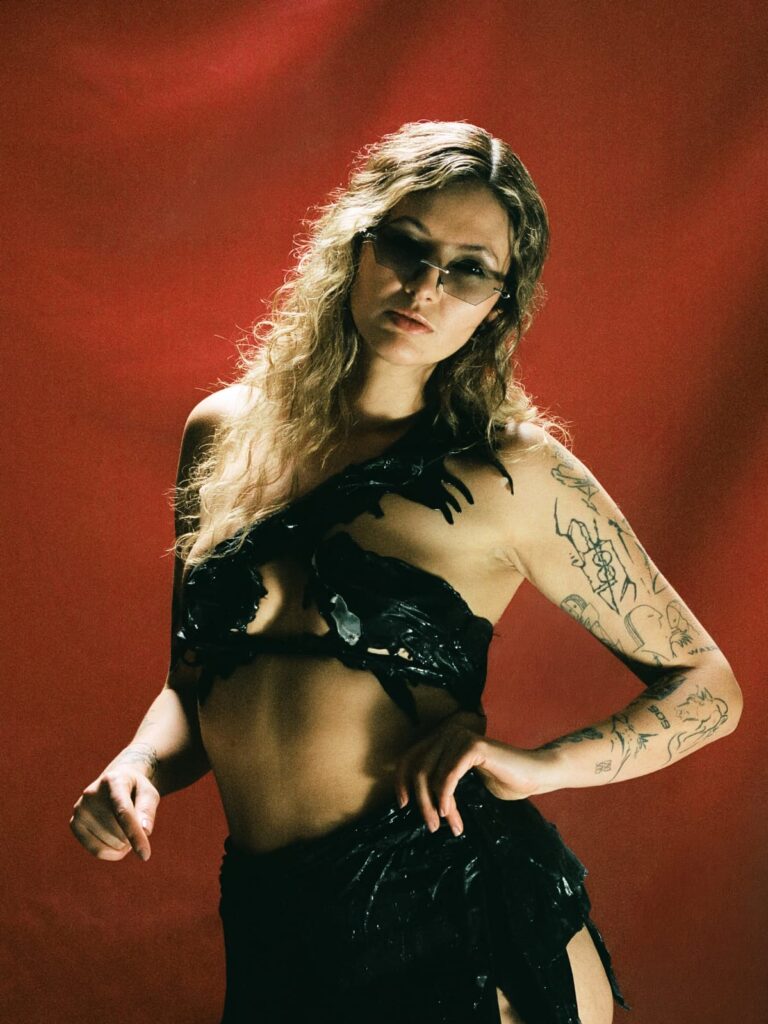
L’EP si ispira al mito di Eco e Narciso. Come hai tradotto la sua narrazione e il suo simbolismo in sound design, ritmo e struttura musicale?
A dire il vero, non penso troppo quando faccio musica. Il mio insegnante di yoga mi ha detto una volta che la vera intelligenza nasce negli spazi tra i pensieri, nello stato meditativo in cui può parlare l’anima. È lì che cerco di attingere quando creo musica.
I brani sono semplicemente venuti da me, e solo dopo ho iniziato a collegare i punti. Mi sono resa conto che riflettevano la storia che avevo appena vissuto. Narciso rappresenta la persona che affoga nella propria immagine — qualcuno che sembra amarsi ma in realtà non lo fa. Eco rappresenta la ninfa che ama l’altro più di se stessa, ripetendo le parole dell’altro e perdendo la propria voce.
“Fused By Desire” riflette l’essere intrappolati in un’illusione, due coppe vuote non possono riempirsi a vicenda. Dal punto di vista sonoro, i brani rispecchiano queste emozioni. “Treatise On A Narcissist,” ha una cassa dura e una linea di basso incalzante che risultano pesanti e quasi manipolative, come essere trascinati dentro un’illusione. “Nymphomaniac” è soffocante, intensa e molto fisica. “Fused By Desire” ha un’atmosfera più sognante, come la fantasia e la speranza che qualcosa di impossibile possa comunque funzionare.
L’uso di hardware analogico e sistemi modulari dà al disco una qualità grezza e fisica. Quanto sono state importanti l’imperfezione e l’imprevedibilità nel trasmettere il peso emotivo di questo progetto?
In realtà ho riflettuto molto sul perfezionismo ultimamente. Ho imparato davvero ad accettare l’imperfezione quando sono passata dal digitale al vinile circa cinque o sei anni fa. Suonare dischi mi ha fatto capire quanto fosse più naturale per me. Il mio cervello ADHD ama essere costantemente stimolato, ma mi ha anche insegnato a lasciar andare la perfezione.
La stessa cosa è successa quando ho iniziato a produrre con strumenti analogici. Ho imparato facendo, e a un certo punto ho capito che se avessi cercato di rendere tutto perfetto non avrei mai finito nulla. Ma cos’è davvero la perfezione?
A volte gli errori sono la parte più bella. Rendono la musica umana. Le imperfezioni e le piccole crepe sono esattamente il punto da cui entra la luce.
I quattro remix portano i brani originali in direzioni sonore molto diverse. Cosa cercavi nella scelta di JakoJako, Fiedel, Rosati e Mareena, e qualcuna delle reinterpretazioni ti ha sorpresa?
Tutte le reinterpretazioni mi hanno sorpresa nel modo migliore. Ho chiesto ad alcuni dei miei producer e DJ preferiti di remixare i brani, quindi mi aspettavo già qualcosa di grande ma il risultato ha superato le mie aspettative.
Ogni remix ha una propria identità pur rimanendo connesso al materiale originale. Amo la varietà e le diverse prospettive che hanno portato al disco. Ho appena ricevuto il test pressing e non vedo l’ora di provare i brani stasera al Tresor West.
Il remix di Fiedel è stato descritto come una masterclass di techno berlinese cruda e funzionale. Cosa rappresenta oggi per te il “suono di Berlino” e come vedi il tuo lavoro in relazione a questa eredità?
Personalmente, non mi piace inserire la musica in nuove tendenze o sottogeneri, sembra di chiuderla in piccole scatole. La musica è troppo complessa e potente per essere limitata così. Ma se dovessi descrivere cosa significa per me il suono techno berlinese, direi qualcosa di grezzo, elegante, ritmico, groove e minimalista, sempre con una forte attenzione alla qualità.
Allo stesso tempo, penso che la techno non debba essere confusa con l’EDM o con interpretazioni molto commerciali e “plastiche” che a volte vengono suonate solo per grandi masse.
La techno porta con sé una cultura più profonda, integrità e uno standard qualitativo molto alto.
Come resident del Tresor, uno spazio con una storia così potente, in che modo quell’ambiente influenza il tuo approccio alla produzione e alla spinta dei tuoi limiti artistici?
Il Tresor mi ha dato lo spazio per espandere il mio lavoro in una dimensione completamente nuova. I numerosi closing set che ho suonato lì mi hanno resa una DJ più forte e mi hanno spinta oltre i miei limiti.
Sono profondamente grata a Paul per aver creduto in me e per avermi dato queste opportunità. Le lezioni che ho imparato in quel basement sono inestimabili e resteranno con me per sempre.
Anche il Tresor West mi ha dato una fiducia incredibile. Ho persino suonato il mio set più lungo lì dopo aver proposto l’idea un po’ folle di un after senza orario di fine. Ho suonato quasi dieci ore in vinile finché non ho letteralmente finito i dischi. Sono molto grata a Sinam per aver reso possibile tutto questo.
I tuoi DJ set solo in vinile e le tue future performance live sembrano due lati complementari della tua identità artistica. Come immagini che “Treatise On A Narcissist” evolverà in un contesto live?
A dire il vero, mi sono sempre vista leggermente più come DJ che come producer. Suono nei club da più di dieci anni e in questo tempo ho acquisito molta esperienza nel guidare un dancefloor.
Leggere il pubblico e capire di cosa ha bisogno è il mio mestiere. Amo lo scambio di energia,testare diverse direzioni, osservare come reagisce la sala e poi decidere insieme dove andare.
La produzione è molto diversa. È estremamente personale: sono io e le macchine chiuse in studio. A volte fluisce, a volte no. Quando funziona, è come se diventassi parte della catena del mio setup analogico,le macchine parlano e io guido la direzione.
Quei momenti in cui la musica sembra scriversi da sola sono magici. Non succedono ogni giorno, e dopo c’è comunque molto lavoro di rifinitura. Ma sono quei momenti che continuo a cercare anche se a volte ci vuole un’eternità per finire un brano.

ENGLISH
Shaleen is our guest today on the occasion of her latest release, “Treatise On A Narcissist EP”, which was released on 11 March via SpellBound. Read the full interview.
Shaleen is undoubtedly one of the most authentic voices in the European techno scene. In her vinyl sets, where analog modulation takes centre stage, body, emotion, and technique converge to create a unique sonic language. Her music has resonated through iconic clubs such as Tresor, Tresor West, Radion, Fuse, and Distillery.As
As the founder of cultural projects like SpellBound and the creator of the Surd series, Shaleen combines sonic research with experimentation, redefining the way electronic music engages with identity and community. Her latest work, “Treatise On A Narcissist”, immerses the listener in the myth of Echo and Narcissus, translating emotional tensions and relational dynamics into tangible, expressive sounds.
The four original tracks blend powerful basslines, intricate percussion, and suspended, immersive atmospheres, while the remixes by Fiedel, Mareena, Rosati, and JakoJako explore new sonic territories, ranging from raw Berlin techno to hypnotic, layered reinterpretations. The project is completed with accompanying artwork and videos, creating an immersive universe where music, narrative, and imagination intertwine into a single sensory experience.
In the interview, Shaleen takes us to the heart of her artistic journey, sharing how she has transformed personal experiences and emotional traumas into music, her deep relationship with analog and modular instruments, and the importance of Tresor West and the Berlin scene in shaping her sonic identity and creative path. Enjoy the read!
Hi Shaleen, welcome to Parkett!
How did transforming trauma into music reshape both your production process and your relationship with the dancefloor?
The dancefloor has always been my healing space,a safe place for understanding, growth and self- awareness. Through club culture I learned a lot about who I am, overcame fears, limiting beliefs and doubts, and also started to process childhood trauma. All of this happened both behind and in front of the DJ booth. My latest EP, “Treatise On A Narcisisst“, deals with one of the most complex experiences I’ve had. It was difficult to process, but it also taught me a lot, how to love myself better, set healthy boundaries, trust my intuition and walk away when something is not right.
I wrote the EP after leaving the most intense and toxic relationship of my life. It was almost three years of highest highs followed by the lowest lows. Looking back, I wouldn’t want to miss the lesson. But at the same time I wouldn’t want to experience this kind of toxic attachment again.
When I finally got out of that cycle and understood what had been happening, I locked myself in the studio. The heartbreak was overwhelming and I knew the only way to process it was to turn it into art. Normally I struggle to finish tracks, but this EP flowed in one continuous process — it felt like the music was writing itself. When the tracks were done, the titles came to me immediately.
The EP draws inspiration from the myth of Echo and Narcissus. How did you translate its narrative and symbolism into sound design, rhythm and musical structure?
To be honest, I don’t think too much when I’m making music. My yoga teacher once told me that real intelligence comes from the gaps between thoughts,the meditative state where the soul can speak. That’s usually where I’m trying to get my music from.
The tracks simply flowed out of me, and only later I started connecting the dots. I realized they reflected the story I had just experienced. Narcissus represents the person drowning in his own reflection — someone who seems to love himself but actually doesn’t. Echo represents the nymph who loves the other person more than themselves, repeating the other’s words and losing their own voice.
Fused By Desire, reflects being trapped in an illusion — two empty cups can’t fill each other.
Sonically the tracks mirror these emotions. Treatise On A Narcissist has a harsh kick and rolling bassline that feels heavy and almost manipulative, like being pulled into the illusion. Nymphomaniac feels drowning, intense and very physical. Fused By Desire carries a more dreamy atmosphere — like the fantasy and hope that something impossible might still work out at the end.
The use of analog hardware and modular systems gives the record a raw, physical quality. How important was imperfection and unpredictability in conveying the emotional weight of this project?
I’ve actually been thinking a lot about perfectionism recently. I really learned to embrace imperfection when I switched from playing digital to vinyl about five or six years ago. Playing records showed me how much more natural it felt for me. My ADHD brain enjoys being constantly engaged, but it also taught me to let go of perfection.
The same thing happened when I started producing with analog gear. I learned everything by doing, and at some point I realized that if I tried to make everything perfect, I would never finish anything. But what is perfect anyway?
Sometimes the mistakes are the most beautiful part. They make the music human. The imperfections — the little cracks — are exactly where the light gets in.

The four remixes take the original tracks into very different sonic directions. What were you looking for when selecting JakoJako, Fiedel, Rosati and Mareena, and did any of the reinterpretations surprise you?
All of the reinterpretations surprised me in the best way. I asked some of my favorite producers and DJs to remix the tracks, so I already expected something great — but the results exceeded my expectations.
Each remix has its own unique identity while still connecting to the original material. I love the variety and the different perspectives they brought to the record. I just received the test pressing and I can’t wait to try the tracks tonight at Tresor West.
Fiedel’s remix has been described as a masterclass in raw, functional Berlin techno. What does the “Berlin sound” represent to you today, and how do you see your work engaging with that legacy?
Personally, I don’t like putting music into this new trends on sub genres, it feels like putting it into small boxes. Music is too complex and powerful to limit it that way. But if I had to describe what the Berlin techno sound means to me, it’s something raw, elegant, rhythmic, groovy and minimalistic — always with a strong focus on quality.
At the same time, I think techno shouldn’t be confused with EDM or very commercial, plastic interpretations that are sometimes played purely for big audiences.
Techno carries a deeper culture and integrity and high bar in terms of quality.
As a Tresor resident, a space with such a powerful history, how does that environment influence the way you approach producing new music and pushing your artistic boundaries?
Tresor gave me the space to expand my craft in a completely new dimension. The many closing sets I played there shaped me into a stronger DJ and pushed me to grow beyond my limits.
I’m deeply grateful to Paul for believing in me and giving me these opportunities. The lessons I learned in that basement are priceless and will stay with me forever.

Tresor West has also given me an incredible amount of trust. I even played my longest set there — after suggesting the slightly crazy idea of an open-ended afterhour. I ended up playing almost ten hours of vinyl until I literally ran out of records. I’m very grateful to Sinam for making that happen.
Your vinyl-only DJ sets and your upcoming live performances feel like two complementary sides of your artistic identity. How do you envision “Treatise On A Narcissist” evolving when translated into a live context?
To be honest, I’ve always seen myself slightly more as a DJ than a producer. I’ve been playing in clubs for more than ten years, and during that time I gained a lot of experience guiding a dancefloor.
Reading the crowd and feeling what people need is my craft. I love the energy exchange — teasing different directions, checking how the room reacts, and then deciding together where the journey goes.
Producing is very different. It’s extremely personal: just me and the machines locked in the studio. Sometimes it flows, sometimes it doesn’t. When it works, it feels like I become part of the chain of my analog gear — the machines speak and I guide the direction.
Those moments when the music seems to write itself are magical. They don’t happen every day tho, and after that it’s still a lot of fine-tuning and work. But those are the moments I’m always chasing — even if I sometimes takes ages to finally finish a track.