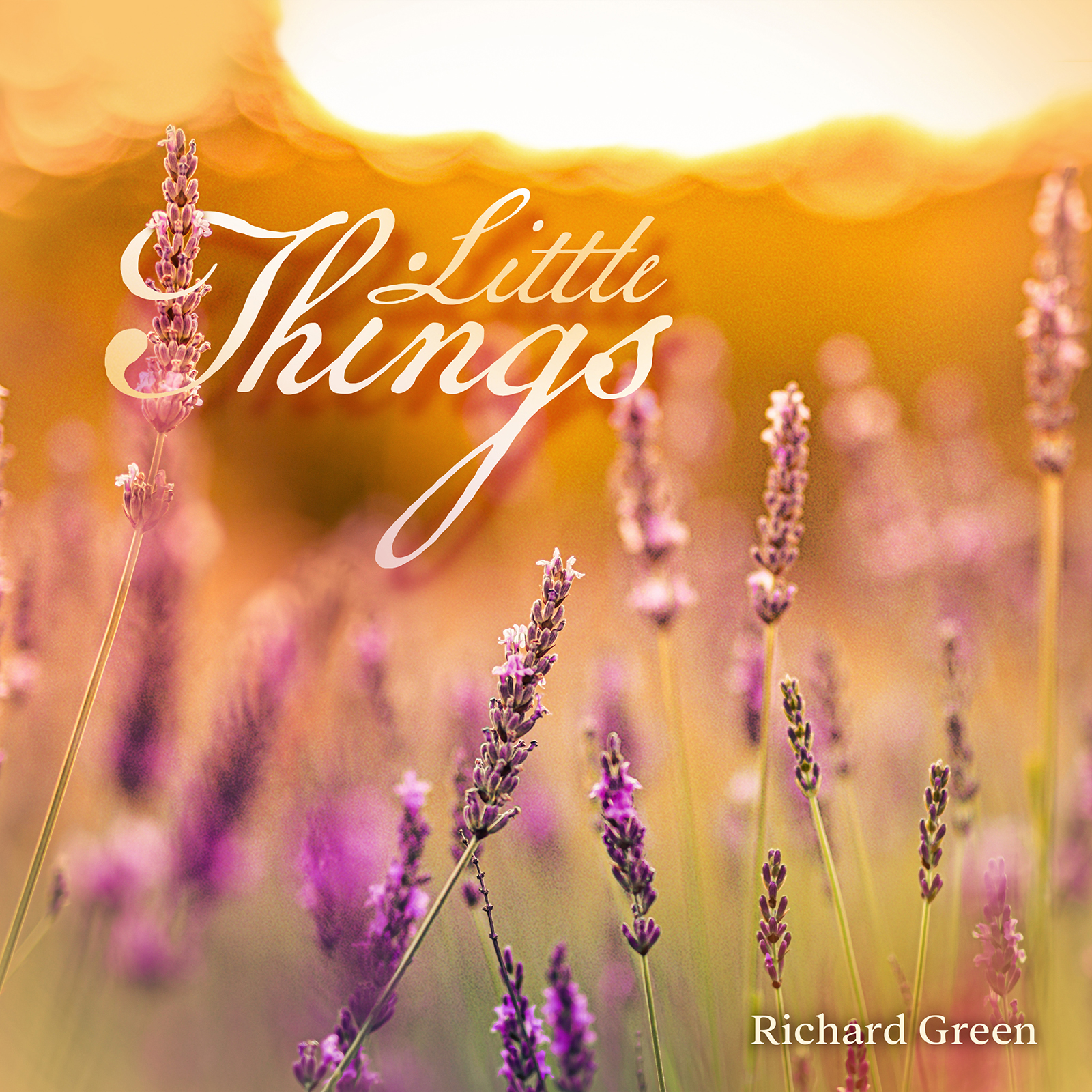

A quiet sense of intention runs through “Little Things,” the latest single from Richard Green, shaping an experience that feels both intimate and carefully constructed. Rooted in a blend of EDM, chillstep, and deep house, the track doesn’t chase immediacy or club-driven urgency; instead, it unfolds gradually, almost hesitantly, as if inviting the listener to lean in rather than be overwhelmed.
The rhythmic foundation is one of the most compelling aspects here. Built on a steady, mid-tempo pulse, the beat avoids excessive complexity, yet it never feels static. Subtle percussive variations—soft hi-hat shuffles, restrained kick patterns, and delicate transitions—create a sense of movement that carries the track forward without drawing too much attention to itself. There’s a patience in the groove, a willingness to let each element breathe. This restraint ultimately becomes its strength, allowing the emotional core of the composition to emerge more clearly.
Layered above this rhythmic bed, the synth work reveals a nuanced approach to texture. Rather than relying on sharp, festival-ready leads, Green opts for warm, rounded tones that drift in and out of focus. Pads expand like slow exhalations, filling the space with a kind of soft luminosity, while the melodic lines remain understated but memorable. The choice of sound design leans heavily into atmosphere, favoring depth over brightness. At times, the synths feel almost tactile, as if they could be reached out and touched.
A particularly striking feature is the integration of violin, recorded with a professional musician and woven seamlessly into the electronic framework. It doesn’t sit on top of the arrangement as a decorative layer; instead, it becomes part of the track’s emotional language. The phrasing carries a human fragility that contrasts with the precision of the digital elements, creating a dialogue between organic and synthetic textures. This interplay gives “Little Things” a distinctive identity, setting it apart from more conventional productions within the same genre space.
Atmospherically, the track leans toward introspection. There’s a gentle melancholia present, but it never tips into heaviness. Instead, it feels reflective—like revisiting a memory that is both comforting and slightly out of reach. This emotional ambiguity works in the track’s favor, allowing listeners to project their own experiences onto the music. The absence of overt lyrical guidance (or the minimal use of it) further enhances this openness, making the piece feel personal without being prescriptive.
Conceptually, “Little Things” revolves around the idea of appreciating life’s quieter moments, a theme that could easily become sentimental in less careful hands. Here, however, the message is conveyed more through mood than declaration. The pacing, the tonal choices, and the gradual build all contribute to a sense of pause—an invitation to step back from the noise of everyday life and focus on something more essential. It’s not a dramatic statement; it’s a gentle reminder, delivered with sincerity.
Green’s background—spanning years in London and a return to Italy—seems to echo within the track’s duality. There’s a certain cosmopolitan polish in the production, paired with a more personal, almost nostalgic undercurrent. This balance reflects an artist who is comfortable moving between different musical worlds, and “Little Things” benefits from that versatility.
What stands out most, perhaps, is the track’s cohesion. Every element, from the rhythm to the melodic structure to the textural layering, feels aligned with a clear artistic vision. Nothing appears excessive or out of place. It’s a piece that understands its own boundaries and operates confidently within them.
As a release, “Little Things” represents a high-quality addition to the contemporary electronic landscape—thoughtful, well-crafted, and emotionally resonant without being overstated. It’s the kind of track that lingers quietly after it ends, not demanding attention, but earning it over time.