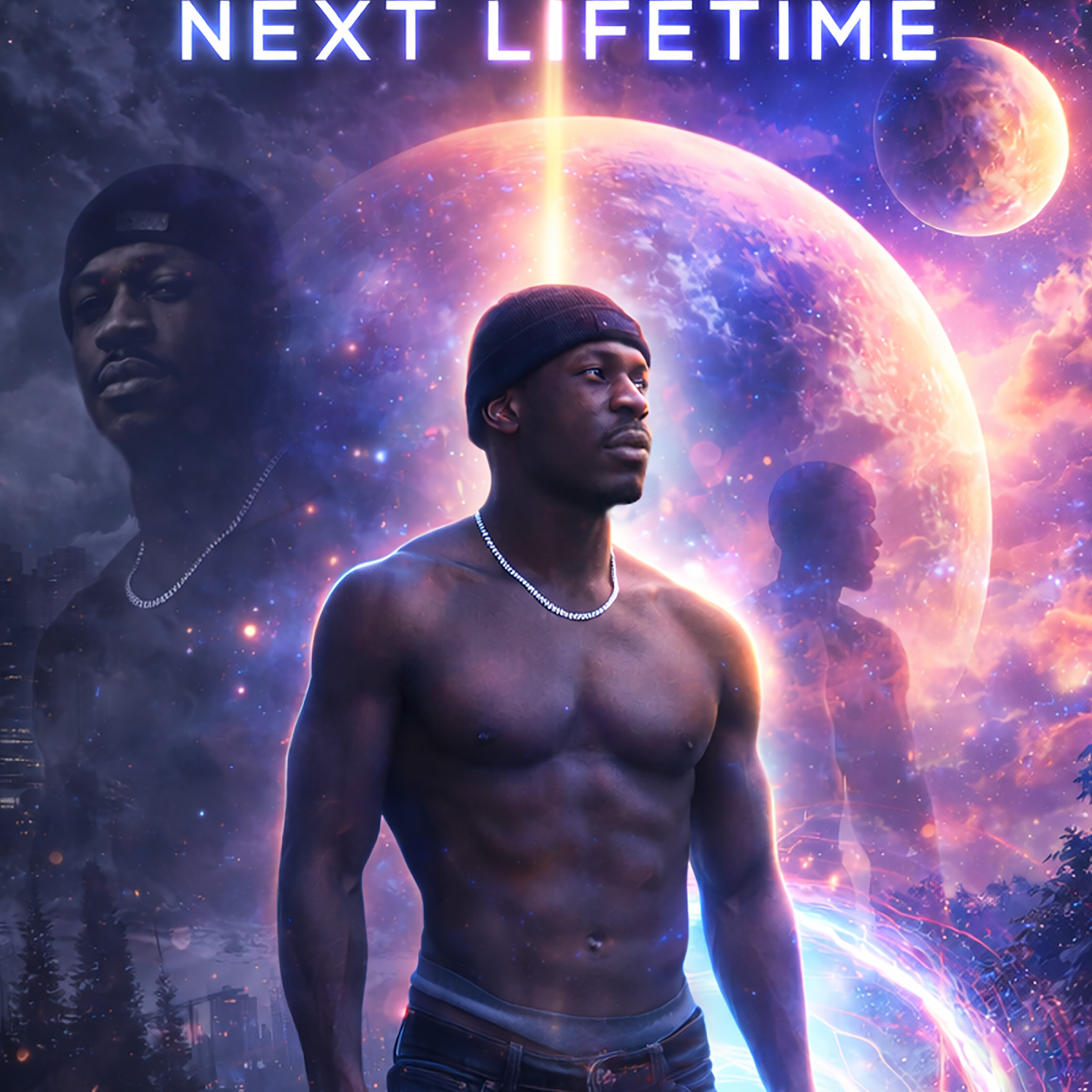

A sense of suspended motion defines Next Lifetime, the latest offering from Trust Tate, a track that lingers between reflection and release without ever settling into a predictable emotional register. Rooted in a synth pop framework yet stretching beyond its conventional borders, the song reveals an artist increasingly comfortable with contrast—both sonically and thematically.
From the outset, the rhythmic structure avoids anything overly rigid. Instead of leaning on a straightforward pop grid, the beat feels slightly elastic, allowing the cadence of the vocal delivery to dictate momentum. The percussion is crisp but not intrusive, occupying a carefully measured space within the mix. Subtle syncopations emerge as the track unfolds, creating a push-and-pull sensation that mirrors the internal conflict embedded in the lyrics. This rhythmic looseness is not accidental; it gives the impression of thought in motion, as if each bar is negotiating its own emotional weight.
The synth work deserves particular attention. Airy pads stretch across the stereo field, creating a floating backdrop that feels both intimate and expansive. Rather than relying on dense layering, the production opts for restraint. Each synthesizer line appears deliberately placed, often fading in and out with a kind of quiet confidence. The tonal palette leans toward cool, slightly melancholic textures—soft digital hues that evoke distance rather than immediacy. Yet, there are moments where sharper synth accents cut through, adding definition and tension just when the arrangement risks becoming too diffuse.
This interplay between softness and edge becomes one of the track’s defining characteristics. The atmosphere, while undeniably reflective, is never passive. It carries a low-burning intensity, sustained through careful engineering choices that prioritize clarity without stripping away texture. The mix allows the instrumental to breathe, leaving enough negative space for the vocals to occupy center stage without overwhelming the surrounding elements.
Trust Tate’s vocal performance operates within this environment with notable precision. His delivery balances controlled aggression and melodic fluidity, shifting seamlessly between rap phrasing and more sung passages. There’s a deliberate tension in how the vocals sit against the instrumental—at times cutting sharply through the mix, at others blending into the atmospheric layers. This dynamic placement reinforces the emotional narrative, emphasizing moments of confrontation while softening passages of acceptance.
Lyrically, Next Lifetime navigates the complex terrain of endings—specifically, the realization that emotional investment does not always translate into permanence. The writing avoids overt dramatization, instead favoring a more measured introspection. Lines unfold with a sense of inevitability, as though the conclusion has been reached long before the song begins. This restraint enhances the impact of the chorus, which lands with a quiet finality rather than explosive release. It feels conclusive, but not entirely resolved—an important distinction that adds depth to the overall narrative.
The production, handled with a clear understanding of space and balance, plays a crucial role in amplifying these themes. There’s an intentional contrast between the lightness of the synth textures and the weight of the subject matter. This duality creates a listening experience that feels immersive without becoming overwhelming. Engineering ensures that every element—percussion, synth, vocal—retains its own identity while contributing to a cohesive whole.
Contextually, the track marks a significant step in Trust Tate’s artistic evolution. Drawing from a background that spans hip-hop, production, and audio engineering, he brings a multidimensional perspective to the synth pop genre. The result is a hybrid sound that resists easy categorization, blending introspective lyricism with a polished yet emotionally resonant sonic landscape.
Next Lifetime stands as a high-quality release that demonstrates both technical control and artistic maturity. Its strength lies not in overt innovation but in the careful calibration of its elements—the rhythm that subtly shifts, the synths that hover and recede, the atmosphere that holds everything together without collapsing into uniformity. It’s precisely this balance that makes the track worthy of attention, and one we are genuinely pleased to feature within our editorial space.