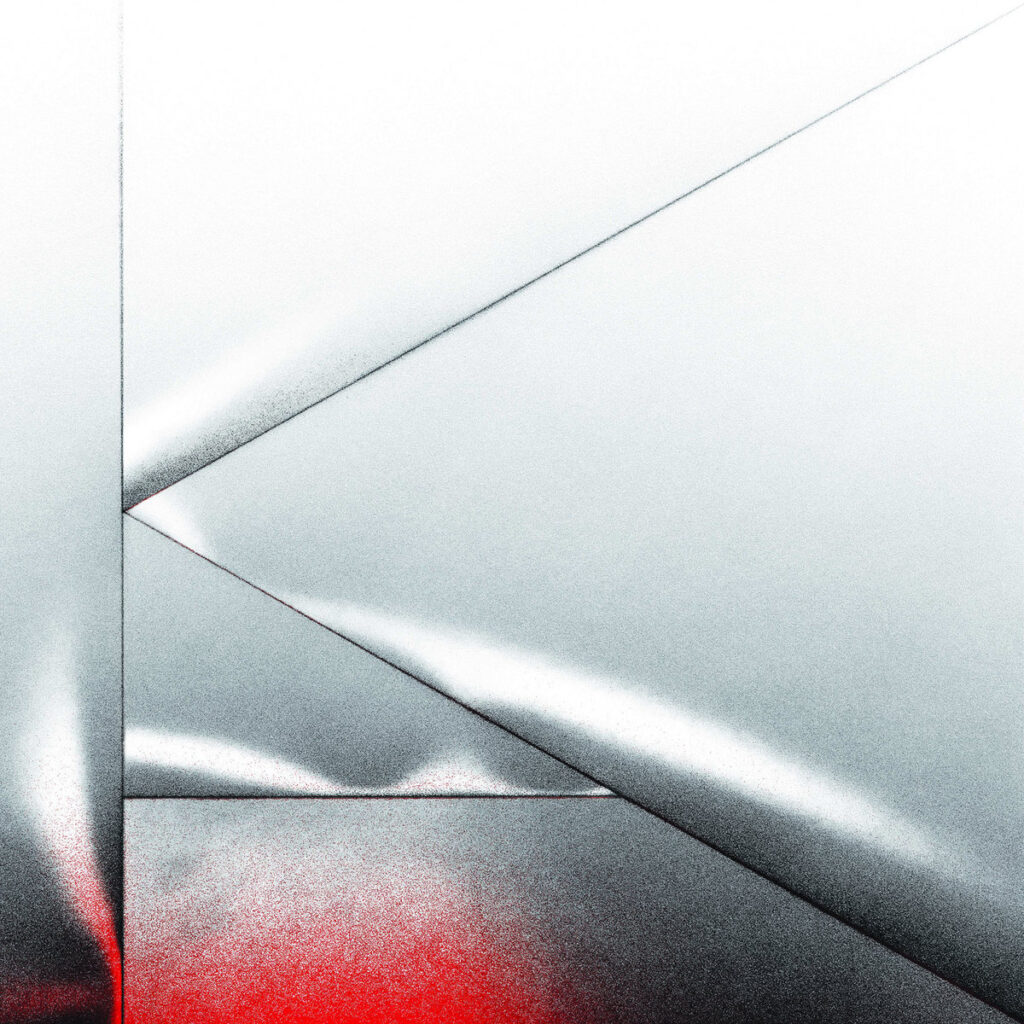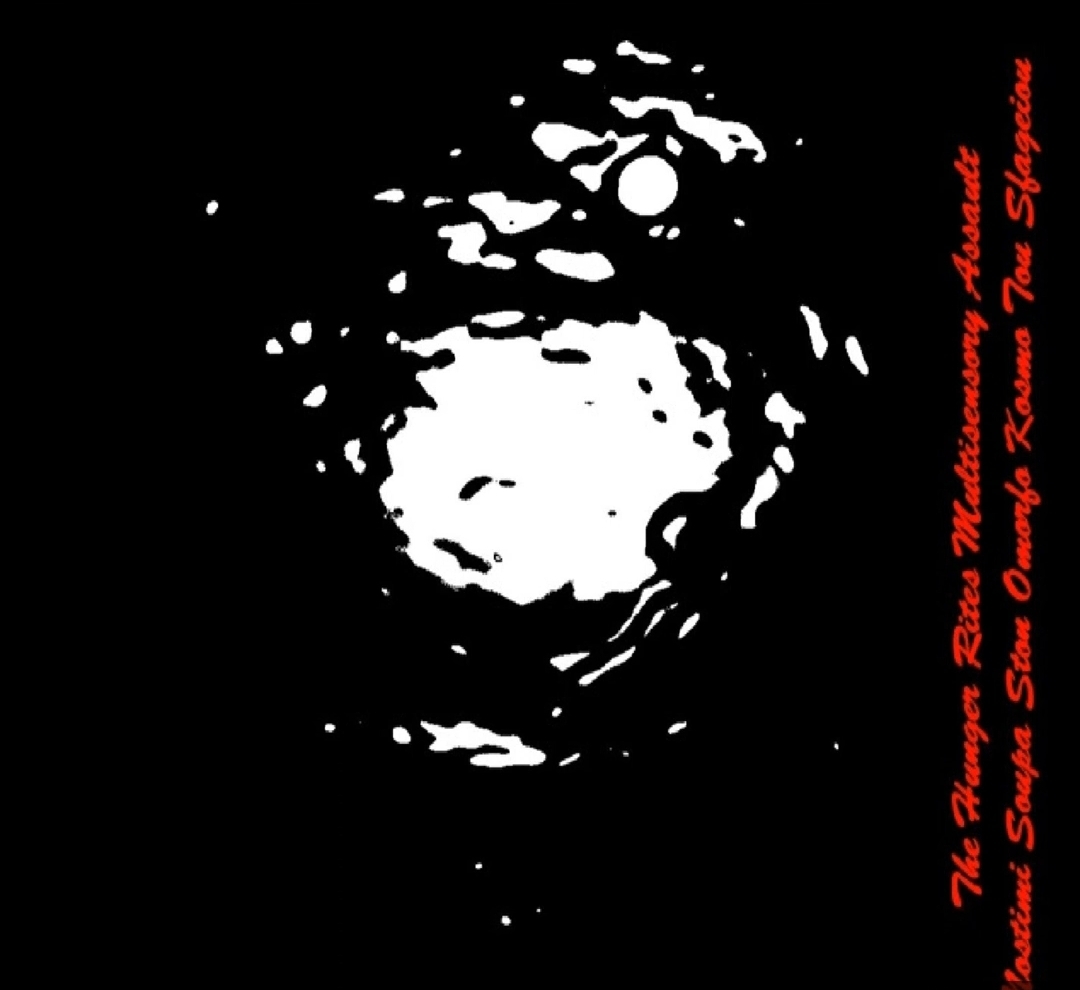

Emerging from the underground fringes of Brussels, Nostimi Soupa Ston Omorfo Kosmo Tou Sfageiou delivers a record that feels less like a conventional album and more like a prolonged psychological episode. The Hunger Rites Multisensory Attack operates in the uneasy territory between dark wave, ritual electronics, industrial minimalism, and immersive sound performance, constructing an atmosphere that constantly shifts between restraint and collapse. Released in late 2025, the project refuses easy categorisation, and that resistance becomes one of its defining strengths.
From the opening passages, the rhythmic architecture immediately establishes a sense of physical unease. The percussion rarely behaves in a straightforward electronic manner. Instead of relying on club-oriented momentum, the beats pulse with an almost biological irregularity, as though the tracks are breathing under pressure. Certain sequences drag deliberately behind the tempo, while others suddenly tighten into mechanical repetition. That unstable pacing gives the album a ritualistic quality, reinforcing the artist’s focus on endurance rather than polished accessibility. It feels intentional, though never overdesigned.
The synth work deserves particular attention because it carries much of the emotional tension throughout the release. Layers of analog textures drift through the compositions like smoke trapped inside abandoned corridors. Some passages evoke the cold theatricality of classic dark wave, while others move closer to experimental ambient electronics, filled with fractured drones and distant melodic fragments. The production avoids excessive clarity; frequencies blur together in ways that create density rather than separation. Occasionally, melodies appear almost by accident, surfacing briefly before dissolving back into noise and repetition.
What makes The Hunger Rites Multisensory Attack compelling is the way atmosphere dominates structure. Many contemporary dark electronic releases aim for cinematic grandeur, but NSSOKTS chooses discomfort instead. Silence, low-volume passages, strained vocal deliveries, and extended repetition become compositional tools. The result can feel claustrophobic at times, yet strangely hypnotic. Listening closely reveals how much emphasis is placed on physical sensation: breaths remain audible, vocal strain is preserved, and the surrounding sonic environment often feels deliberately suffocating. Those production decisions align perfectly with the album’s conceptual framework surrounding deprivation, overload, and bodily transformation.
Vocally, the record avoids traditional performance techniques. The delivery fluctuates between spoken incantation, exhausted whisper, and fragmented chant. There is little interest in perfection here. Cracks, hesitations, and raw breathing are left exposed inside the mix, giving the material a human fragility that contrasts sharply with the mechanical electronic foundation beneath it. At moments, the voice almost disappears into the instrumentation entirely, becoming another texture instead of a narrative guide. That ambiguity works in the album’s favour because meaning emerges through sensation more than language.
The influence of artists such as Rozz Williams, Brendan Perry, and Mark E Smith can occasionally be detected in the project’s uncompromising aesthetic approach, though the release never feels derivative. Fragments of post-industrial darkness coexist with moments of near-liturgical stillness, while subtle blues-inspired tonalities unexpectedly surface beneath the electronic layers. Even references to composers like Erik Satie seem present in the album’s sparse, suspended emotional spaces.
Another fascinating aspect is the recording methodology itself. The decision to capture performances in low light, under minimal playback conditions, and after prolonged repetition sessions clearly shaped the final sound. Rather than presenting a controlled studio product, the album preserves tension in its rawest form. That sense of incompletion becomes strangely immersive. Tracks feel alive, unresolved, almost unstable — as though they might shift shape depending on where or how they are played.
Within today’s dark wave and experimental electronic landscape, many releases attempt to recreate nostalgia. The Hunger Rites Multisensory Attack moves in the opposite direction. It challenges the listener through duration, sensory imbalance, and emotional abrasion while still maintaining remarkable artistic coherence. This is undeniably a demanding record, but also a deeply absorbing one. NSSOKTS has crafted a work that prioritises atmosphere, psychological pressure, and corporeal experience over immediate gratification, resulting in a release of unusual depth and authenticity.
It is exactly the kind of ambitious underground project that deserves attention, and one we are genuinely pleased to feature on our webzine.