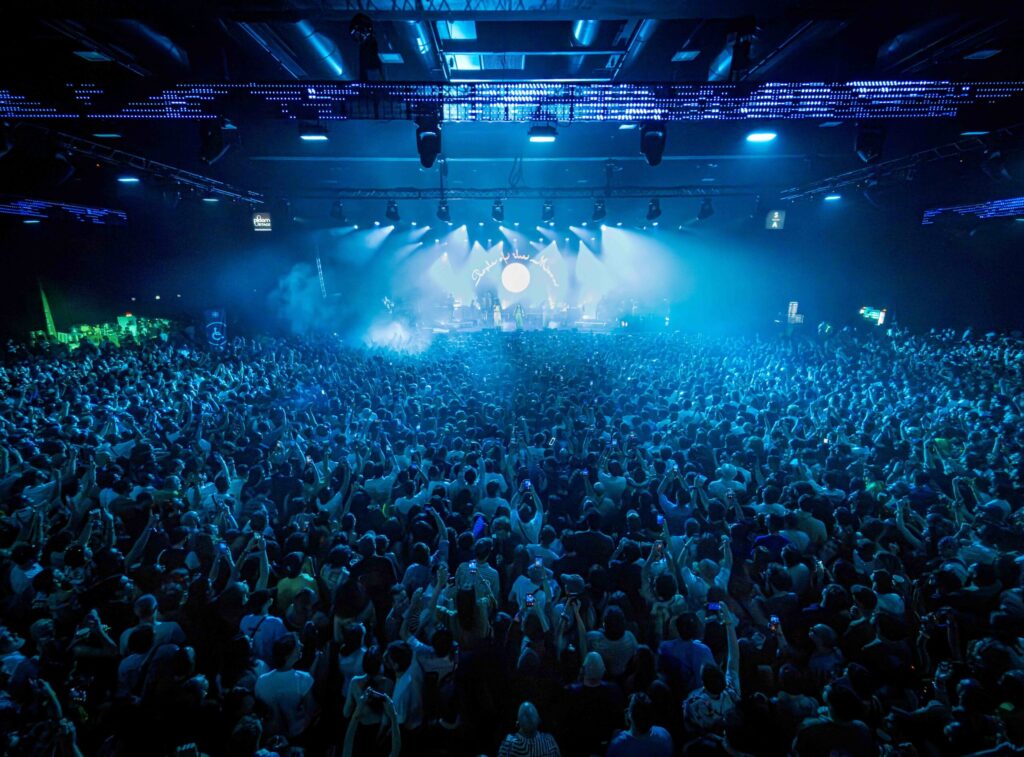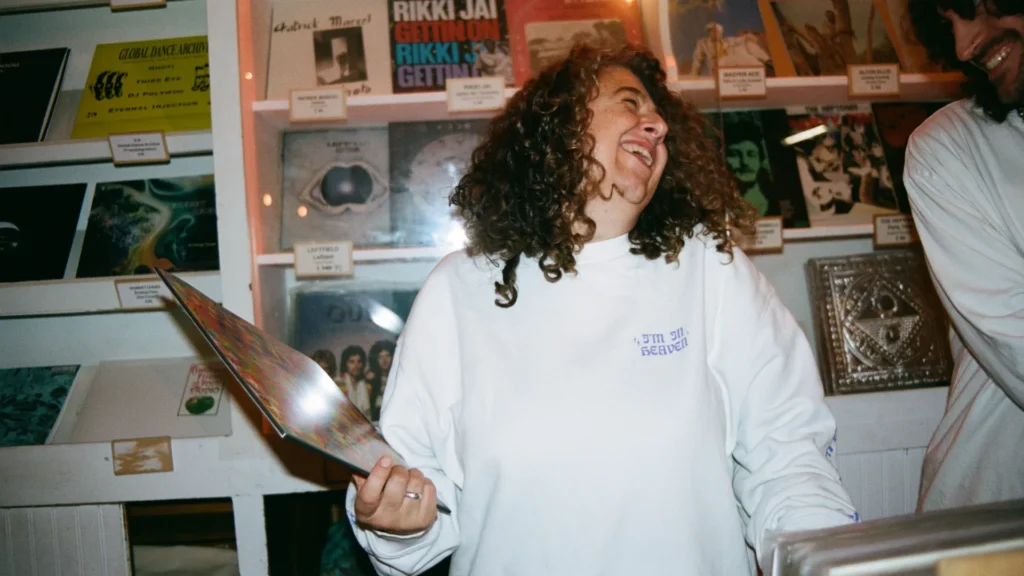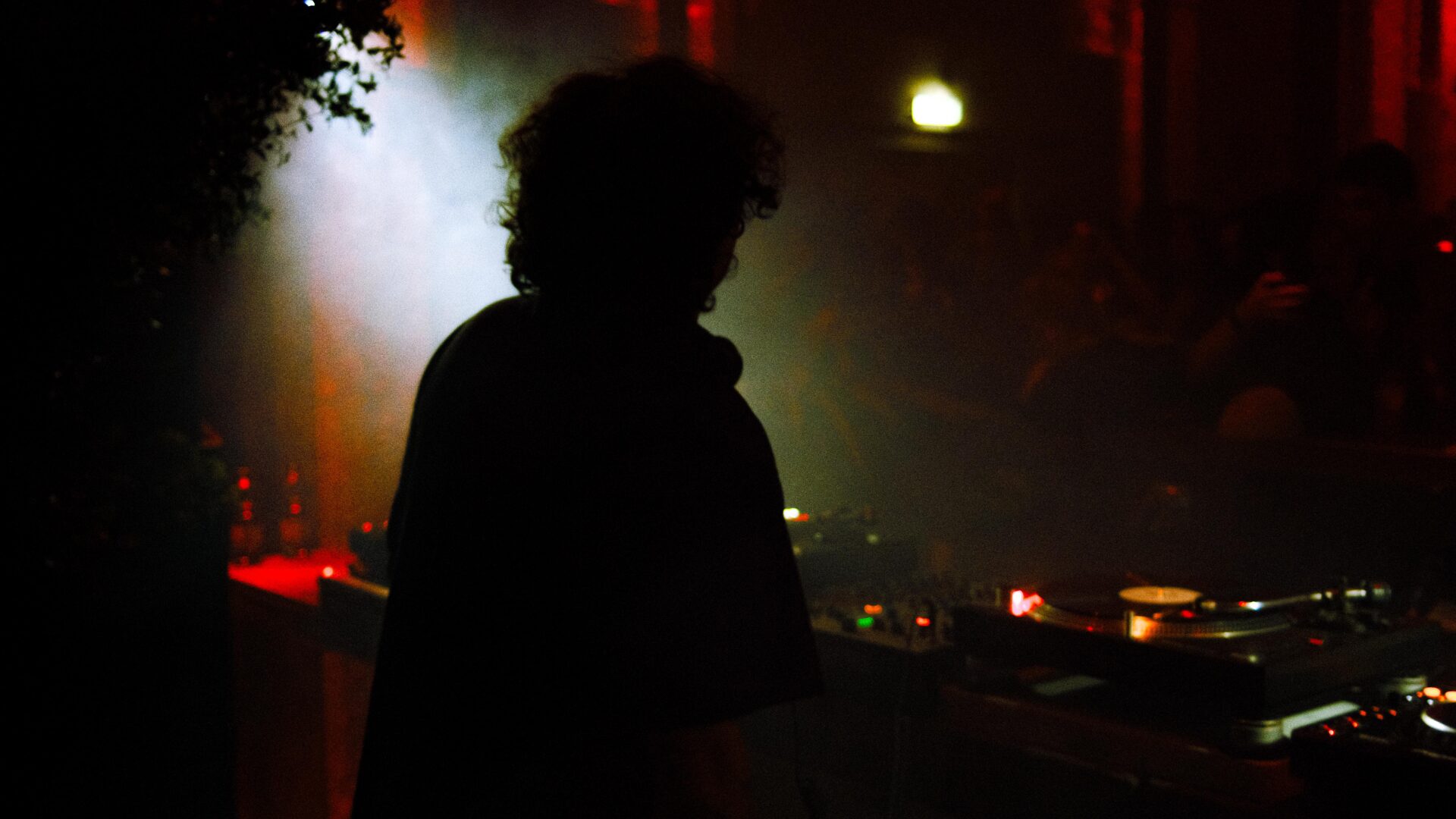

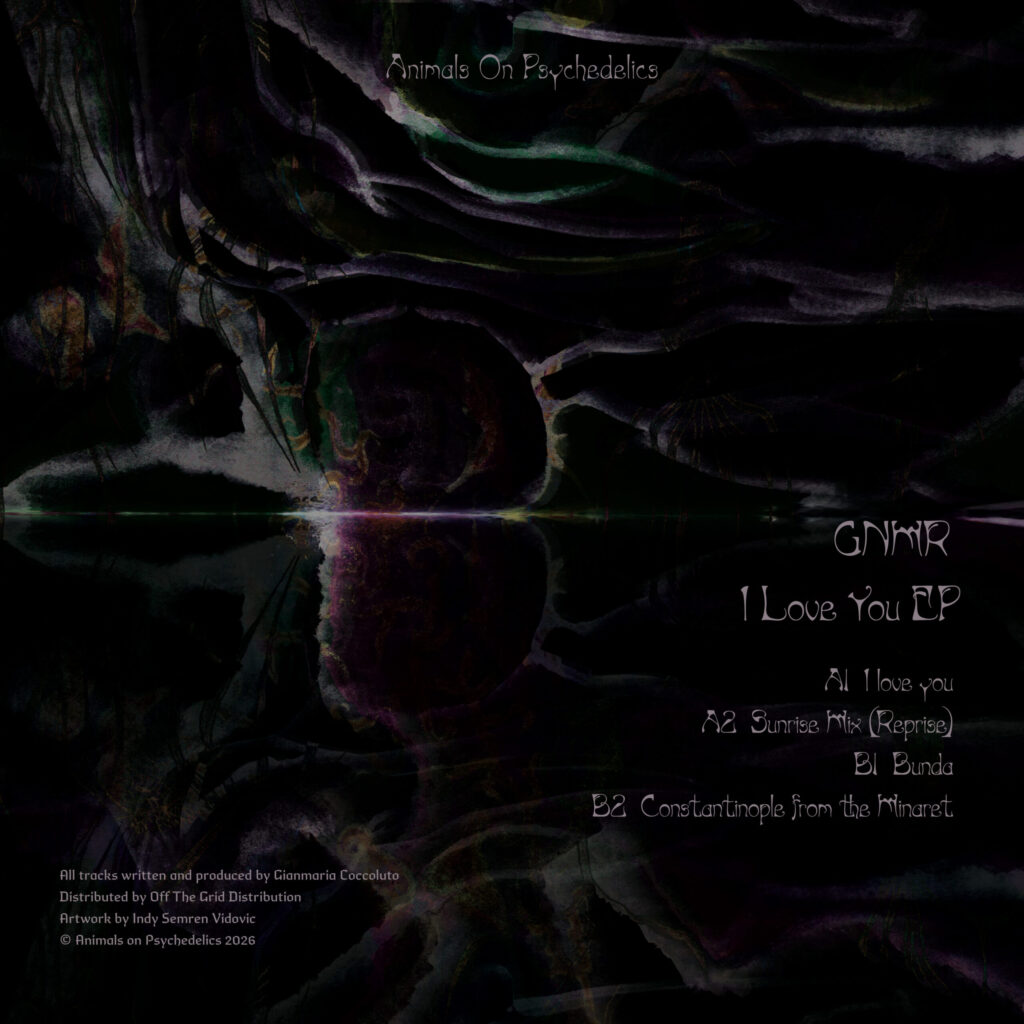
GNMR debutta su Animals On Psychedelics con “I Love You” Ep, un vinile ipnotico.
L’EP di GNMR nella scuderia di Animals On Psychedelics appartiene a una ristretta cerchia di nuova musica capace di smuovere sentimenti ed emozioni.
Con I Love You EP GNMR si spoglia delle vesti di costruttore per indossare quelle di un regista, capace di tradurre istantanee e frammenti di vita in un ecosistema dove le macchine dialogano con la natura più selvaggia.
Il catalogo della label britannica guidata da Carl H si arricchisce di un capitolo fondamentale formato da quattro tracce stampate su vinile che galleggiano tra tribalismo, canti mistici e una saturazione analogica curata nei minimi dettagli. Abbiamo analizzato la genesi di questo progetto attraverso le parole di GNMR, esplorando il delicato equilibrio tra l’improvvisazione in studio e la sacralità del dancefloor.
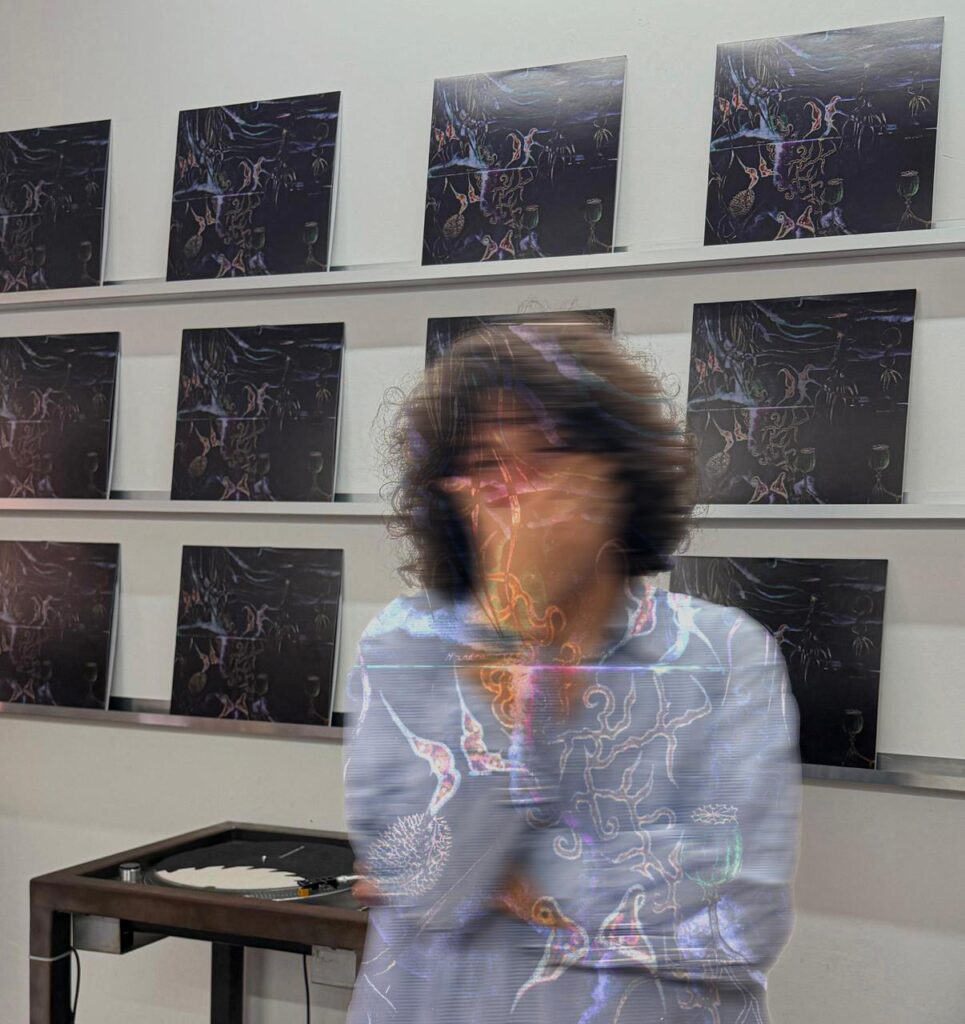
Ciao GNMR, Benvenuto su Parkett. Come si è sviluppato questo legame concettuale con la natura e il tribalismo? C’è un’ispirazione particolare dietro sonorità così organiche?
Reputo la musica che faccio e che propongo molto visuale: nasce quasi sempre da istantanee, luoghi, ricordi o sensazioni che provengono dal mio vissuto, oppure da cose che ho interiorizzato attraverso l’immaginazione.
Cerco di raccontare delle scene, dei frammenti di vita vissuta in diversi stati della realtà, e utilizzo il suono come strumento per contestualizzarli.
Sono un amante dei contrasti: l’elettrico e l’organico, il dolce e il salato. Allo stesso modo, la natura, l’ispirazione tribale e le macchine fanno parte dello stesso ecosistema. Nessun suono è escluso dalla mia band.
Questo lavoro segna il tuo ingresso ufficiale nella famiglia di Animals On Psychedelics. Com’è nata la collaborazione con l’etichetta e in che modo sapere che le tracce avrebbero trovato casa lì ha influenzato la direzione artistica o la tracklist finale dell’EP?
La collaborazione con Carl è nata in maniera molto spontanea. Circa un anno e mezzo fa gli ho fatto ascoltare una raccolta di demo che stavo sviluppando e alcune di quelle tracce sono poi diventate parte dell’EP.
Da quel momento il processo è stato molto naturale. La prospettiva della pubblicazione ha certamente aiutato a mettere a fuoco alcune scelte, ma la direzione artistica dei brani era già presente nelle loro forme embrionali.
Da fan della serie Animals On Psychedelics, ho vissuto questa opportunità anche come una possibilità di interpretarne a modo mio l’identità sonora e immaginifica.
Il tutto ha poi acquisito una struttura ancora più solida grazie al lavoro grafico di Indy. alla direzione artistica di Carl e al coordinamento e alla distribuzione di Off The Grid. Il contributo di tutti è stato fondamentale.
In un’intervista di un paio di anni fa hai detto: “La musica è democratica: davanti al sound system spariscono le distanze e si diventa un’unica cosa”.
Pensi sia ancora valido questo concetto?
Sì, sempre.
Tracce come “Bunda” e “Constantinople From The Minaret” suggeriscono una mappa geografica e mistica precisa, complice anche l’uso di cori e sample ipnotici. Ci racconti la genesi del brano di chiusura e come riesci a bilanciare questi elementi tradizionali con l’energia del dancefloor?
Onestamente, più che riuscirci, ci provo. Non sono nemmeno sicuro di riuscire sempre a trovare un equilibrio perfetto tra tutti questi elementi.
Come dicevo prima, il mio approccio alla musica è molto visuale. Posso partire da un suono, da un’idea o anche dal nulla, ma quasi subito mi ritrovo davanti all’immagine di una storia che vorrei raccontare. Altre volte, invece, entro direttamente in studio con un’immagine molto precisa già in testa.
Qualunque sia il punto di partenza, sento poi il bisogno di contestualizzare quella storia il più possibile. Ambientazioni, voci, effetti sonori e dettagli apparentemente secondari contribuiscono a definire un’atmosfera più credibile e immersiva.
Alcune volte penso che la musica elettronica da dancefloor abbia bisogno di dialogare con il panorama sonoro della vita reale, è proprio da lì che riesce ad acquisire una dimensione più narrativa e umana.
Nello specifico di Constantinople From The Minaret, l’ispirazione è partita da antichi canti di preghiera e dal desiderio di far convivere elementi appartenenti a culture diverse all’interno di un unico spazio sonoro. Il minareto, il suono delle campane e le voci cercano di esaltare questo contesto geografico e culturale. L’arp che accompagna la chiusura del brano, invece, è per me il suono di un mercato delle spezie: una piccola immagine sonora che cerca di completare il viaggio.
Il tuo processo creativo unisce strumentazione analogica e digitale. Quando approcci una nuova traccia, parti da un’idea o lasci che sia l’interazione con le macchine a dettare il groove? In un EP come “I Love You”, quanto peso ha avuto l’improvvisazione nella creazione delle tracce?
In parte credo di aver già risposto nelle domande precedenti. Per quanto riguarda questo EP, c’è stata fin dall’inizio una necessità reale di andare in una direzione ben precisa.
La prima fase è stata quasi di ricerca sonora: costruire un linguaggio, trovare dei colori e delle sensazioni che potessero sostenere il racconto dei brani. La maggior parte delle tracce nasce da un’intenzione molto chiara e da una sensazione che sto cercando di tradurre in musica.
Una volta raggiunto un nucleo abbastanza comunicativo, inizia una fase di scrittura più strutturata e consapevole. In questo senso l’improvvisazione ha avuto un ruolo importante soprattutto all’inizio del processo. Tra i brani dell’EP, probabilmente Bunda è quello che conserva maggiormente una forma di scrittura diretta, impulsiva e istintiva.
Nelle note tecniche spicca il mastering con taglio analogico affidato a Marco Pellegrino. Considerando i bassi profondi e i complessi incastri percussivi dell’EP, quanto è stato fondamentale questo approccio fisico per preservare il calore delle tue macchine in funzione della stampa su vinile?
È stato fondamentale avere accanto una persona preparata e sensibile come Marco. Credo che il mastering non sia soltanto una fase tecnica del processo, ma anche un momento di interpretazione e valorizzazione del lavoro che è stato fatto a monte.
Il compito di professionisti come Marco e di realtà come Uncut è proprio quello di preservare, migliorare o esaltare determinati aspetti della musica quando serve, rispettandone l’identità. Nel caso di un disco pensato anche per il vinile, questa attenzione diventa ancora più importante perché ogni scelta ha conseguenze concrete sulla resa fisica del supporto.
Nei tuoi set mescoli digitale e analogico. In che modo il vinile, con i suoi tempi di ricerca e la sua fisicità, influenza il tuo approccio alla selezione musicale rispetto alla facilità e all’abbondanza del digitale?
Paradossalmente, se parliamo del mercato delle nuove uscite, per certi aspetti il vinile semplifica il processo di selezione. Esiste infatti un filtro naturale molto più severo: quello della pubblicazione fisica.
Questo significa che, quantitativamente, le novità disponibili sono spesso meno numerose rispetto all’universo digitale e ciò rende la ricerca più focalizzata. Allo stesso tempo non credo affatto che pubblicare su vinile significhi automaticamente fare musica migliore rispetto a chi sceglie di pubblicare in digitale.
Sono semplicemente due ecosistemi diversi, con dinamiche differenti.
Matteo Viti – Andrea Moretto
ENGLISH VERSION
GNMR: A CHAT ABOUT I LOVE YOU EP
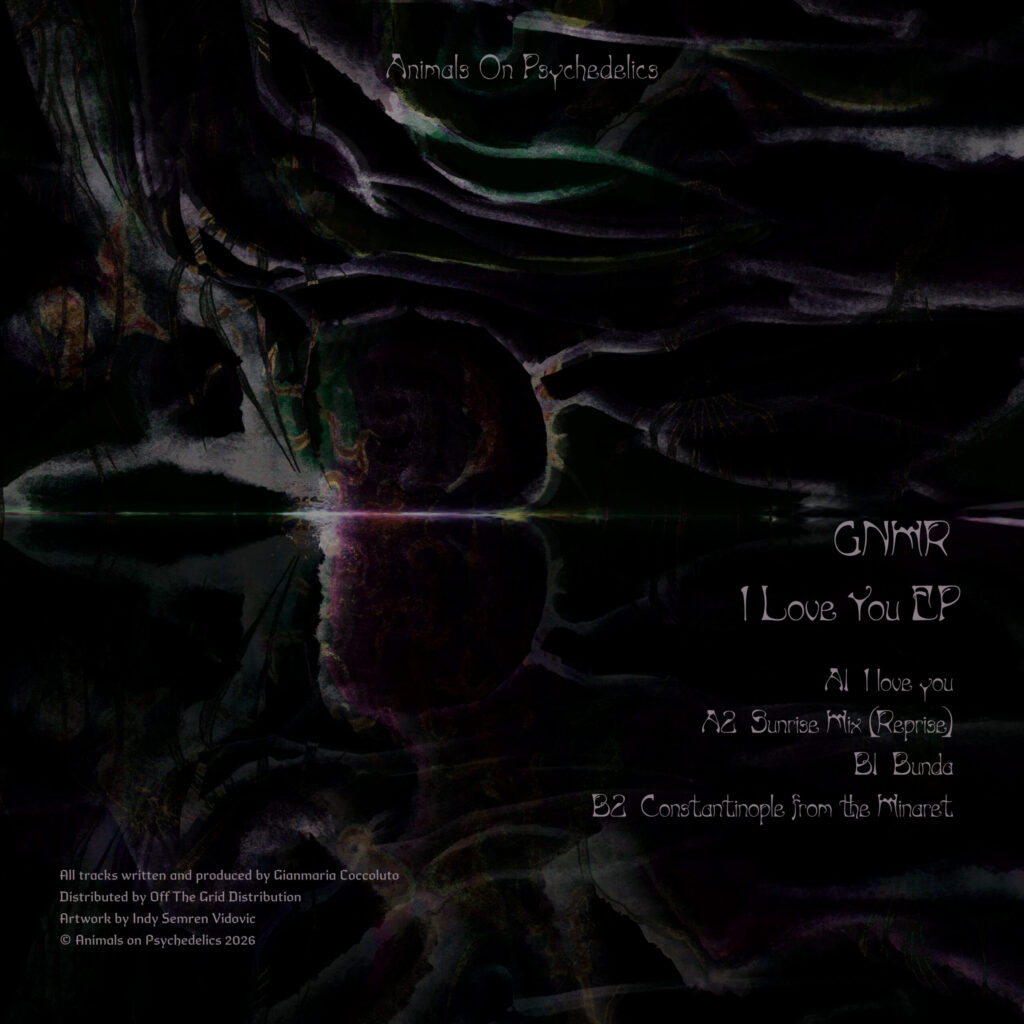
GNMR debuts on Animals On Psychedelics with an hypnotic vinyl release.
GNMR’s debut EP on Animals On Psychedelics undisputedly have the capacity to evoke feelings and emotions.
With the “I Love You EP”, GNMR strips away the architect’s coat to step into the shoes of a director, capable of translating snapshots and fragments of life into an ecosystem where machines converse with untamed nature.
The catalog of the British label run by Carl H is enriched by a pivotal chapter: four tracks pressed on vinyl that float between tribalism, mystical chants, and an analog saturation meticulously crafted down to the finest detail. We analyzed the genesis of this project through GNMR’s own words, exploring the delicate balance between studio improvisation and the sacredness of the dancefloor.
Hi GNMR, welcome to Parkett Channel. How did this conceptual link with nature and tribalism develop? Is there a particular inspiration behind such organic sounds?
I’m glad the music managed to paint that kind of picture for the person who wrote the press release. I consider the music I make and play to be highly visual: it almost always stems from snapshots, places, memories, or sensations from my own experience, or from things I have internalized through imagination.
I try to narrate scenes, fragments of life lived across different states of reality, and I use sound as a tool to contextualize them.
I love contrasts: the electric and the organic, the sweet and the savory. In the same way, nature, tribal inspiration, and machines all belong to the same ecosystem. No sound is excluded from my spectrum.
This project marks your official entry into the Animals On Psychedelics family. How did the collaboration with the label come about, and how did knowing that the tracks would find a home there influence the artistic direction or the final tracklist of the EP?
The collaboration with Carl came about very spontaneously. About a year and a half ago, I shared a collection of demos I was developing with him, and some of those tracks eventually became part of the EP.
From that point on, the process felt completely natural. The prospect of releasing them certainly helped focus certain choices, but the artistic direction of the tracks was already there in its embryonic stage.
As a fan of the Animals On Psychedelics catalog, I also saw this opportunity as a chance to interpret their sonic and imaginative identity in my own way.
The whole project then gained an even more solid structure thanks to Indy’s graphic work, Carl’s art direction, and the coordination and distribution by Off The Grid. Everyone’s contribution was vital.
In an interview a couple of years ago you said: “Music is democratic: in front of the sound system, distances disappear and we become one.” Do you think this concept still holds true?
Yes, always.
Tracks like “Bunda” and “Constantinople From The Minaret” suggest a precise geographical and mystical map, aided by the use of hypnotic chants and samples. Can you tell us about the genesis of the closing track and how you manage to balance these traditional elements with the energy of the dancefloor?
Honestly, rather than managing to do it, I simply try. I am not even sure I always find a perfect balance among all these elements.
As I mentioned earlier, my approach to music is highly visual. I might start from a sound, an idea, or even nothing at all, but almost immediately I find myself facing the image of a story I want to tell. Other times, I enter the studio with a very precise image already in mind.
Whatever the starting point, I then feel the need to contextualize that story as much as possible. Settings, voices, sound effects, and seemingly secondary details all help define a more credible and immersive atmosphere.
Sometimes I think electronic dance music needs to dialogue with the soundscape of real life; that is precisely how it manages to acquire a more narrative and human dimension.
In the specific case of Constantinople From The Minaret, the inspiration came from ancient prayer chants and the desire to let elements from different cultures coexist within a single sonic space. The minaret, the sound of bells, and the voices attempt to enhance this geographical and cultural context. The arp that accompanies the end of the track, on the other hand, is the sound of a spice market to me: a small sonic image that tries to complete the journey.
Your creative process combines analog and digital instrumentation. When you approach a new track, do you start with an idea or do you let the interaction with the machines dictate the groove? In an EP like “I Love You”, how much weight did improvisation have in creating the tracks?
To some extent, I think I have already answered this in the previous questions. Regarding this EP, right from the start there was a genuine need to go in a very specific direction.
The first phase was almost like sonic research: building a language, finding colors and sensations that could support the narrative of the tracks. Most of the pieces come from a very clear intention and a feeling that I am trying to translate into music.
Once a sufficiently communicative core is reached, a more structured and conscious writing phase begins. In this sense, improvisation played an important role, especially at the beginning of the process. Among the tracks on the EP, Bunda is probably the one that retains the most direct, impulsive, and instinctive form of writing.
In the technical notes, the analog-cut mastering by Marco Pellegrino stands out. Considering the deep bass and complex percussive layers of the EP, how crucial was this physical approach to preserving the warmth of your machines for the vinyl pressing?
Having someone as skilled and sensitive as Marco by my side was essential. I believe mastering is not just a technical phase in the process, but also a moment to interpret and elevate the work that was done upstream.
The job of professionals like Marco, and studios like Uncut, is precisely to preserve, improve, or enhance specific aspects of the music when needed, while respecting its identity. When a record is conceived with vinyl in mind, this attention to detail becomes even more critical, because every single choice has concrete consequences on the physical performance of the medium.
In your sets, you mix digital and analog. How does vinyl, with its search times and physicality, influence your approach to music selection compared to the ease and abundance of digital?
Paradoxically, if we are talking about the market for new releases, in some ways vinyl simplifies the selection process. There is a naturally harsher filter: that of a physical release.
This means that, quantitatively, the available new releases are often fewer compared to the digital universe, which makes the search more focused.
At the same time, I do not believe at all that releasing on vinyl automatically means making better music than those who choose to release digitally.
They are simply two different ecosystems, with different dynamics.
Matteo Viti – Andrea Moretto