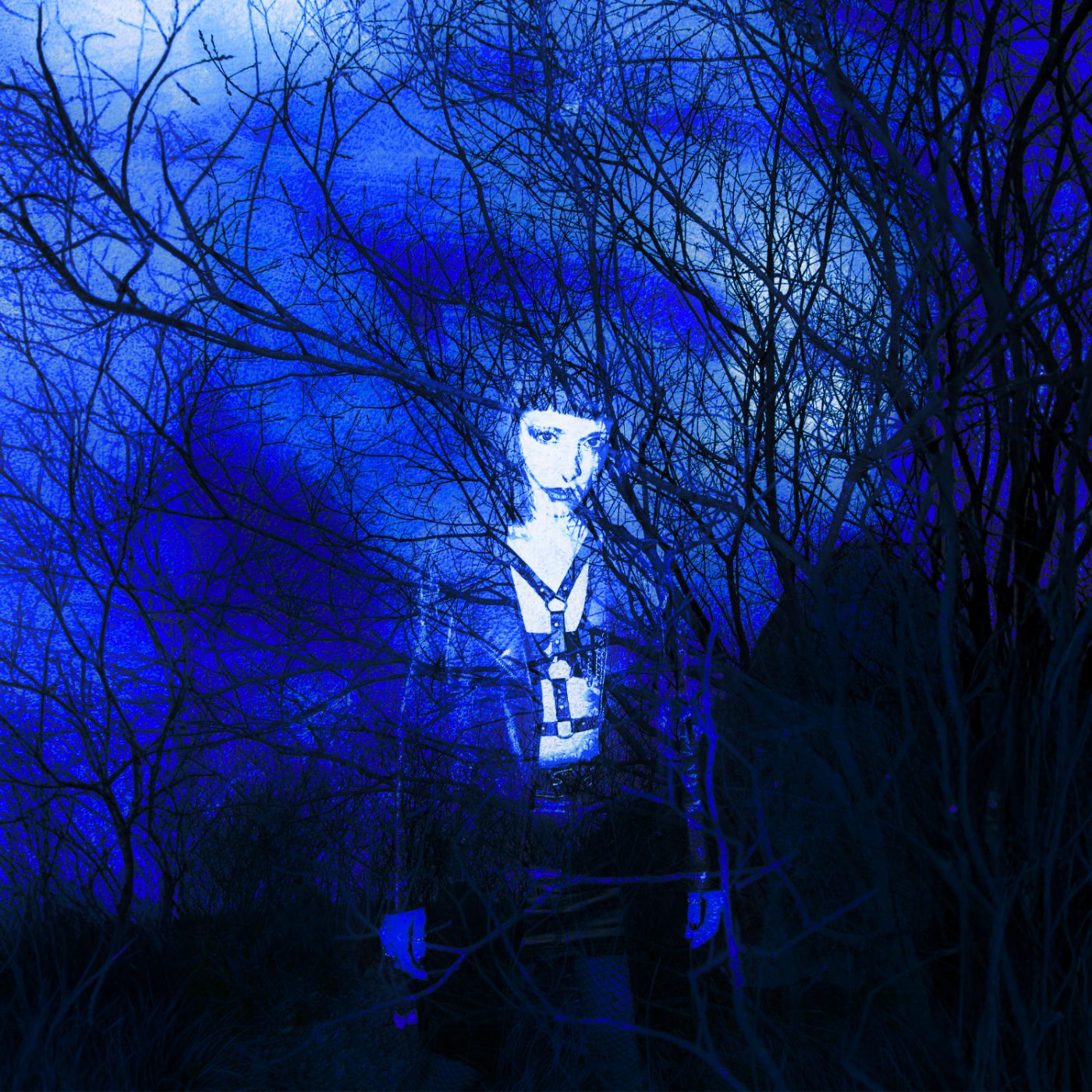

Un senso di trasformazione continua attraversa The Roots And The Blue, secondo album di Beta Libre, un lavoro che evita qualsiasi immobilità per svilupparsi come un flusso in costante mutazione. Nato da quasi due anni di scrittura e ricerca sonora, il disco si colloca tra dark wave ed electronic pop, pur mantenendo una natura aperta, difficilmente confinabile in categorie rigide.
Fin dalle prime tracce, la componente ritmica assume un ruolo strutturale. Le drum machine non si limitano a sostenere i brani, ma diventano veri e propri elementi narrativi. I pattern oscillano tra precisione meccanica e leggere imperfezioni, creando una tensione che rende il ritmo instabile, vivo. In Apocalypse emerge una spinta electro-rock diretta e incalzante, mentre Resurrection introduce una costruzione più ibrida, dove il beat dialoga con strutture pop e inflessioni più spezzate. Nel complesso, la ritmica riflette un’idea di movimento costante, dove equilibrio e rottura convivono.
I sintetizzatori costituiscono l’altra colonna portante del disco. L’uso di synth analogici dona profondità e matericità al suono, contrapponendosi a tonalità spesso cupe. Le stratificazioni si sviluppano in modo progressivo, evitando soluzioni immediate. In Jellyfish, ad esempio, le linee si dilatano fino a diventare liquide, quasi sospese, mentre in brani come Chaos o The Destroyer emergono timbri più ruvidi, distorti, che introducono elementi di frattura. Questa alternanza tra armonia e dissonanza contribuisce a costruire un paesaggio sonoro dinamico e imprevedibile.
La voce di Beta Libre, influenzata da una formazione lirica, si inserisce in questo contesto con un approccio che alterna controllo e vulnerabilità. I registri cambiano frequentemente: da aperture più ampie e definite a momenti più raccolti, quasi sussurrati. In tracce come Feather e Sweet, questa flessibilità vocale accompagna tematiche legate alla memoria e alla perdita, senza mai risultare eccessivamente enfatica.
L’atmosfera generale rappresenta forse l’aspetto più distintivo dell’album. Una dualità costante — tra radici e cielo, corpo e dimensione astratta — attraversa sia i testi che le scelte sonore. La title track The Roots And The Blue sintetizza questa tensione attraverso un impianto dark R&B, dove linee di basso più terrene si intrecciano con aperture sintetiche ampie e sospese. Il risultato non è una risoluzione, ma una coesistenza di elementi opposti.
La struttura del disco evita uno sviluppo lineare. Piuttosto, si muove per cicli emotivi: caduta, reazione, trasformazione. Brani come Guilty e Wound esplorano territori più densi e viscerali, mentre The Unknown introduce una dimensione più aperta e indefinita. La chiusura affidata a Something Remains riduce l’arrangiamento all’essenziale, lasciando una sensazione sospesa, volutamente incompleta.
The Roots And The Blue si configura come un lavoro coerente ma non prevedibile. La sua forza risiede nella capacità di abitare il contrasto, trasformando l’instabilità in un elemento generativo. Una release di alto livello, che trova spazio con naturalezza all’interno di una webzine musicale contemporanea, testimoniando una ricerca artistica che mette al centro il suono come processo in evoluzione.
ENGLISH VERSION
A sense of movement defines The Roots And The Blue, the second full-length by Beta Libre, a record that refuses stillness and instead unfolds as a continuous transformation. Built across nearly two years of writing and sonic exploration, the album situates itself between dark wave and electronic pop, yet constantly slips beyond those boundaries, embracing a fluid, genre-agnostic language.
From the opening moments, rhythm takes on a narrative role. The percussive structures are not merely supportive; they act as shifting ground beneath the listener. Drum machines pulse with an almost organic irregularity, at times rigid and mechanical, at others fractured and breathing. Tracks like Apocalypse introduce a driving electro-rock backbone, where beats feel urgent, almost collapsing forward, while Resurrection bends toward hybrid territories, blending pop cadences with sharper, syncopated flows. Across the record, rhythm becomes a metaphor for instability and renewal—never fixed, always evolving.
The synthesizer work is equally central. Analog textures dominate, carrying a tactile warmth that contrasts with the album’s darker tonal palette. Layers build gradually, often resisting immediate resolution. In pieces like Jellyfish, synth lines stretch and dissolve into liquid forms, creating a hypnotic suspension where melody and atmosphere blur. Elsewhere, harsher timbres emerge—distorted, abrasive edges in The Destroyer or Chaos—suggesting rupture rather than cohesion. This interplay between softness and dissonance constructs a soundscape that feels alive, constantly negotiating between tension and release.
Vocally, Beta Libre brings a background rooted in classical and operatic training into a contemporary framework that feels deliberately unpolished. Her voice moves between control and fragility, sometimes soaring with clarity, sometimes breaking into more intimate, almost whispered registers. This dynamic range enhances the album’s emotional architecture, particularly in tracks such as Feather and Sweet, where themes of loss and memory are carried through subtle shifts in tone rather than overt dramatics.
Atmosphere remains the album’s most defining element. There is a persistent duality at play—earth and sky, body and abstraction—mirrored not only in the lyrics but in the sonic construction itself. The title track, The Roots And The Blue, condenses this tension into a dark R&B framework, where grounded basslines meet expansive, airy synths. The result is neither resolution nor conflict, but coexistence. Throughout the 14 tracks, colors seem almost audible: deep blues in the ambient layers, flashes of red in the rhythmic intensity, and dense shadows shaping the darker passages.
As the album progresses, its structure avoids a linear trajectory. Instead, it cycles through states—collapse, resistance, emergence—without clearly separating them. Guilty and Wound delve into heavier, more visceral territories, where rhythm tightens and textures thicken, while The Unknown opens outward, embracing ambiguity and space. By the time Something Remains closes the record, the arrangement strips back to a minimal core, leaving a lingering sense of incompletion that feels intentional rather than unresolved.
The Roots And The Blue stands as a cohesive yet unpredictable body of work. Its strength lies not in clarity, but in its willingness to inhabit contradiction—transforming instability into a generative force. A high-quality release that finds its place naturally within the pages of a contemporary music webzine, it reflects an artistic vision grounded in exploration, where sound becomes both medium and message.