
Fabrizio Mammarella e Giulia Gutterer raccontano il progetto b2b che unisce Slow Motion Records, Wrong Era e i dancefloor berlinesi. Li incontriamo in vista della loro data al Mercato del Porto di Marina di Ragusa per Spring Loaded – Sonica Primavera.
Quando si pensa al nome Galleria Europa, ci vengono subito in mente centri commerciali di provincia, insegne al neon consumate dal tempo, quel tipo di estetica che nell’Italia degli anni ’80 cercava di fare del consumo un’esperienza quasi culturale. Eppure è esattamente da quella tensione — tra nostalgia e decostruzione critica, tra radici italiane e adozione berlinese — che nasce il b2b tra Fabrizio Mammarella e Giulia Gutterer, due figure che il mondo della musica elettronica europea conosce bene, ciascuna per motivi propri, entrambe accomunate dalla stessa ossessione di fare della musica italiana qualcosa di irriducibile a qualsiasi etichetta di genere.
L’architetto del suono Fabrizio Mammarella
Fabrizio Mammarella è uno dei costruttori più silenziosi e tenaci dell’ecosistema dell’Italian Dance Wave: selezionatore, produttore e fondatore di etichette, la sua discografia conta decine di brani diventati classici del dancefloor, collaborazioni con Lauer nel progetto Black Spuma, con Rodion e con Clap Rules. Dal 2004 a oggi ha pubblicato su DFA, Permanent Vacation, Correspondant, Live At Robert Johnson, Les Disques De La Mort e Futureboogie, oltre che sulla sua Slow Motion/ Wrong Era — fondata nel 2009 e da più di un decennio il punto di riferimento più solido del movimento Italian Dance Wave a livello internazionale. Il suo è un percorso che rifiuta la specializzazione e abbraccia la ricerca come metodo permanente e lo fa con i titoli che meglio raccontano il suo universo come “Metal Nero” e “Onda” con Black Spuma su International Feel, “Fantasia 500” su Wrong Era — quattro tracce che filtrano l’elettro di Detroit e la ghetto house attraverso il disco per costruire qualcosa di totalmente nuovo — e “EYE-BM”, il singolo più EBM e bruciante della sua produzione recente, passando per l’alias sperimentale Telespazio.
L’altra protagonista dell’Italo Dance Wave
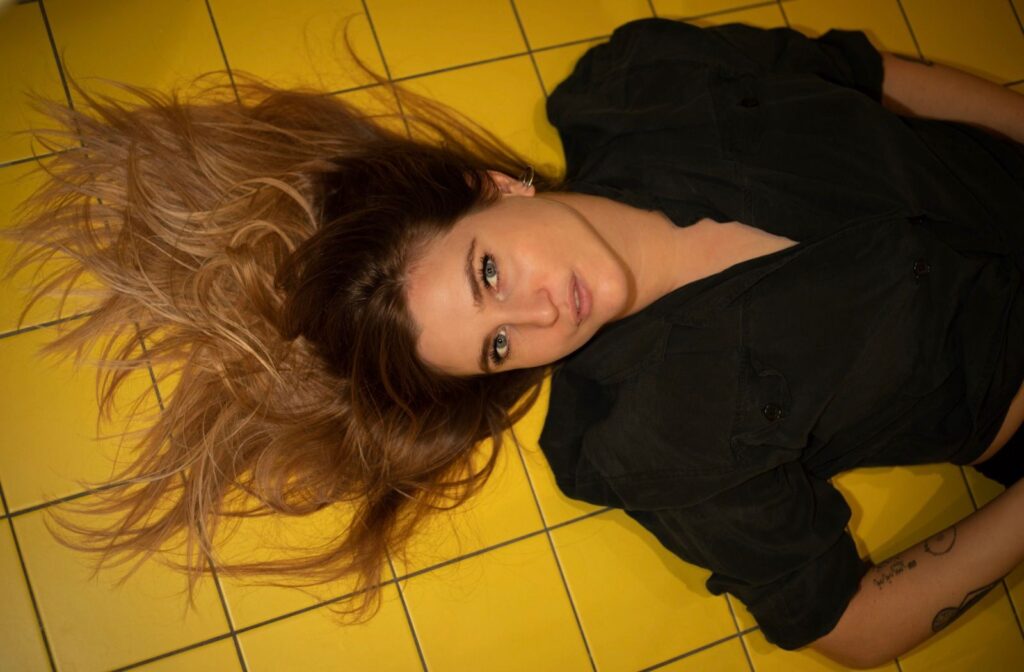
Giulia Gutterer è l’altra metà del progetto, e la sua storia è quella di chi ha costruito un’identità abitando una scena e non visitandola e basta. Cresciuta tra le montagne di Bolzano, ha portato il cuore dell’Italo Dance Wave al centro della club scene berlinese. Ossessionata da Hi-NRG, Downtempo, New Beat, Dark e Nu Disco, ha animato dancefloor iconici al Panorama Bar del Berghain per Italorama, al Cocktail d’Amore, al Salon zur Wilden Renate, a RSO e al Sisyphos. Nel 2023 ha firmato “Dimensione” per Wrong Era, una compilation che raccoglie tracce che illustrano il suo gusto.
La nascita di Galleria Europa
È proprio da questa doppia competenza — produttiva e selettiva, italiana e berlinese, radicata e nomade — che nasce Galleria Europa. Sarà il Mediterraneo a ospitare il prossimo capitolo del duo che chiuderanno la rassegna Spring Loaded – Sonica Primavera al Mercato del Porto di Marina di Ragusa, spazio polifunzionale affacciato sul porto turistico siciliano che in questi anni ha saputo diventare uno dei luoghi più interessanti della nuova cultura club italiana. Li abbiamo intervistati per capire da dove viene questo progetto, dove sta andando, e cosa significa suonare insieme quando hai già un mondo musicale tutto tuo.
Partiamo dall’inizio. Come nasce Galleria Europa come progetto autonomo, distinto dalle vostre carriere soliste?
Nasce sicuramente dalla nostra passione e curiosità nel parlare di musica. Abbiamo gusti molto simili e quindi questo ci porta a scambiarci pareri e canzoni. Suonare insieme è stata quindi una conseguenza molto naturale ed è un insieme di tutte le esperienze e i suoni che ci accomunano e che ci appassionano: è proprio un bel viaggio.
Il nome è molto evocativo. Da dove viene?
Galleria Europa è il nome di una galleria nel centro di Bolzano, che ci ha sempre colpito per il suo nome, il font e il carattere. È infatti la classica galleria di shopping, con negozi storici, alcuni disabitati e altri ancora attivi e caratterizzati da uno stile nostalgico e decadente. Una volta ci siamo semplicemente trovati là davanti e ci siamo detti: “Che gran nome per un progetto per noi due”, e that’s it! In più, pensandoci anche in maniera più approfondita, descrive perfettamente il nostro suono: una sorta di crocevia che porta a sonorità che raggruppano tutto quel sound eurocentrico che va dall’italo alla new beat belga, all’electro teutonica, all’italian house; insomma, ha senso sotto ogni punto di vista.
Fabrizio, la tua storia è lunga e articolata. Cosa ha significato pubblicare su DFA in un momento in cui quell’etichetta era il punto di riferimento per chiunque facesse musica all’incrocio tra post-punk e dancefloor?
È stata una grande soddisfazione. DFA è stato un punto di riferimento assoluto per un certo tipo di sound; basti pensare agli artisti che facevano parte della scuderia: LCD Soundsystem, The Rapture, Juan MacLean, Black Dice. Quell’estetica musicale non ha mai abbandonato il mio percorso artistico.
Slow Motion nasce nel 2009. L’idea era rappresentare un tipo di suono molto specifico — la reinterpretazione contemporanea dell’Italo degli anni ’80, della disco, della new wave italiana. Come è cambiata quella missione nel tempo?
La missione è rimasta inalterata. Sia io che Franz (Scala) abbiamo sempre creduto nel concept della label che hai descritto e che esso stesso fosse il suo punto di forza. Non abbiamo mai ceduto alle tendenze del momento e questa perseveranza è servita a noi per tenerci sempre saldi a un ideale artistico e all’etichetta per non cadere mai nel tranello del susseguirsi delle mode. Proprio per questo il nostro catalogo, a quasi vent’anni dalla prima release, è rimasto molto fresco.
Giulia, il tuo percorso è stato più lungo e più silenzioso, almeno pubblicamente. Come si costruisce una presenza nella scena berlinese partendo dall’Italia?
Lunghissimo non direi! Diciamo che ho iniziato entrando nel sottobosco dell’organizzazione di party Slow Motion nel 2014/2015, assieme a Franz Scala a Berlino. Sono sempre stata appassionata di musica e, entrando in quel mondo berlinese, mi sono avvicinata a un sound che non avevo mai veramente approfondito prima. La curiosità è diventata poi ossessione, nel senso che dovevo sapere sempre tutti i nomi, le canzoni, ecc. E quindi, a un certo punto, verso il 2017, mi sono ritrovata con un sacco di musica e, spronata anche qui e là, mi sono detta: “Ma iniziamo a metterla insieme e vediamo che succede?”. Quindi sì, direi che entrare a far parte del sottobosco berlinese è un processo che dura da un bel po’ di anni, tra organizzazione di feste e djing.
Il b2b come forma artistica è ancora sottovalutato rispetto alla produzione discografica. Come lo vivete voi?
Giulia: Penso che sia giusto che chi produca sia visto più in alto di chi faccia un b2b, anche se sicuramente la ricetta per un buon b2b non è semplice e soprattutto non ha mezzi termini. O funziona davvero bene (e non parlo in termini di riscontri, parlo soprattutto in termini di sensazioni in console, che poi inevitabilmente si percepiscono anche a livello emotivo nel pubblico), oppure ti lascia con l’amaro in bocca. Quindi sicuramente, quando va bene, è un “match made in heaven”! Però appunto, senza le produzioni, b2b o set singolo, che musica metti poi?
Fabrizio: Credo che viviamo in un momento in cui la cultura, in qualsiasi ambito, viva un grave momento di crisi; questo si riflette anche nella musica, ovviamente. La produzione discografica, per tante motivazioni, ne risente conseguentemente: credo che oggi non abbia lo stesso valore che aveva fino ai primi anni 2000, quando ho cominciato con le prime pubblicazioni. Al contrario, i b2b stanno prendendo sempre più piede; basti pensare che molti festival oggi annunciano i back to back in una sezione esclusiva del programma.
Siete stati descritti come “ambasciatori dell’Italian Dance Wave dal Panorama Bar di Berlino al resto del mondo”. Cosa significa per voi quella definizione?
L’Italian Dance Wave è un termine coniato da noi per descrivere tutto quel mix di suoni che va dalla italo, alla new wave, alla musica dance che ha formato la nostra cultura soprattutto negli anni 80. Aver portato questo suono all’interno del Panorama Bar è sicuramente una grandissima soddisfazione e vedere interesse in questo “movimento” ci rende fieri e ci motiva nel fare sempre meglio
Galleria Europa chiuderà la rassegna Spring Loaded – Sonica Primavera al Mercato del Porto di Marina di Ragusa, uno spazio che negli anni ha già ospitato nomi come Satoshi Tomiie, Alex Neri e, singolarmente, lo stesso Fabrizio. Cosa significa tornarci in una veste diversa, come progetto b2b?
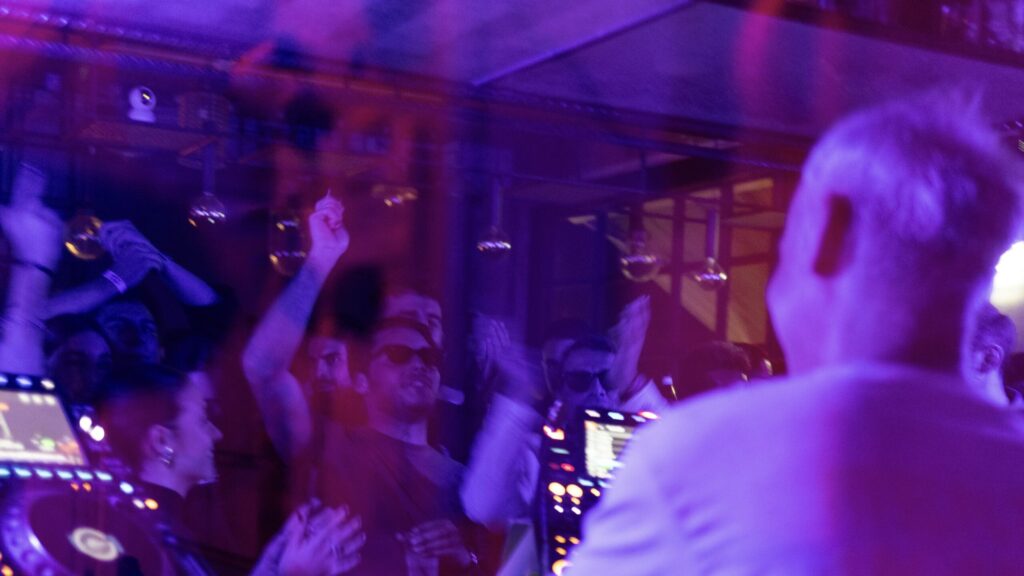
In realtà anche lo scorso anno abbiamo suonato insieme, quindi è una riconferma molto apprezzata. Amiamo profondamente l’estetica e l’attenzione ai dettagli di Mercato Del Porto, qualità che si riflettono non solo sulla musica ma anche sull’architettura del locale, sulla proposta gastronomica, artistica e grafica, tornarci è sempre un grande piacere.
Siete l’atto conclusivo di un programma che mette in dialogo scene diverse — GNMR, Matisa, Sam Ruffillo, artisti locali. Come si prepara un set che deve anche essere, in qualche modo, una chiusura?
Abbiamo un’idea di quello che può funzionare all’interno di questa rassegna. La preparazione del set, poi, viene molto influenzata dalla musica nuova che acquisiamo ogni giorno e che ci piace suonare di volta in volta. Ogni nostro set è un mix di musica nuova, classici del suono Galleria Europa e musica futura che verrà pubblicata nei mesi a seguire.
Il Mercato del Porto è uno spazio ibrido: cucina mediterranea, cantina, club. La musica elettronica che suonate voi si muove spesso in territori altrettanto difficili da classificare. C’è qualcosa in quella ibridità che vi appartiene?
Direi che siamo accomunati da una grande curiosità per tutto quello che non è scontato, dalla ricerca e dall’attaccamento al territorio.
Cosa bolle in pentola per il futuro del progetto?
Abbiamo diverse serate in programma a Berlino, la prossima sarà al RSO, locale dove teniamo la nostra serata Self.Control. Infatti apriremo la serata proprio come Galleria Europa. E poi un tour negli Stati Uniti dove suoneremo insieme.
Galleria Europa sarà al Mercato del Porto di Marina di Ragusa domenica 12 aprile, ultima data della rassegna Spring Loaded – Sonica Primavera. Un set che, come ogni capitolo del duo, non si replica mai uguale a se stesso — e che stavolta chiude la sua prima stagione mediterranea con vista sul prossimo tour americano.
ENGLISH VERSION
Galleria Europa: Italian Dance Wave meets the Mediterranean for Spring Loaded – Sonica Primavera
Fabrizio Mammarella and Giulia Gutterer talk about the b2b project that bridges Slow Motion Records, Wrong Era and Berlin’s dancefloors. We caught up with them ahead of their set at Mercato del Porto in Marina di Ragusa for Spring Loaded – Sonica Primavera.
When you hear the name Galleria Europa, your mind immediately goes to provincial shopping malls, worn-out neon signs, that kind of aesthetic that defined 1980s Italy — where consumption was dressed up as something almost cultural. And yet it’s precisely from that tension — between nostalgia and critical deconstruction, between Italian roots and Berlin adoption — that the b2b between Fabrizio Mammarella and Giulia Gutterer was born. Two figures the European electronic music world knows well, each for their own reasons, both driven by the same obsession: making Italian music something that resists any genre label.
The Sound Architect Fabrizio Mammarella
Fabrizio Mammarella is one of the quietest and most tenacious architects of the Italian Dance Wave ecosystem — selector, producer and label founder, his discography runs to dozens of dancefloor classics, collaborations with Lauer as Black Spuma, with Rodion and with Clap Rules. Since 2004 he has released on DFA, Permanent Vacation, Correspondant, Live At Robert Johnson, Les Disques De La Mort and Futureboogie, as well as on his own Slow Motion / Wrong Era — founded in 2009 and for over a decade the most solid reference point in the Italian Dance Wave movement internationally. His is a path that refuses specialisation and embraces research as a permanent method, and he makes that clear through the titles that best define his universe: Metal Nero and Onda with Black Spuma on International Feel, Fantasia 500 on Wrong Era — four tracks that filter Detroit electro and ghetto house through the disco grinder to build something entirely new — and EYE-BM, the most EBM and raw single of his recent output, alongside the experimental alias Telespazio.
The Other Protagonist of the Italo Dance Wave
Giulia Gutterer is the other half of the project, and her story is that of someone who built an identity by inhabiting a scene, not just passing through it. Raised in the mountains of Bolzano, she brought the heart of Italo Dance Wave to the centre of Berlin’s club scene. Obsessed with Hi-NRG, Downtempo, New Beat, Dark and Nu Disco, she has lit up iconic dancefloors at the Berghain’s Panorama Bar for Italorama, at Cocktail d’Amore, Salon zur Wilden Renate, RSO and Sisyphos. In 2023 she released Dimensione on Wrong Era, a compilation that maps her taste in full.
The Birth of Galleria Europa
It is precisely from this double competence — productive and selective, Italian and Berliner, rooted and nomadic — that Galleria Europa was born. The Mediterranean will host the duo’s next chapter, closing the Spring Loaded – Sonica Primavera series at Mercato del Porto in Marina di Ragusa, a multipurpose space overlooking the Sicilian tourist port that has quietly become one of the most interesting venues in Italy’s new club culture. We sat down with them to find out where this project comes from, where it’s heading, and what it means to play together when you already have a musical world of your own.
Let’s start from the beginning. How did Galleria Europa come about as a standalone project, separate from your solo careers?
It definitely grew out of our shared passion and curiosity for talking about music. We have very similar tastes, which naturally leads us to swap opinions and tracks. Playing together was a very natural consequence of that — it’s a blend of all the experiences and sounds we have in common, the ones we’re both passionate about. It’s really a wonderful journey.
The name is very evocative. Where does it come from?
Galleria Europa is the name of a shopping arcade in the centre of Bolzano, and it always caught our eye — the name, the font, the whole feel. It’s the classic kind of shopping gallery, with long-established stores, some empty and some still open, all with that nostalgic, slightly decadent style. One day we just found ourselves standing in front of it and said: “What a great name for a project of ours” — and that was it. And the more we thought about it, the more it made sense: it perfectly describes our sound. A kind of crossroads that leads to a mix of Eurocentric sounds — from Italo to Belgian new beat, Teutonic electro, Italian house. It works on every level.
Fabrizio, your story is long and rich. What did it mean to release on DFA at a time when that label was the absolute reference point for anyone working at the crossroads of post-punk and dancefloor?
It was a huge satisfaction. DFA was an absolute touchstone for a certain kind of sound — just think of the artists on their roster: LCD Soundsystem, The Rapture, Juan MacLean, Black Dice. That musical aesthetic has never left my artistic path.
Slow Motion was founded in 2009. The idea was to represent a very specific sound — a contemporary reinterpretation of 1980s Italo, disco and Italian new wave. How has that mission evolved over time?
The mission has stayed the same. Both Franz (Scala) and I have always believed in the label’s concept and in the fact that the concept itself was its strength. We never gave in to the trends of the moment, and that stubbornness helped us stay true to an artistic ideal — and kept the label from falling into the trap of chasing whatever was fashionable. Which is exactly why our catalogue, almost twenty years after the first release, still sounds incredibly fresh.
Giulia, your path has been longer and quieter, at least publicly. How do you build a presence in the Berlin scene coming from Italy?
I wouldn’t say that long, actually! Let’s say I started by getting involved in the underground world of the Slow Motion party organisation around 2014/2015, together with Franz Scala in Berlin. I’ve always been passionate about music, and getting into that Berlin world brought me closer to a sound I’d never really explored before. Curiosity turned into obsession — I had to know every name, every song. And then at some point, around 2017, I found myself sitting on a lot of music and, with a bit of encouragement here and there, I thought: “Let’s start putting it together and see what happens.” So yes, becoming part of the Berlin underground has been a process that’s taken quite a few years — between organising parties and DJing.
The b2b format is still undervalued compared to studio production. How do you experience it?
Giulia: I think it makes sense that producers are held in higher regard than a b2b — but that said, the recipe for a good b2b is not simple, and there’s no middle ground. Either it works really well — and I’m not talking in terms of reception, I mean in terms of what you feel at the booth, which inevitably comes through emotionally to the crowd as well — or it leaves you with a bitter taste. So when it works, it really is a match made in heaven. But without productions, b2b or solo set aside, what music are you even going to play?
Fabrizio: I think we’re living through a moment where culture, in every field, is going through a serious crisis — and music reflects that, of course. Recorded music, for many reasons, has suffered as a result: I don’t think it carries the same weight it did up until the early 2000s, when I started releasing. On the other hand, b2bs are gaining more and more ground — just look at how many festivals now dedicate an entire dedicated section of their programme to back-to-backs.
You’ve been described as “ambassadors of the Italian Dance Wave from the Panorama Bar in Berlin to the rest of the world.” What does that mean to you?
Italian Dance Wave is a term we coined ourselves to describe that whole mix of sounds — Italo, new wave, dance music — that shaped our culture, especially in the ’80s. Bringing that sound into the Panorama Bar has been an enormous satisfaction, and seeing genuine interest in this “movement” makes us proud and motivates us to keep pushing.
Galleria Europa will close the Spring Loaded – Sonica Primavera series at Mercato del Porto in Marina di Ragusa, a space that over the years has hosted names like Satoshi Tomiie, Alex Neri and, individually, Fabrizio himself. What does it mean to come back in a different guise, as a b2b project?
Actually, we played together there last year as well, so this is a very welcome return. We have a deep love for the aesthetic and the attention to detail at Mercato del Porto — qualities that show not just in the music but in the architecture of the venue, the food and drinks offering, the visual identity. Coming back is always a real pleasure.
You’re the closing act of a programme that brings together very different scenes — GNMR, Matisa, Sam Ruffillo, local artists. How do you prepare a set that also has to function, in some way, as a finale?
We have a sense of what tends to work within this kind of context. The actual preparation is heavily shaped by the new music we pick up every day and want to play. Every set we do is a mix of new music, Galleria Europa classics, and music that’s yet to come out over the following months.
Mercato del Porto is a hybrid space — Mediterranean kitchen, wine cellar, club. Your music also moves through territories that resist easy classification. Is there something in that hybridity that feels like yours?
I’d say we’re both driven by a deep curiosity for everything that isn’t obvious — by research, and by a strong attachment to place.
What’s next for the project?
We have several dates lined up in Berlin — the next one is at RSO, where we host our Self.Control night, and we’ll be opening it as Galleria Europa. And then a US tour, where we’ll be playing together.
Galleria Europa will be at Mercato del Porto in Marina di Ragusa on Sunday 12 April, the closing date of the Spring Loaded – Sonica Primavera series. A set that, like every chapter from this duo, never repeats itself — and this time closes their first Mediterranean season with a US tour already on the horizon.