

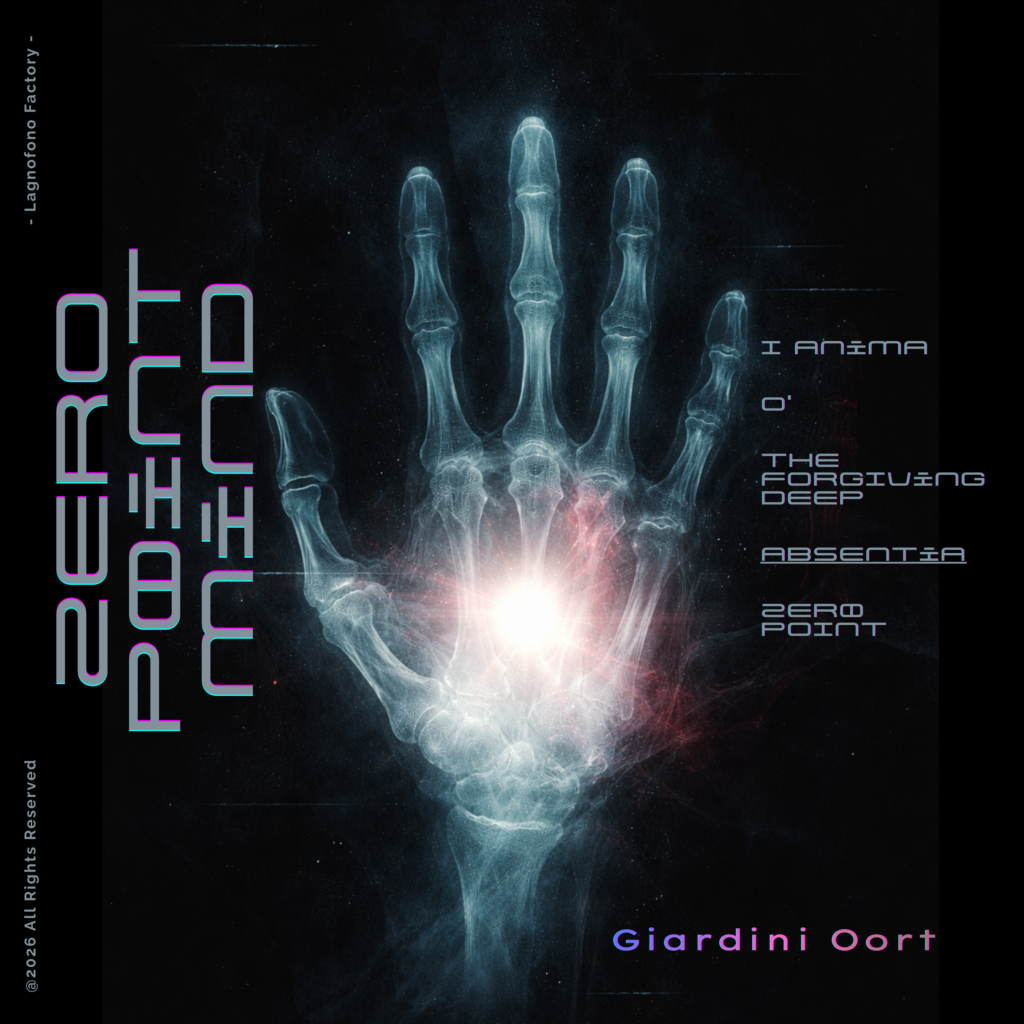
Giardini Oort’s Zero Point arrives as a carefully constructed statement from the margins of experimental electronic music, positioning itself where avant-garde sensibility and industrial weight intersect. Conceived and produced entirely by the Ravenna-based artist, the track reflects a solitary and uncompromised creative process, one that privileges atmosphere, tension and physical presence over immediacy or accessibility. From the opening moments, Zero Point establishes a space that feels intentional and inward-looking, less concerned with conventional structure and more focused on shaping an experience that unfolds through pressure, rupture and controlled instability.
Rhythm plays a central role in defining the track’s identity. Rather than relying on a continuous pulse, Zero Point is built around sharp interruptions, fractured patterns and start-stop dynamics that keep the listener in a state of alertness. The percussive framework combines electronic precision with organic irregularities, drawing from ritual percussion and hybrid textures. Hand-played elements such as udu-style drums and resonant instruments subtly coexist with digital cuts and industrial accents, creating a sense of motion that feels both mechanical and bodily. This tension between the programmed and the performed gives the track its distinctive rhythmic character, where momentum is constantly suggested, withdrawn, and reshaped.
The synth work reinforces this unstable balance. Heavy low-end pressure anchors the composition, acting less as a bassline and more as a physical force that shapes the surrounding space. Modular synthesis plays a key role in the sound design, allowing tones to evolve with a sense of unpredictability and fragility. Layers of distorted textures, restrained melodic fragments and atmospheric drones move in and out of focus, often leaving deliberate gaps of near-silence. These absences are as important as the sounds themselves, emphasizing contrast and making each return of noise feel purposeful. The influence of darker industrial and cinematic electronics is present, yet filtered through a personal lens that avoids imitation in favor of restraint and detail.
Vocals are treated as an intimate, almost tactile element within the mix. Delivered with a hushed, close-mic presence, they do not seek to dominate the track or provide narrative clarity. Instead, they function as another layer of texture, reinforcing the psychological weight of the composition. This approach aligns with the broader aesthetic of Zero Point, where meaning is suggested through tone and atmosphere rather than explicit storytelling. The voice becomes part of the sonic architecture, contributing to the sense of collapse and reconstruction that defines the track’s emotional arc.
Atmospherically, Zero Point moves between darkness and clarity without fully settling into either. There is a meditative quality to its pacing, but it resists comfort. Tension is sustained through evolving textures and sudden shifts, keeping the listener engaged and slightly off-balance. The track feels designed as a space of presence and alignment, where attention is constantly redirected to the moment. Rather than offering release in the traditional sense, it invites a form of focus that emerges from density, pressure and fragmentation.
As a release, Zero Point stands out for its coherence and depth. Every element, from sound design to rhythmic structure, appears carefully considered and integrated into a unified vision. It is not a track built for passive consumption, but one that rewards close listening and repeated engagement. In that sense, it reflects a high level of craftsmanship and artistic intent, positioning Giardini Oort as a project capable of navigating complex emotional and sonic territory with confidence.
Zero Point is a high-quality release that fits naturally within the context of a webzine attentive to experimental and forward-thinking electronic music. Its balance of industrial intensity, experimental detail and immersive atmosphere makes it a compelling contribution to the contemporary avant-garde landscape, and one that leaves a lasting impression through its disciplined yet expressive approach to sound.