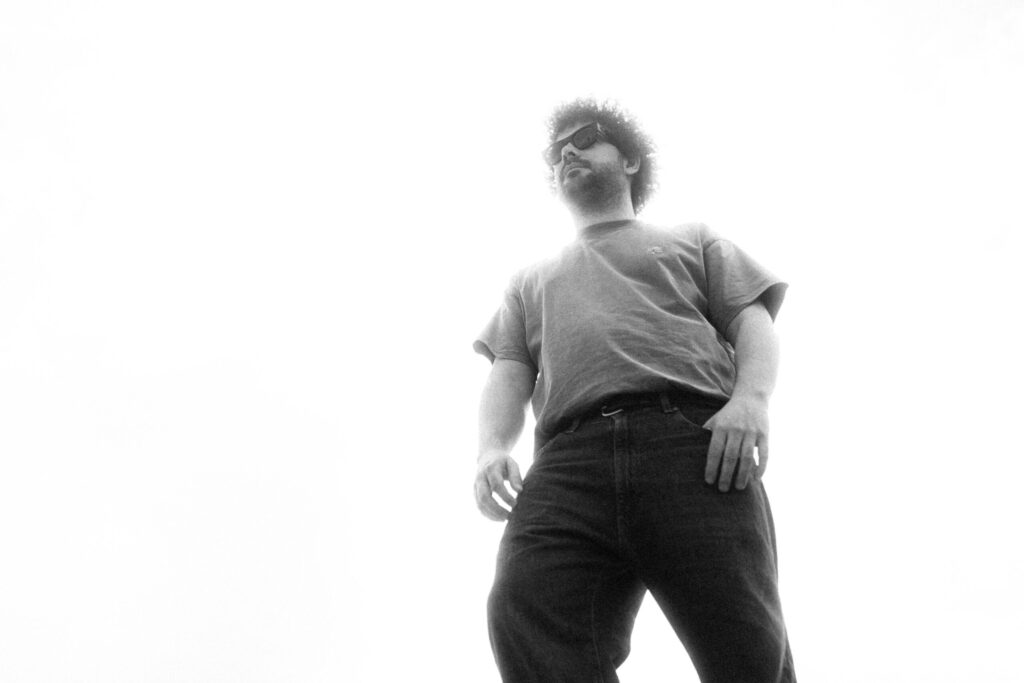

Dietro le quinte di Horst con Yu Su: a partire dal nuovo album, una conversazione sui suoni che cambiano forma.
Negli ultimi anni, Yu Su ha costruito un percorso personale tra elettronica, ambient, house e influenze provenienti da mondi musicali molto diversi, sviluppando un linguaggio difficile da incasellare in un solo genere. Il suo nuovo album, Foundry, pubblicato a inizio maggio, sembra raccogliere parte di queste esplorazioni e aprire una fase più essenziale e introspettiva: un lavoro dai toni più scuri, che conserva però la sensibilità e la delicatezza caratteristiche della sua musica.
Yu Su arriva a Horst Festival per la prima volta quest’anno. La incontriamo poco prima del suo set, tra gli spazi verdi dell’Asiat Park, in un setting immersivo dove musica, arte e architettura si incontrano: un’atmosfera che lei stessa definisce “magica”.

Grazie per essere qui con noi oggi, e benvenuta a Horst. In occasione della tua ultima uscita, Foundry, pubblicata a inizio maggio, volevo partire proprio dal disco: cosa senti di diverso rispetto ai tuoi lavori precedenti?
Penso di essere entrata nella mia fase minimal techno. È qualcosa che sto cercando di capire più a fondo, anche nel modo in cui lavoro sul suono. Rispetto ai miei lavori precedenti, mi sembra una direzione più astratta, più scura. Però resta comunque delicata, epica.
Il titolo rimanda a una fonderia, a un luogo in cui materiali diversi vengono fusi e rimodellati. Anche l’album, in qualche modo, nasce da questa idea di fusione tra suoni e influenze diverse?
Sì, perché sento di avere ancora tanto da scoprire della musica contemporanea occidentale. Per me è ancora tutto molto nuovo. Ogni album, in fondo, riflette questo processo: scoprire cose nuove e, in qualche modo, “recuperare il tempo perduto”, come l’ha definito Philip Sherburne in una recente intervista.
Se Foundry parte dall’idea di materiali che si fondono e cambiano forma, qualcosa di simile attraversa anche il modo in cui Yu Su si muove tra format diversi. Negli anni ha prodotto musica per film — tra cui la colonna sonora del cortometraggio Blue and Red Horses (2024) — e per progetti legati alla moda, incrociando realtà come Sacai, Jimmy Choo e SAMUEL GUÌ YANG. Che si tratti di un album, di un film o di un progetto visivo, il punto di partenza resta lo stesso: usare il suono per costruire atmosfere, immagini e texture.
Il tuo approccio cambia quando la musica è pensata per un film, una sfilata o un progetto visivo?
In realtà non cambia molto. Anche quando il contesto è diverso, per me si tratta sempre di raccontare una storia e costruire un mondo attraverso il suono. Più che lo stile o il genere, conta il modo in cui costruisci le texture.
Hai remixato artisti provenienti da scene molto diverse, da Parquet Courts a King Gizzard & The Lizard Wizard. Cosa ti affascina di piú quando reinterpreti la musica di un altro artista?
Mi piace troppo remixare musica completamente diversa da quello che faccio io. Per esempio, alcune cose più band-oriented che ho remixato. È interessante perché io non suono il basso, non suono la chitarra, non so suonare la batteria. Quindi è bello avere davanti tutti questi materiali incredibili. E farci cose un po’ wild.
Siamo alla fine dell’intervista. Prima di salutarci, torniamo al set di stasera: che tipo di energia vuoi portare a Horst? E qual è un disco che tieni sempre in borsa?
Per stasera direi naughty energy. Qualcosa di giocoso, un po’ istintivo. E come disco, Mister Heartbreak di Laurie Anderson.
___________________________________________________
ENGLISH VERSION
Yu Su: The Interview
Backstage at Horst with Yu Su: from her new album , a conversation about sounds in motion.
Over the past few years, Yu Su has built a personal path through electronic music, ambient, house and influences coming from very different musical worlds, developing a language that is hard to place within a single genre. Her new album, Foundry, released in early May, seems to bring together part of these explorations while opening a more essential and introspective phase: darker in tone, but still marked by the sensitivity and delicacy that often run through her music.
Yu Su arrives at Horst Festival for the first time this year. We meet her shortly before her set, among the green spaces of Asiat Park, in an immersive setting where music, art and architecture come together: an atmosphere she herself describes as “magical”.
Thank you for being here with us today, and welcome to Horst. With your latest release, Foundry, out since early May, I wanted to start from the record: what feels different about this album compared to your previous work?
I think I’m entering my minimal techno phase, and understanding it in a deeper way. Also in the way I work with sound. Compared to my previous work, it feels more abstract, darker. But it’s still gentle, epic.
The title suggests a foundry, a place where different materials are melted and reshaped. Does the album also come from this idea of fusing different sounds and influences?
Yes, because I feel like I still don’t have much knowledge of Western contemporary music. Everything is still so new. So every time I write an album, it really reflects me discovering, or “catching up with lost time”, as Philip Sherburne put it in a recent interview.
If Foundry starts from the idea of materials melting and changing shape, something similar also runs through the way Yu Su moves across different formats. Over the years, she has produced music for films — including the soundtrack for the short film Blue and Red Horses (2024) — and for fashion-related projects, crossing paths with names such as Sacai, Jimmy Choo and SAMUEL GUÌ YANG. Whether it is an album, a film or a visual project, the starting point remains the same: using sound to build atmospheres, images and textures.
Does your approach change when the music is made for a film, a runway show or a visual project?
Not really. I think it’s all about telling a story and building a world through sounds. So it doesn’t matter what style or genre the music is. You just build textures.
You have also remixed artists from very different scenes, from Parquet Courts to King Gizzard & The Lizard Wizard. What interests you most when you reinterpret someone else’s music?
I only really like to remix music that’s totally different from what I do. For example, the band I’ve remixed. It’s so interesting because I don’t play bass, I don’t play guitar, I don’t know how to play drums. So it’s very nice to have all these amazing materials in front of me. And I do wild things with them.
We’re at the end of the interview. Before we say goodbye, let’s go back to tonight’s set: what kind of energy do you want to bring to Horst? And what’s one record you always keep in your bag?
Naughty. Naughty energy. And Mister Heartbreak by Laurie Anderson.