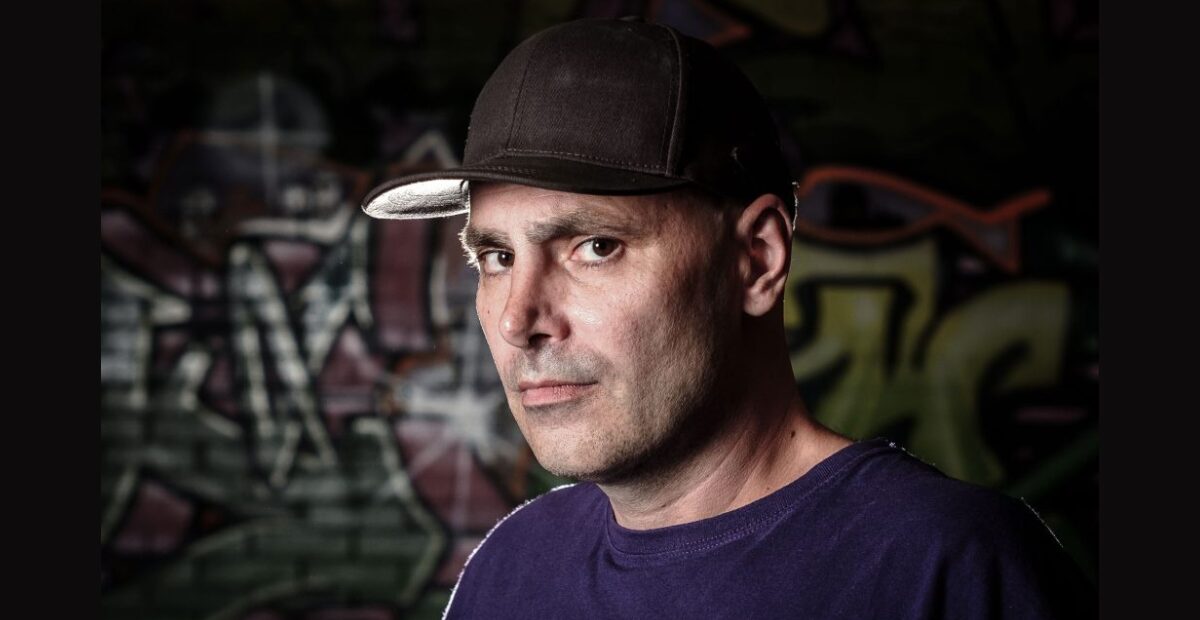

Per il trentennale di Cenobite Records, etichetta che è un vero e proprio punto di riferimento per produttori e DJ underground, abbiamo intervistato il suo fondatore, Michel Klaassen meglio noto come Leviathan e Tellurian, DJ producer olandese di musica Psycore e Gabber di stanza ad Amsterdam.
Michel Klaassen in arte Leviathan (conosciuto anche come Tellurian) è un DJ producer olandese di musica Hardcore Techno, Gabber, ma anche di un mix di Trance e Industrial Hardcore, fondatore di Cenobite Records.
Nato ad Amsterdam nel 1970, Michel iniziò a produrre musica nel 1985 all’interno di una crew Hip-Hop chiamata D-P (che sta per “Digital-Power”). Attraverso l’Hip-House e l’Acid Techno, divenne ossessionato dalla Dark Oldskool Hardcore Techno, per cui cominciò a frequentare i primi illegali e le prime feste Hardcore.
Nel 1992 uscì il suo primo disco, “The TOF band”.
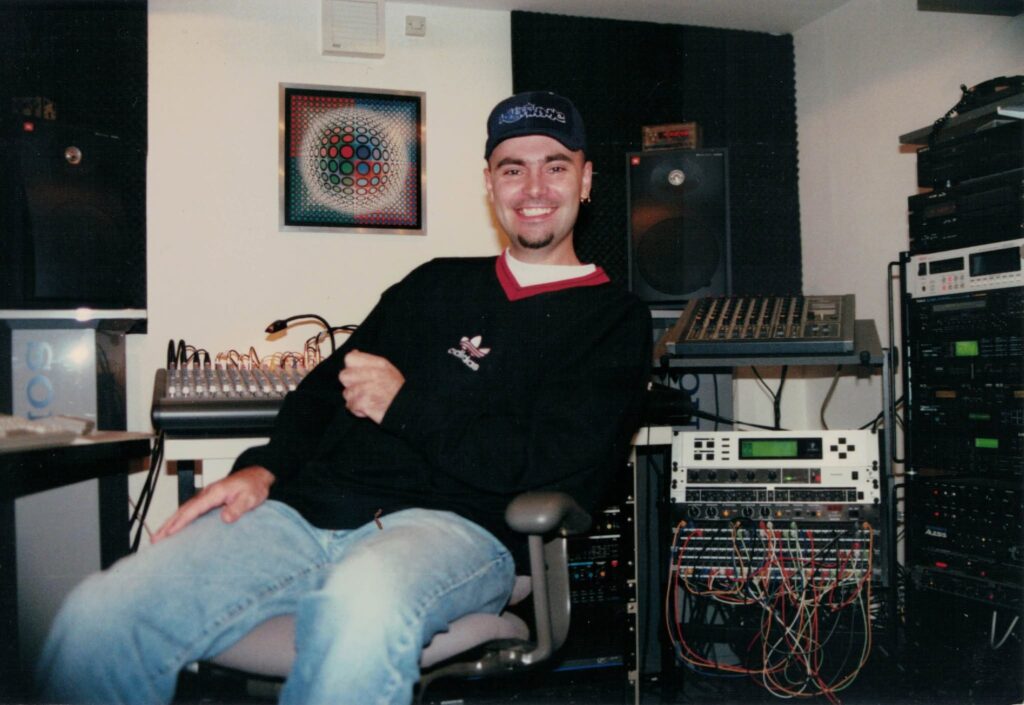
Michel investì quindi in nuove attrezzature e in classici sintetizzatori vintage, fino a dar vita a uno studio di registrazione multimediale professionale che fa battere il cuore a molti producer.
“Posso produrre qualsiasi tipo di musica nel mio studio, il mio interesse per la musica è anche molto versatile”.
Michel Klaassen
Nel tempo Michel Klaassen ha sviluppato una grande varietà di stili e ha lavorato a vari progetti con artisti come Delirium, Omar Santana, Predator, Danny Firestone, Dano, Few Prescelti, Techno-Head, Micado, Crypt, Archatos, Beyonder, Holocron, Brainiac e Philosopher.
Come Tellurian, Michel ha collaborato con la Mokum Records già dai primi anni Novanta, quando l’etichetta era una piattaforma cruciale per lo sviluppo e la diffusione delle sonorità Hardcore.
Lo stile unico di Michel in veste di Tellurian e la sua capacità di produrre tracce grezze, energiche e cupe, lo resero rapidamente un membro prezioso per il team Mokum.
Dal 1992 Michel si esibisce in tutto il mondo, nel circuito dei festival Oldschool Rave e Hardcore.
Ha suonato come DJ e con live-act in eventi importanti come:
Thunderdome, Hellraiser, Mystery-land, Digital Overdose, Immortality, Hardcore Resurrection, Ground Zero Festival, Multigroove, Hellbound, Q-base Festival, In Qontrol, Festival del Terremoto, Pandemonium, Harmony of Hardcore, Play Festival, WISH outdoor Festival, Last World Festival, Hardshock Festival, Dance Valley, Tellurian (Dubai), Ghosttown, Dance to Eden, DefQon-1 Festival, Airforce Festival.
Di seguito, l’esplosiva performance di Leviathan al Thunderdome del 2024:
Cenobite Records: un’etichetta che ha lasciato il segno nella storia dell’Hardcore
Nel 1996 Michel Klaassen fondò una propria label, la celebre Cenobite Records, dando forma a un suono underground che fonde ritmi elettronici veloci, dunque Techno Hardcore, con elementi Psycore e Trance.
Nata sotto l’ala di ISP (Immortal Sound Productions), l’organizzazione che sta dietro i leggendari eventi “Hellraiser” organizzati allo Sporthallen Zuid di Amsterdam, Cenobite ha lasciato un segno indelebile nella storia dell’Hardcore.
Oltre che negli eventi, Cenobite è stata coinvolta anche nella produzione dell’intera serie TV “Hellraiser”, giocando un ruolo di rilievo nella predisposizione delle track listings che divennero poi ascolti fondamentali per generazioni di fan.
Da tre decenni Cenobite rappresenta, dunque, una forza trainante per tutta la scena Hardcore, ed è sinonimo di musica Hardcore all’avanguardia svolgendo un ruolo cruciale nel plasmare il panorama del genere.
Con un orecchio attento ai suoni innovativi e un impegno incrollabile per la qualità, Michel Klaassen ha saputo dar vita nel tempo a una scuderia variegata di artisti che condividono con lui la passione di andare sempre oltre i confini sonori.
Per questo ed altri motivi, Cenobite è da considerarsi a tutti gli effetti un punto di riferimento rilevante per produttori e DJ underground, offrendo loro la possibilità di scatenare le loro visioni creative.
Al Melkweg di Amsterdam si festeggeranno i 30 anni di Cenobite assieme ai 20 anni di Owue Stjil Is Botergeil
La Cenobite quest’anno compie 30 anni: per festeggiare l’importante traguardo, il 5 settembre 2026 all’iconico Melkweg di Amsterdam si terrà un evento storico, lo “Strength of Unity – 30 years Cenobite Records & 20 years Owue Stjil Is Botergeil”.
La serata è co-organizzata da Strength of Unity, che a sua volta celebrerà i 20 anni del suo leggendario concept Ouwe Stijl is Botergeil.
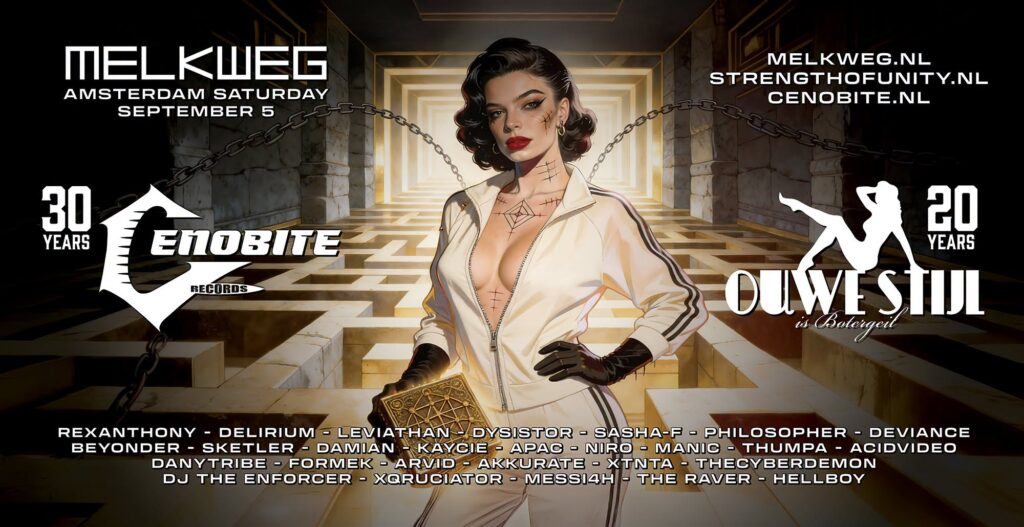
Gli artisti che prenderanno parte all’evento appartengono sia alla New Generation che alle leggende pioneristiche dell’Hardcore Classics:
Rexanthony, Delirium, Leviathan, Dysistor, Sasha F, Philosopher, Deviance, Beyonder, Sketler, Damian, Kaycie, Apac, Niro, Manci, Thumpa, Acidvideo, Arvid, Akkurate, Xtnta, Thecyberdemon, DJ The Enforcer, Xqruciator, Messi4h, The Raver, Hellboy, e gli italiani Formek e Danytribe, che poco tempo fa ho avuto il piacere di intervistare sempre per Parkett (se cliccate sui loro nomi, potete leggere le rispettive interviste!).
Ma vi lascio alle parole di Michel Klaassen, così potrete scoprire non solo molto di più su di lui, ma vi saprà anche meglio illustrare il summenzionato evento.
(Non vi nascondo che man mano che rispondeva alle mie domande, mi sono entusiasmata ed emozionata tantissimo: sarà che è uno dei miei DJ preferiti di sempre, ma non credo il motivo sia dovuto solo a questo, perché veramente, dalle sue parole trasuda tutto l’amore che ha per la musica, e la passione che ci mette nel crearla!).
Ciao Michel, piacere Karol: benvenuto su Parkett! Sono veramente entusiasta per questa intervista! Come prima cosa vorrei sapere perché hai scelto Leviathan e Tellurian come nomi d’arte. Cosa significano e/o rappresentano?
Il nome Leviathan deriva dall’universo di Hellraiser. Leviathan è la figura centrale e la potente entità che sta dietro ai Cenobiti nella serie cinematografica di Hellraiser. Ero affascinato dall’atmosfera cupa e misteriosa di quel mondo, e il nome si adattava perfettamente alla musica che volevo creare.
Anche il nome Cenobite Records nasce dallo stesso legame. Quando abbiamo fondato l’etichetta nel 1996, lo abbiamo fatto sotto l’egida della ISP (Immortal Sound Productions), la società responsabile di eventi leggendari come Digital Overdose e Hellraiser. Grazie a questo collegamento, il nome Cenobite è stato una scelta naturale, capace di rappresentare l’orientamento oscuro, sperimentale e unico che volevamo dare all’etichetta.
Il nome Tellurian è tratto dal dizionario inglese e significa “abitante della Terra”, ovvero qualcuno proveniente dal nostro pianeta. Ho scelto questo nome perché rappresentava un altro aspetto della mia personalità musicale.
Mentre Leviathan si è legato a sonorità Hardcore più cupe e psichedeliche, Tellurian mi ha permesso di esplorare stili e influenze diversi all’interno della musica elettronica.
Entrambi i nomi rappresentano sfaccettature creative diverse del mio essere, ma la passione alla loro base è la stessa: creare musica dotata di atmosfera, emozione e una forte identità.
Parlami dei tuoi trascorsi musicali: con quali generi sei cresciuto? Quali i tuoi artisti/gruppi preferiti con cui ti sei formato?
Sono cresciuto ad Amsterdam negli anni Ottanta, un periodo molto interessante per la musica. Prima ancora che nascesse l’Hardcore, ero già coinvolto nella cultura Hip-Hop. Facevo parte della crew Hip-Hop Digital Power (D-P) ed ero attivo nell’ambito della musica per breakdance, dell’Electric Boogie e di tutto ciò che ruotava attorno a questa cultura.
Il mio background musicale è molto variegato: ascoltavo Hip-Hop, Electro, Soul, Disco, Funk, Synth-Pop, New Wave, Industrial, EBM, Acid House e la prima Techno.
Artisti come Kraftwerk, The Art of Noise, Yello, Giorgio Moroder e molti altri hanno influenzato il mio percorso.
Ciò che mi ha sempre attratto è stata la musica elettronica dotata di carattere: musica capace di creare un’atmosfera e di possedere una propria identità.
Ho iniziato a produrre musica nel 1985, molto prima che la scena Hardcore diventasse quella che è oggi. Tutte quelle influenze iniziali sono confluite nel sound che ho sviluppato in seguito.
Sei una figura di riferimento della scena elettronica underground olandese e internazionale, e fin dagli anni Novanta sei stato parte del mondo delle feste Hardcore e degli illegali: raccontaci di quel periodo. Cosa ti ha attirato di quell’universo? Cosa ha rappresentato per te? E cosa ne pensi dell’attuale scena?
Tra la fine degli anni Ottanta e l’inizio degli anni Novanta si viveva un periodo davvero speciale, perché tutto era nuovo. La scena rave stava crescendo rapidamente e si percepiva la sensazione di creare qualcosa di completamente diverso. Ero attratto da quella libertà e da quella creatività. Nessuno seguiva schemi predefiniti; la gente sperimentava con i suoni, organizzava feste in luoghi insoliti e costruiva una comunità attorno alla musica.
Nella scena rave non contava apparire perfetti. A nessuno importava quale marca indossassi. A nessuno importava se i tuoi passi di danza fossero “giusti”. Nessuno giudicava la tua acconciatura, la tua età o se ti integrassi perfettamente.
La pista da ballo era uno dei pochi luoghi in cui tutti erano uguali. Ci si andava per la musica, ma anche per l’energia e per perdersi per qualche ora e sentirsi parte di qualcosa di più grande.
È stata proprio quella libertà a rendere così speciale questa scena. Non si fondava su “mi piace”, follower o apparenze: si basava su rispetto, unità e una passione condivisa per la musica.
Forse è per questo che in tanti ci portiamo ancora dentro quella sensazione. Perché, per una notte, nulla contava se non la cassa, il basso, i suoni e le persone che ballavano accanto a te.
È di questa scena rave che mi sono innamorato.
Grazie al mio coinvolgimento nella scena hardcore delle origini – inclusi gli ambienti legati a Mokum Records, Hellraiser e Immortal Soun Productions (ISP) – sono entrato a far parte di un movimento che ha cambiato per sempre la musica elettronica.
La scena attuale è molto più grande e professionale, il che comporta numerosi vantaggi. La qualità delle produzioni, degli eventi e della tecnologia è migliorata enormemente. Tuttavia, credo sia importante
mantenere vivo lo spirito originale: creatività, individualità e la sensazione di far parte di qualcosa di speciale.
Nel 1996 hai fondato una tua etichetta, la Cenobite Records. Si può dire che grazie a te il termine Psycore (inteso come Psychedelic Hardcore) è divenuto celebre nell’alveo della musica Hardcore Techno, tanto è vero che lo stile “Cenobite”, molto oscuro e allo stesso tempo melodico e psichedelico, rappresenta un filone unico e pionieristico. Come definiresti tale genere? Da cosa è caratterizzato?
Quando ho fondato la Cenobite Records nel 1996, volevo creare qualcosa di diverso nell’ambito dell’Hardcore.
All’epoca, gran parte dell’Hardcore puntava soprattutto su velocità e aggressività, mentre lo stile commerciale dominante era l’Happy Hardcore.
Volevo aggiungere più atmosfera, melodia, profondità e influenze psichedeliche; i raver lo avrebbero poi definito Trancecore o “Cenobite Style”.
È così che è nato quello che abbiamo chiamato Psycore: Psychedelic Hardcore.
Per me, lo Psycore consiste nel creare un’esperienza completa. Unisce l’energia dell’Hardcore ad atmosfere cupe, sonorità ipnotiche, effetti futuristici, melodie cariche di emozione e strutture inaspettate.
La musica deve trasportarti altrove. Non deve limitarsi a far ballare la gente, ma deve anche evocare immagini e sensazioni nella mente.
Il sound della Cenobite si è sempre basato sull’equilibrio tra oscurità e melodia, tra aggressività ed emozione.
Mi sbaglio, o il nome della tua etichetta ha a che fare con i Cenobiti, le iconiche creature demoniache della saga horror Hellraiser?
Hai perfettamente ragione. Il nome Cenobite Records è stato ispirato direttamente dall’universo di Hellraiser, e anche il nome Leviathan deriva da lì. Nella mitologia di Hellraiser, Leviathan è l’entità suprema che sta dietro ai Cenobiti; ho sempre amato l’atmosfera cupa, misteriosa e ultraterrena di quei film.
Il legame è diventato ancora più speciale quando, dopo aver lanciato l’etichetta nel 1996 sotto l’egida della ISP (Immortal Sound Productions) – la società responsabile dei leggendari eventi Hellraiser e Digital Overdose – ci è stato chiesto ufficialmente di contribuire alla promozione del nuovo film Hellraiser: Bloodline in concomitanza con un evento dedicato alla saga.
Nell’ambito di questa collaborazione, abbiamo ottenuto l’autorizzazione ufficiale a utilizzare campionamenti audio tratti dal film nelle nostre produzioni. All’epoca era una cosa davvero unica, che ha reso ancora più forte il legame tra la Cenobite Records e l’universo di Hellraiser.
Per noi, il nome non era solo ispirato a un film horror: è diventato parte integrante dell’identità dell’etichetta fin dagli esordi.
La Cenobite ha inoltre contribuito alla serie di CD di Hellraiser e alla sua direzione musicale.
In un’epoca orientata sempre più al digitale, in cui rapidità e snellezza costituiscono valori centrali e ove è essenziale ripensare processi e strumenti in chiave innovativa, cosa ne pensi di chi sceglie ancora di suonare col vinile professandone il culto?
Il vinile avrà sempre un posto speciale nella musica elettronica.
Quando ho iniziato, il vinile era il formato principale. I DJ dovevano cercare i dischi, costruire la propria collezione e conoscere davvero la musica. C’era un legame fisico con il supporto che è difficile da sostituire.
Allo stesso tempo, non sono contrario alla tecnologia. Ho sempre accolto con favore le novità. Ho iniziato usando hardware per la produzione musicale, ho sperimentato diversi metodi di produzione e ho anche creato
una piattaforma digitale per la Cenobite Records.
Ogni formato ha i suoi vantaggi. Il vinile rappresenta storia e cultura, mentre il digitale offre agli artisti la possibilità di condividere la propria musica in tutto il mondo. Credo che possano coesistere.
Quando hai iniziato a produrre, che tipo di musica facevi? Di che tipo di strumentazioni ti servivi?
Ho iniziato a produrre basi Hip-Hop intorno al 1985; le mie prime influenze spaziavano tra Hip-Hop, Electro, Funk e musica elettronica.
All’epoca, produrre musica era completamente diverso da oggi: si lavorava con hardware, campionatori, sintetizzatori e strumentazione MIDI. Non c’erano tracce illimitate al computer né un’infinità di plugin; bisognava essere creativi con l’attrezzatura che si aveva a disposizione.
Quelle limitazioni hanno contribuito a sviluppare il mio stile, costringendomi a fare scelte precise e a creare sonorità uniche.
Il mio percorso è partito da quei primi esperimenti, passando per la Techno old school, l’Hip House e l’Hardcore, fino ad arrivare alla creazione dei sound “Leviathan” e “Tellurian” e alla fondazione delle etichette Mokum e Cenobite Records.
Ho iniziato con il C64 e successivamente con il Commodore Amiga; i primi strumenti hardware sono stati Casio SK1, Roland TR-505, TR-808, Juno-106 e Akai S750.
Dalla tua bio apprendo che nel 1992 uscì il tuo primo disco, “The TOF band”: ho cercato sul web, ma non sono riuscita a trovare nulla al riguardo, però sono curiosa di sapere di cosa si tratta e soprattutto di ascoltarlo.
“The TOF Band” è stata la mia prima pubblicazione commerciale ufficiale, nel 1992. Uscì sia in vinile che come CD singolo, con uno stile musicale riconducibile alla Oldschool House.
Oltre a partecipare alla produzione, ho lavorato anche come tecnico del suono e operatore video per il progetto. È stata un’esperienza formativa preziosa, che mi ha offerto una visione approfondita sia degli aspetti tecnici che di quelli creativi dell’industria musicale.
La TOF Band si è anche esibita dal vivo in famosi club di Amsterdam come i leggendari iT, Roxy ed Escape, che all’epoca erano tra i locali notturni più iconici della città.
Ciò che ha reso il progetto particolarmente significativo è stato il fatto che tutte le royalties derivanti dalla pubblicazione furono devolute alla ricerca sull’AIDS. Nei primi anni Novanta, l’AIDS aveva un impatto devastante e volevamo sostenere la lotta contro la malattia attraverso la musica.
Purtroppo, come molte pubblicazioni indipendenti di quell’epoca, il progetto non è mai approdato sulle piattaforme digitali, rendendolo oggi piuttosto difficile da reperire. Col senno di poi, è stato un capitolo importante della mia carriera e uno dei primi passi fondamentali che hanno poi portato a Tellurian, Mokum Records, Leviathan e alla fondazione della Cenobite Records.
Col tempo poi hai investito in nuove e altre strumentazioni/attrezzature, fino a dar vita all’attuale studio di registrazione professionale: ce ne parli? Quante ore al giorno ci passi?
Il mio studio è cresciuto nel corso degli anni di pari passo con la mia esperienza. Come la maggior parte dei produttori, ho iniziato con una configurazione piuttosto modesta e ogni aggiornamento è stato il frutto di anni di lavoro, apprendimento e reinvestimento.
Oggi il mio studio è il luogo in cui avviene quasi tutto: la produzione di nuova musica, la rimasterizzazione di materiale datato, il restauro di registrazioni su DAT, la preparazione delle uscite per la Cenobite Records e la collaborazione con gli artisti dell’etichetta.
Non sto a contare le ore. Ci sono giorni in cui vi trascorro due o tre ore, mentre in altri posso arrivare facilmente a dieci o dodici ore di lavoro. Quando arriva l’ispirazione, il tempo semplicemente svanisce.
Quali sono le ultime uscite Cenobite che ci consigli e che vorresti farci ascoltare?
Sono orgoglioso di ogni uscita, perché pubblico solo musica in cui credo davvero. Alcune delle pubblicazioni recenti che consiglio vivamente sono:
- Sasha-F – Ways of the Underground E.P.
- Sketler – The Twilight Zone
- Formek – Obsession EP
- Arvid – Dreams of Death EP
- Jawcep – Conqueror EP
- Holocron – 2026 Remixes
Cenobite ha sempre puntato sulla qualità piuttosto che sulla quantità.
Continuiamo a sostenere sia artisti affermati che nuovi talenti capaci di portare qualcosa di originale nella scena Hardcore.
Tutte le uscite sono disponibili tramite Cenobite Records sul nostro sito web e sulle principali piattaforme di streaming e download.
Sono inoltre in programma nuovi remix realizzati da artisti di spicco, per creare un ponte tra la storia di Cenobite Records e il futuro della musica Hardcore.
E invece, della tua collaborazione come DJ Tellurian con la Mokum, cosa ci racconti? Quando e come è nata? E quali dei tuoi pezzi usciti con la Mokum sono i tuoi preferiti?
Mokum Records è sempre stata una delle etichette Hardcore più influenti dei Paesi Bassi, quindi è stato un onore entrare a far parte di quella famiglia.
La mia collaborazione con Mokum Records è iniziata in modo molto diretto e “old-school”. Nel 1993 mi sono presentato di persona alla sede centrale della Mokum Records, dietro la Stazione Centrale di Amsterdam, con una demo su cassetta in mano. All’epoca, tutto era ancora molto personale. Non c’erano internet, invii online o social media. Portavi fisicamente la tua musica a un’etichetta e speravi che qualcuno ci credesse.
Fred Berhout (Freddy-B) della Mokum ascoltò la demo: fu l’inizio del mio percorso con l’etichetta sotto lo pseudonimo di Tellurian.
Lavorare con la Mokum è stata un’esperienza fantastica, trattandosi di una delle etichette Hardcore più importanti di quel periodo. L’alias Tellurian mi ha permesso di esplorare un lato diverso del mio sound e di sperimentare nuove idee, pur rimanendo legato alla scena Hardcore.
Subito dopo l’uscita del mio primo vinile, MOK-5, fui invitato a esibirmi sul palco Immortality / Hellraiser ad Amsterdam.
I miei brani preferiti di quel periodo:
- Tellurian – Booster Activate
- Tellurian – Get Stupid
- Tellurian – Squash The Floor
- Tellurian – Bloody Fucking Hardcore
- Tellurian – Guyver
- Tellurian – Psycho
- Tellurian – Rendez Vouz
- Tellurian – Straight to Hell
- Tellurian – Vortex
- Tellurian – My Name Doesn’t Matter
Cosa provi quando suoni davanti a un pubblico che va al ritmo con la tua musica e dunque con i battiti del tuo cuore?
È una delle sensazioni più belle che si possano provare come produttore.
Passi ore e ore da solo in studio a creare musica, senza mai sapere davvero come reagirà il pubblico. Poi, all’improvviso, ti ritrovi tra la folla o dietro la console a vedere centinaia, o addirittura migliaia, di persone entrare in sintonia con quelle idee.
È uno scambio di energia reciproco: il pubblico ti trasmette energia e tu, si spera, restituisci qualcosa attraverso la musica. È proprio questo che continua a motivarmi dopo tutti questi anni.
Hai suonato ad eventi di grossa portata come il Thunderdome, il Pandemonium e l’Harmony of Hardcore, solo per nominarne alcuni, ma anche ad eventi più di nicchia (per esempio ho avuto la felicità di ascoltarti e ballarti al Deep Impact organizzato qui vicino Roma da Alex Coma a maggio del 2025, e ultimamente al Triple XXX Hakkuh al Paradiso di Amsterdam): immagino che tu provi emozioni differenti a seconda dei contesti. Per esempio, come ti senti e quali emozioni provi quando suoni davanti a migliaia di persone rispetto a quando invece suoni per pochi “eletti”?
Sono esperienze completamente diverse, ed è proprio per questo che le apprezzo entrambe.
Suonare a un grande festival come il Thunderdome è incredibile, grazie alle dimensioni, alla produzione e alla storia dell’evento. Guardare una folla di migliaia di persone che condividono la stessa energia è qualcosa di davvero speciale.
Gli eventi underground più piccoli sono molto più intimi. Sei più vicino al pubblico, puoi correre maggiori rischi musicali e spesso suonare set più lunghi, che ti permettono di costruire un vero e proprio viaggio sonoro.
In fin dei conti, non conta la grandezza della folla, ma la connessione con le persone in pista.
Tra gli innumerevoli eventi musicali a cui hai preso parte come DJ durante la tua carriera artistica, ce ne è qualcuno in particolare che ti è rimasto impresso?
Ci sono stati molti momenti indimenticabili, quindi sceglierne solo uno è quasi impossibile.
I primi eventi Hellraiser avranno sempre un posto speciale, essendo stati una parte fondamentale della nascita della Cenobite Records.
Suonare al Thunderdome è sempre stato un onore, trattandosi di uno dei nomi più importanti nella storia dell’Hardcore.
Più di recente, esibirmi in locali come il Number One in Italia e tornare al Paradiso con la Mokum mi ha ricordato che la comunità Hardcore è ancora incredibilmente appassionata, sia che si suoni per poche centinaia di persone, sia per diverse migliaia.
Ogni evento aggiunge un nuovo capitolo alla storia.
Parlaci dell’evento ove si celebrerà il 30° anniversario della Cenobite – insieme al 20° anniversario della OSIB – e che si terrà al Melkweg di Amsterdam il 5 settembre: come sarà strutturato? Cosa possiamo aspettarci da una serata storica come questa?
Questo evento ha un significato particolare per me, dato che non abbiamo mai avuto l’opportunità di festeggiare il nostro 25° anniversario a causa dei lockdown imposti dal COVID. Ciò rende la celebrazione di questi 30 anni ancora più speciale.
Festeggeremo i 30 anni di Cenobite Records insieme ai 20 anni di “Ouwe Stijl Is Botergeil” (Strength of Unity) nella leggendaria cornice del Melkweg di Amsterdam.
La line-up riunisce artisti che hanno contribuito a scrivere la storia di Cenobite e talenti più recenti che ne rappresentano il futuro.
Il pubblico potrà vivere un viaggio attraverso tre decenni di musica, spaziando dalle produzioni classiche della Cenobite ai brani inediti di Gen, il tutto accompagnato da un’atmosfera e da effetti visivi straordinari.
Per me non si tratta di una festa come tante altre: è una celebrazione dedicata a tutti coloro che hanno sostenuto Cenobite Records negli ultimi trent’anni: artisti, promoter, DJ e, soprattutto, i fan. Senza di loro, nulla di tutto questo sarebbe stato possibile.
Puoi segnalarci a quale evento prenderai parte prossimamente?
Oltre all’anniversario del Melkweg, non vedo l’ora di proseguire il percorso di Cenobite a livello internazionale, con esibizioni in Giappone, Stati Uniti, Colombia, Italia, Spagna e diversi altri eventi in Europa che verranno annunciati a breve.
Ogni esibizione è un’occasione per entrare in contatto con pubblici diversi, rappresentando al contempo la musica e la filosofia alla base di Mokum & Cenobite Records.
Qual è la tua visione relativamente alla scena elettronica attuale, alle tendenze in atto e alla musica c.d. “da rave” nel suo complesso?
La musica elettronica è diventata più accessibile che mai: un aspetto che rappresenta al contempo un punto di forza e una sfida.
La tecnologia permette a quasi chiunque di produrre musica, ma l’originalità è diventata più importante che mai.
I social media e gli algoritmi spesso spingono le persone a seguire le tendenze anziché creare qualcosa di unico.
La scena underground ha sempre prosperato grazie ad artisti che hanno osato sperimentare.
Spero che le generazioni future continuino a innovare, invece di limitarsi a copiare ciò che funziona già.
Tre aggettivi per descriverti come Michel e tre aggettivi per descriverti come DJ.
Come Michel: creativo, determinato e preciso.
Come produttore e DJ: eclettico, energico, imprevedibile e appassionato.
Oltre alla musica, quali sono gli altri tuoi interessi e/o passioni?
Mi sono sempre interessato di scienza e fantascienza, graphic design, videogiochi, tecnologia e ingegneria audio. Mi piace anche restaurare vecchie registrazioni e preservare la storia dell’hardcore, perché ritengo importante che le generazioni future comprendano le origini di questa musica.
Come ti immagini nel prossimo futuro? Pensi avrai sempre a che fare con la musica o hai in serbo anche altri progetti?
La musica è sempre stata al centro della mia vita e non credo che questo cambierà.
Negli anni Novanta ho avuto la fortuna di lavorare a tempo pieno come produttore musicale. È stato un periodo entusiasmante, in cui le vendite di dischi e CD permettevano di concentrarsi esclusivamente sulla produzione musicale.
Quando Internet ha trasformato il settore e la pirateria digitale si è diffusa su larga scala, il modello di business è cambiato radicalmente. Come molti artisti della mia generazione, ho dovuto adattarmi. È stato allora che ho intensificato la mia attività di DJ, portando la mia musica direttamente al
pubblico di tutto il mondo.
Parallelamente, ho ampliato le mie competenze oltre l’ambito musicale. Nel corso degli anni ho lavorato nel settore multimediale, occupandomi di montaggio video, grafica, marketing e web design.
Queste discipline creative hanno integrato il mio lavoro musicale, permettendomi di continuare a sviluppare e promuovere i miei progetti, tra cui la Cenobite Records.
Guardando al futuro, intendo continuare a produrre musica, esibirmi come DJ e far crescere la Cenobite Records.
Mi appassiona inoltre l’organizzazione di eventi, creando occasioni affinché
artisti emergenti e affermati possano esibirsi, entrare in contatto con il pubblico e far evolvere la scena Hardcore.
Offrire un palcoscenico ai talenti e contribuire alla promozione della musica è diventato per me importante tanto quanto produrla in prima persona.
La tecnologia e l’industria musicale potranno anche cambiare, ma la mia passione resta immutata: creare musica, sostenere gli artisti e contribuire al futuro della scena Hardcore.
Cosa consiglieresti a chi si avvicina per la prima volta al tuo mondo, ovvero alla produzione e al DJing?
Non inseguire le mode.
Sviluppa il tuo sound, impara le basi della produzione musicale, porta a termine i tuoi brani e accetta le critiche costruttive.
Il successo non arriva dall’oggi al domani. Costanza, pazienza e originalità ti porteranno molto più lontano rispetto al tentativo di imitare qualcun altro.
Soprattutto, fai musica perché la ami, non perché cerchi di inseguire algoritmi o numeri.
Nel ringraziarti per questa bellissima intervista, ti chiedo un’ultima cosa: alcune tracce di artisti che ti piacciono e che metteresti in una mini playlist da far ascoltare ai lettori di Parkett.
- 80 Aum – Stronger Then Steel
- D-Shake – Techno Trance
- Beyond – Bang!
- Test – Overdub
- Circuit Breaker – Trac-X
- Mescalinum United – We Have Arrived
- Rexanthony– For You Marlene
- Asylum–Mescalum
- Joey Beltram – Mentasm
- Final Analyzis – El Punto Final
Questi brani mi hanno influenzato in modi diversi e continuano a ispirarmi ancora oggi. Ognuno di essi rappresenta un capitolo importante nell’evoluzione della musica elettronica.
ENGLISH VERSION
Hi Michel, nice to meet you! I’m Karol. Welcome to Parkett! I’m really excited about this interview! First off, I’d like to know why you chose “Leviathan” and “Tellurian” as your artist names. What do they mean and/or represent?
The name Leviathan comes from the Hellraiser universe. Leviathan is the lead character and the powerful entity behind the Cenobites in the Hellraiser movie series.
I was fascinated by the dark, mysterious atmosphere of that world, and the name fitted perfectly with the music I wanted to create.
The name Cenobite Records has the same connection. When we started the label in 1996, it was under the wings of ISP (Immortal Sound Productions), the company behind legendary events like
Digital Overdose and Hellraiser.
Because of this connection, the name Cenobite was a natural choice and represented the dark, experimental and unique direction we wanted for the label.
The name Tellurian comes from the English dictionary and means “earthling” someone from Earth. I chose this name because it represented another side of my musical personality.
While Leviathan became connected with the darker and more psychedelic Hardcore sound, Tellurian allowed me to explore different styles and influences within electronic music.
Both names represent different creative sides of me, but the passion behind them is the same: creating music with atmosphere, emotion and a strong identity.
Tell me about your musical background: what genres did you grow up with? Who were your favorite artists or bands that shaped your musical development?
I grew up in Amsterdam during the 1980s, a very interesting period for music. Before Hardcore existed, I was already involved with Hip-Hop culture.
I was part of the Hip-Hop crew Digital Power (D-P) and was active with breakdance Music, Electric Boogie and the whole culture around it.
My musical background is very diverse. I listened to Hip-Hop, Electro, Soul Disco Funk, Synth-Pop, New Wave, Industrial, EBM, Acid House and early Techno.
Artists like Kraftwerk, The Art of Noise, Yello, Giorgio Moroder, and many others influenced me.
What always attracted me was electronic music that had character music that created an atmosphere and had its own identity.
I started producing music in 1985, long before the Hardcore scene became what it is today. All those early influences became part of the sound I later developed.
You are a key figure in the Dutch and international underground electronic music scene, and you have been part of the world of hardcore parties and illegal raves since the 1990s. Tell us a bit about that period. What drew you to that universe? What did it mean to you? And what do you think of the current scene?
Late 1980s The early 1990s were a very special time because everything was new. The rave scene was growing rapidly, and there was a feeling that we were creating something completely different.
I was attracted by the freedom and creativity. Nobody was following formulas; people were experimenting with sounds, organizing parties in unusual locations and building a community around the music.
The rave scene was never about looking perfect. Nobody cared what brand you wore. Nobody cared if your dance moves were “right.” Nobody judged your hairstyle, your age, or whether you fit in.
The dancefloor was one of the few places where everyone was equal. You came for the music. You came for the energy. You came to lose yourself for a few hours and become part of something bigger.
That freedom is what made this scene so special. It wasn’t built on likes, followers, or appearances it was built on respect, unity, and a shared passion for the music.
Maybe that’s why so many of us still carry that feeling with us today. Because for one night, nothing else mattered except the kick drum, the bass, the sounds and the people dancing beside you.
That’s the rave scene I fell in love with.
Through my involvement with the early Hardcore scene, including the world around Mokum Records, Hellraiser and Immortal Sound Productions (ISP), I became part of a movement that changed electronic music forever.
The current scene is much bigger and more professional, which has many advantages. The quality of production, events and technology has improved enormously. But I also think it is important to keep the original spirit alive: creativity, individuality and the feeling that you are part of something
special.
In 1996, you founded your own label, Cenobite Records. It is fair to say that, thanks to you, the term “Psycore” (meaning Psychedelic Hardcore) became renowned within the Hardcore Techno scene. How would you define this genre? What are its defining characteristics?
When I started Cenobite Records in 1996, I wanted to create something different within Hardcore. At that time, a lot of Hardcore was focused mainly on either speed and aggression and the main
commercial style was Happy Hardcore. I wanted to add more atmosphere, melody, depth and psychedelic influences, ravers would call it Trancecore or Cenobite Style.
That became what we called Psycore – Psychedelic Hardcore. For me, Psycore is about creating a complete experience. It combines the energy of Hardcore with dark atmospheres, hypnotic sounds, futuristic effects, emotional melodies and unexpected structures.
The music should take you somewhere. It should not only make people dance, but also create images and feelings in your mind.
The Cenobite sound was always about balancing darkness and melody, aggression and emotion.
Am I mistaken, or does your label’s name have something to do with the Cenobites, the iconic demonic creatures from the “Hellraiser” horror saga?
You’re absolutely right. The name Cenobite Records was directly inspired by the Hellraiser universe, and the name Leviathan also comes from it.
Leviathan is the supreme entity behind the Cenobites in the Hellraiser mythology, and I always loved the dark, mysterious and otherworldly
atmosphere of those films.
The connection became even more special because, after launching the label in 1996 under the wings of ISP (Immortal Sound Productions) the company behind the legendary Hellraiser and Digital Overdose events we were officially asked to help promote the release of the new Hellraiser: Bloodline movie in combination with an Hellraiser event.
As part of that collaboration, we received official clearance to use audio samples from the film in our productions. That was something very unique at the time and made the connection between Cenobite Records and the Hellraiser universe even stronger.
For us, the name wasn’t just inspired by a horror film it became part of the identity of the label from the very beginning.
Cenobite also contributed to the Hellraiser CD series and its musical direction.
In an increasingly digital age where speed and agility are core values, and rethinking processes and tools through an innovative lens is essential what is your take on those who still choose to play vinyl and champion its cult following?
Vinyl will always have a special place in electronic music.
When I started, vinyl was the main format. DJs had to search for records, build their collection and really know their music. There was a physical connection with the format that is difficult to replace.
At the same time, I am not against technology. I have always embraced new developments. I started with hardware in music production, moved through different production methods and also created a digital platform for Cenobite Records.
Every format has its own advantages. Vinyl represents history and culture, while digital gives artists the possibility to share music worldwide. I think both can exist together.
When you started producing, what kind of music did you make? What kind of equipment did you use?
I started producing Hip-Hop beats like in 1985.
My first influences came from Hip-Hop, Electro, Funk and some electronic music.
In those days, producing music was completely different from today. You worked with hardware machines, samplers, synthesizers and MIDI equipment.
There were no unlimited computer tracks or endless plugins. You had to be creative with the equipment you had available.
Those limitations actually helped develop my style because you had to focus on making choices and creating unique sounds.
My journey went from those early experiments, through Oldschool Techno Hip House and Hardcore, eventually leading to the creation of the Leviathan and Tellurian sounds and the foundation of Mokum & Cenobite Records.
Started with C64 and later the Commodore, Amiga First hardwear Casio SK1, Roland TR-505, TR-808, Juno-106, Akai S750.
From your bio, I learned that your first record “The TOF Band” was released in 1992; I searched online but couldn’t find anything about it, yet I’m curious to know what it’s like and, above all, to listen to it.
“The TOF Band” was my first official commercial release, back in 1992. It was released as both a vinyl record and a CD single, and the musical style was like Oldschool House.
Besides being involved in the production, I also worked as the sound engineer and cameraman for the project. It was a great learning experience and gave me valuable insight into both the technical and creative sides of the music industry.
The TOF Band also performed as a live stage act at famous Amsterdam clubs such as the legendary iT, Roxy and Escape, which were among the city’s most iconic nightlife venues at the time.
What made the project especially meaningful was that all royalties from the release were donated to AIDS research. In the early 1990s, AIDS had a tremendous impact, and we wanted to support the fight against the disease through music.
Unfortunately, like many independent releases from that era, it never made the transition to digital platforms, making it quite difficult to find today. Looking back, it was an important chapter in my career and one of the first stepping stones that eventually led to Tellurian, Mokum Records, Leviathan, and the founding of Cenobite Records.
Over time, you invested in new instruments and equipment, eventually creating your current professional recording studio could you tell us about it? How many hours a day do you spend there?
My studio has grown over the years alongside my experience.
Like most producers, I started with a relatively modest setup, and every upgrade came through years of working, learning and reinvesting.
Today, my studio is where almost everything happens: producing new music, remastering older material, restoring DAT recordings, preparing releases for Cenobite Records and working with artists on the label.
I don’t really count the hours. Some days I’m there for two or three hours, while other days I can easily spend ten or twelve hours working. When inspiration is there, time simply disappears.
What are the latest Cenobite releases you recommend and would like us to listen to?
I’m proud of every release because I only put out music I truly believe in. Some recent releases I’d definitely recommend are:
- Sasha-F – Ways of the Underground E.P.
- Sketler – The Twilight Zone
- Formek – Obsession EP
- Arvid – Dreams of Death EP
- Jawcep – Conqueror EP
- Holocron – 2026 Remixes
Cenobite has always focused on quality rather than quantity. We continue to support both established artists and new talent that bring something original to the Hardcore scene.
All releases are available through Cenobite Records on our website and the major streaming and download platforms.
There are also plans for new remixes by well-known artists, creating a bridge between the history of Cenobite Records and the future of Hardcore music.
And what about your collaboration with Mokum as Tellurian? When and how did it come about? And which of the tracks you released on Mokum are your favorites?
Mokum Records has always been one of the most influential Hardcore labels in the Netherlands, so it was an honour to become part of that family.
My collaboration with Mokum Records started in a very direct and old-school way. I literally walked into the Mokum Records head office behind Amsterdam Central Station in 1993 with a cassette tape demo in my hand.
At that time, everything was still very personal. There was no internet, no online submissions and no social media. You brought your music physically to a label and hoped people would believe in it.
Fred Berhout (Freddy-B) from Mokum listened to the demo, and that was the beginning of my journey with the label as Tellurian.
Working with Mokum was a great experience because it was one of the most important Hardcore labels of that era. The Tellurian alias allowed me to explore a different side of my sound and experiment with different ideas while staying connected to the Hardcore scene.
Right after my first vinyl release MOK-5 i was asked to perform at Immortality / Hellraiser stage in Amsterdam.
My favorite tracks from that era:
- Tellurian – Booster Activated
- Tellurian – Get Stupid
- Tellurian – Squash The Floor
- Tellurian – Bloody Fucking Hardcore
- Tellurian – Guyver
- Tellurian – Psycho
- Tellurian – Rendez Vouz
- Tellurian – Straight to Hell
- Tellurian – Vortex
- Tellurian – My Name Doesn’t Matter
How does it feel to play in front of an audience that moves to the rhythm of your music and, by extension, the beat of your heart?
That’s one of the greatest feelings you can experience as a producer. You spend countless hours alone in the studio creating music, never really knowing how people will react. Then suddenly you’re standing in the crowd or behind the decks watching hundreds or even thousands of people connecting with those ideas.
That energy works both ways. The audience gives you energy, and hopefully you give something back through the music. That’s what keeps me motivated after all these years.
You’ve played at massive events like Thunderdome, Ground Zero Festival, Hellraiser, Ghosttown and Harmony of Hardcore but also at more intimate underground events. How do those experiences differ?
They’re completely different experiences, and that’s exactly why I enjoy both.
Playing at a huge festival like Thunderdome is incredible because of the scale, the production and the history behind the event. Looking out over thousands of people all sharing the same energy is something very special.
Smaller underground events are much more personal. You’re closer to the audience, you can take more musical risks and often play longer sets that allow you to build a real journey.
At the end of the day, it isn’t about the size of the crowd. It’s about the connection with the people on the dance floor.
Among the countless musical events where you’ve performed throughout your career, is there any one in particular that stands out in your memory?
There have been many unforgettable moments, so choosing just one is almost impossible.
The early Hellraiser events will always be special because they were such an important part of the birth of Cenobite Records.
Playing Thunderdome has always been an honour because it’s one of the biggest names in Hardcore history.
More recently, performing at events like in Club Number One, Italy and returning to Paradiso with Mokum reminded me that the Hardcore community is still incredibly passionate, whether you’re playing for a few hundred people or several thousand.
Every event adds another chapter to the story.
Tell us about the event marking Cenobite’s 30th anniversary which will be celebrated alongside OSIB’s 20th anniversary at Amsterdam’s Melkweg on September 5th. What can we expect?
This event means a lot to me because we never had the opportunity to celebrate our 25th anniversary due to the COVID lockdowns. That makes this 30-year celebration even more meaningful.
We’re celebrating 30 Years of Cenobite Records together with 20 Years of Ouwe Stijl Is Botergeil (Strength of Unity) at the legendary Melkweg in Amsterdam.
The lineup brings together artists who helped build the history of Cenobite alongside newer artists who represent its future.
Visitors can expect a journey through three decades of music, from classic Cenobite productions to brand new Gen material, supported by an amazing atmosphere and visuals.
For me, it’s not just another party. It’s a celebration of everyone who has supported Cenobite Records over the past thirty years, artists, promoters, DJs and, most importantly, the fans. Without them, none of this would have been possible.
Can you tell us about any upcoming events you’ll be playing at?
Besides the Melkweg anniversary, I’m looking forward to continuing the Cenobite journey internationally, including performances in Japan, USA, Colombia, Italy, Spain, and several other European events that will be announced soon.
Every performance is an opportunity to connect with different audiences while representing the music and philosophy behind Mokum & Cenobite Records.
What is your take on the current electronic music scene?
Electronic music has become more accessible than ever, which is both a strength and a challenge.
Technology allows almost anyone to produce music, but originality has become more important than ever. Social media and algorithms often encourage people to follow trends instead of creating something unique.
The underground has always thrived because artists dared to experiment. I hope future generations continue to innovate instead of simply copying what already works.
Three adjectives to describe yourself as Michel, and three to describe yourself as a DJ.
As Michel: Creative, determined and on point.
As a Producer & DJ: Eclectic, Energetic, unpredictable and passionate.
Besides music, what are your other interests?
I’ve always been interested in science & science fiction, graphic design, Computer Games, technology and audio engineering.
I also enjoy restoring old recordings and preserving Hardcore history, because I believe it’s important that future generations understand where this music came from.
How do you envision your near future? Do you think you’ll still be involved in music, or do you have other projects in the pipeline?
Music has always been at the centre of my life, and I don’t see that changing.
In the 1990s, I was fortunate enough to work as a full-time music producer. It was an exciting time when record and CD sales made it possible to focus entirely on producing music.
When the internet changed the industry and illegal downloading became widespread, the business model changed dramatically.
Like many artists from my generation, I had to adapt. That’s when I
became more active as a DJ, bringing my music directly to audiences around the world.
At the same time, I expanded my skills beyond music. Over the years I’ve worked in multimedia, including video editing, graphic design, marketing and web design.
Those creative disciplines complemented my work in music and allowed me to continue building and promoting my own projects, including Cenobite Records.
Looking ahead, I want to continue producing music, DJing and developing Cenobite Records.
I’m also passionate about organising events, creating opportunities for both new and established artists to perform, connect with audiences and keep the Hardcore scene evolving.
Giving talent a stage and helping to promote the music has become just as important to me as producing it myself.
The technology and the music industry may continue to change, but my passion remains the same: creating music, supporting artists and contributing to the future of the Hardcore scene.
What advice would you give to someone just starting out?
Don’t chase trends.
Develop your own sound, learn the fundamentals of music production, finish your tracks and accept constructive criticism.
Success doesn’t happen overnight.
Consistency, patience and originality will take you much further than trying to imitate someone else.
Most importantly, make music because you love it not because you’re chasing algorithms or numbers.
As I thank you for this wonderful interview, I’d like to ask one last thing: Name five tracks by artists you like that you’d include in a mini-playlist.
I’d like to thank you, Karol, and Parkett for this interview.
This is my mini-playlist:
- 80 Aum – Stronger Then Steel
- D-Shake – Techno Trance
- Beyond – Bang!
- Test – Overdub
- Circuit Breaker – Trac-X
- Mescalinum United – We Have Arrived
- Rexanthony– For You Marlene
- Asylum–Mescalum
- Joey Beltram – Mentasm
- Final Analyzis – El Punto Final
These tracks all influenced me in different ways and still inspire me today.
They each represent an important chapter in the evolution of electronic music.