
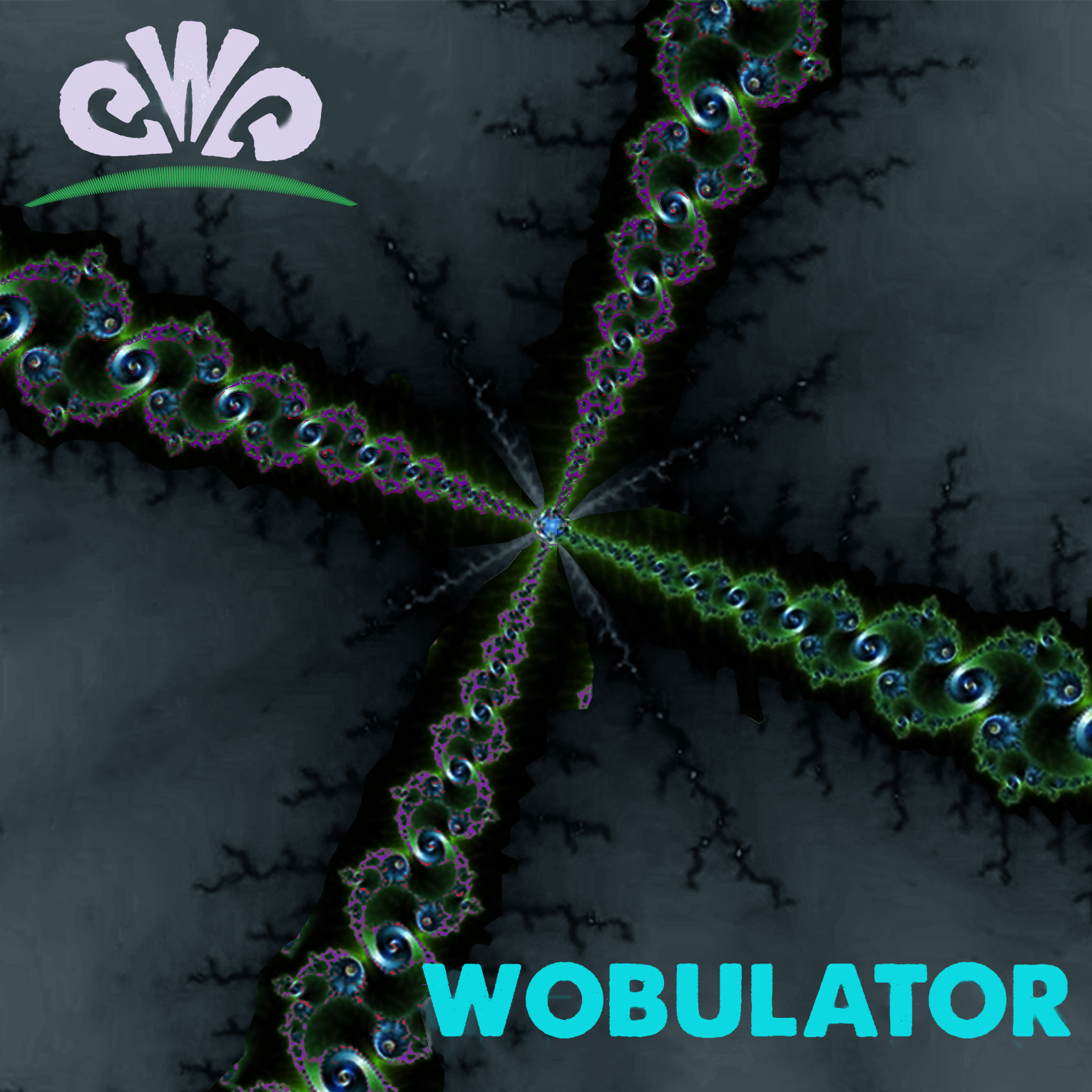
GMG’s “WOBULATOR” arrives as a dense, restless piece of electronic music that sits comfortably at the crossroads of breakbeat, IDM and experimental hip-hop without ever fully settling into one lane. Released on December 20th, 2025, the track functions both as a standalone statement and as a revealing fragment of the broader world hinted at in the forthcoming album DARK FOREST CONSPIRACY. From the outset, it feels less like a single designed for linear consumption and more like a moving system of ideas, constantly reconfiguring itself as it plays.
Rhythm is the engine of “WOBULATOR,” but it is a deliberately unstable one. The breakbeats are sharp, fractured, and often pulled apart just as they seem ready to lock into a groove. Jersey club-inspired kick patterns surface briefly, only to be disrupted by sudden edits, dropouts, or sideways shifts in emphasis. There is a sense of motion that never resolves into comfort. Beats swing, stutter, and snap back into place, echoing the tradition of electronic hip-hop while pushing against its more familiar structures. Rather than using rhythm to anchor the listener, GMG uses it to provoke alertness, as if the track is constantly asking for renewed attention.
The sampling work is central to this effect. Most source material is chopped beyond easy recognition, transformed through aggressive processing into new waveforms that feel both tactile and elusive. Scratches appear not as nostalgic gestures but as textural interventions, sharp and sometimes abrasive, cutting across the stereo field with exaggerated panning. There is a clear lineage connecting these techniques to pioneers like Amon Tobin and Squarepusher, but “WOBULATOR” avoids imitation by refusing to linger on any single reference point. Influences are worn openly, yet the track keeps moving, almost impatiently, toward something less defined and more personal.
Synth work in “WOBULATOR” operates less as melody and more as atmosphere. Tones swell and recede, often smeared or filtered to the point where they feel half-remembered. Some passages carry a distinctly digital sheen, evoking mid-2000s low-poly aesthetics and the bright, synthetic optimism of early Y2K design culture. Others feel darker and more congested, like sound compressed by concrete walls. This contrast creates a subtle tension between nostalgia and pressure, a push and pull that mirrors the track’s refusal to settle into a purely retro or purely futuristic identity.
Atmospherically, the track captures what GMG has described as the “concrete nausea” of urban life in London and Birmingham. There is density everywhere: in the overlapping rhythms, in the layered samples, in the way elements seem to compete for space rather than harmonize politely. Yet this density never collapses into chaos. Even at its most cluttered, “WOBULATOR” feels intentional, carefully assembled through a process that values collage over polish. The use of extreme panning and granular edits gives the impression of movement through physical space, as if the listener is passing through different rooms or streets, each with its own sonic residue.
What ultimately sets “WOBULATOR” apart is its sense of urgency. While it draws heavily from established breakbeat and electronic hip-hop traditions, it avoids becoming an exercise in genre reverence. The track’s child-like whimsicality, its constant shifting of ideas, prevents it from ossifying into pastiche. At the same time, there is a clear seriousness beneath the surface, a reflection of isolation and fragmentation within a contemporary music landscape that often feels overcrowded and transactional.
As an introduction to GMG’s broader vision, “WOBULATOR” is both inviting and challenging. It suggests an artist deeply engaged with the mechanics of sound, willing to dismantle familiar forms in order to rebuild them on their own terms. The result is a high-quality release that rewards close listening and repeated returns, revealing new details with each pass. It is precisely the kind of track that benefits from being hosted and examined within a webzine context, where its layers, references, and subtle contradictions can be given the space they deserve.