
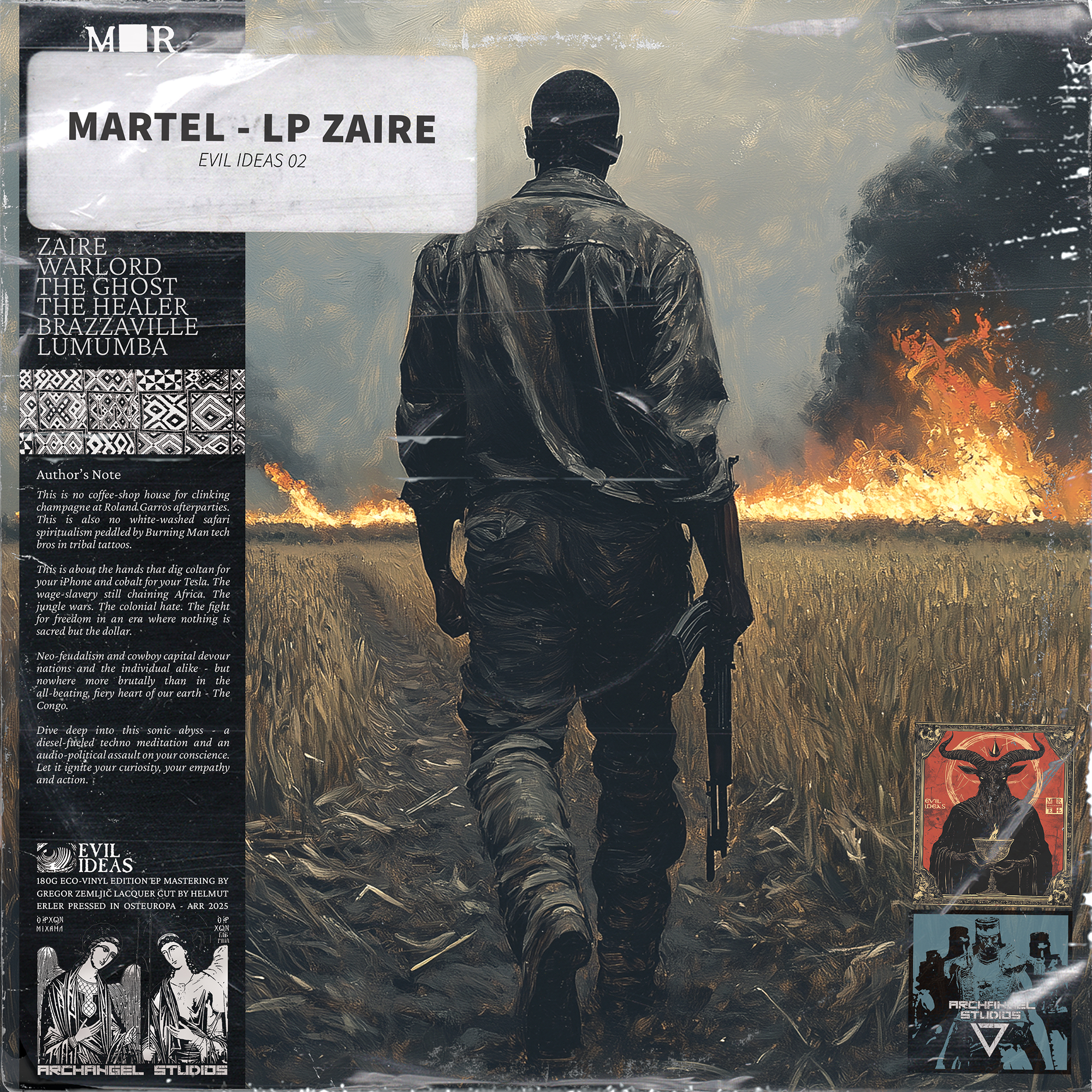
Mastered by Gregor ZemljiÄ, Zaire marks a profound artistic statement by Martel Vladimiroff, a multidisciplinary artist from Titograd, Montenegro, whose creative roots span architecture, music, film, and game development. Set for release on July 23, 2025, Zaire emerges as a high-quality and deeply evocative exploration of sound, rhythm, and meaning—an album we are proud to feature on our webzine.
From its very first moments, Zaire plunges the listener into a dense sonic landscape inspired by the Congo Rainforest. The record’s atmosphere is both humid and hypnotic, an enveloping world of tribal percussion, dark synth textures, and haunting field recordings. The rhythmic foundation is unmistakably techno in its pulse, yet it refuses predictability. Each groove feels alive—organic, gritty, and breathing with the pulse of the jungle. Martel replaces conventional drum samples with real percussive instruments sourced from his travels through Africa, creating a tactile authenticity that roots the album in place and history.
Tracks such as “Brazzaville” and “The Ghost” exemplify Martel’s mastery in blending electronic precision with the untamed essence of the natural world. “Brazzaville” stands as a powerful anti-gentrification statement against the sanitized versions of Afro-house that populate mainstream festivals. Its rhythmic flow is trance-like and ritualistic, built upon interlocking percussions and reverberating synth lines that feel as though they were carved out of the rainforest itself. “The Ghost,” on the other hand, merges organic samples of wildlife with heavy, diesel-fueled grooves and Pan-African spoken word passages, crafting a suffocating yet intoxicating sense of atmosphere.
Throughout Zaire, Martel’s production remains meticulous yet raw. His use of analog and digital gear—including Soviet-era synthesizers and heavy guitar effect pedals—creates a unique tension between modern electronic clarity and an almost industrial grunge. Pads and drones float through the mix like mist over the Congo, while distant voices, documentary fragments, and warlord interviews remind listeners of the political and social realities that fuel this project. The rhythmic structures evolve constantly, often abandoning the standard four-on-the-floor patterns for syncopated, polyrhythmic sequences that mirror the chaos and energy of the continent he evokes.
Thematically, Zaire stands as a bold commentary on Africa’s ongoing struggles with exploitation, conflict, and neocolonialism. Martel challenges stereotypes by dismantling the polished imagery often associated with “world music” and replacing it with a soundscape that is confrontational, visceral, and honest. The album critiques Western commodification of African culture, aiming instead to restore its depth and anguish through sound. In Martel’s words, this is not “coffee-shop house for clinking champagne at Roland Garros afterparties” nor “white-washed safari spiritualism peddled by Burning Man tech bros.” Zaire is about the hands that dig coltan for smartphones, the lives lost in wars fueled by greed, and the relentless struggle for freedom and dignity.
The synth work in Zaire deserves particular praise. Rather than serving as mere melodic ornamentation, the synthesizers act as a narrative device—rising and decaying like an ecosystem under pressure. Their timbre shifts from glassy and ethereal to abrasive and metallic, mirroring the album’s emotional and thematic depth. In some passages, the synths intertwine with tribal chants and environmental sounds, creating an uncanny fusion between human-made and organic resonance.
Atmospherically, the album achieves a rare balance between cinematic immersion and club-ready energy. It feels equally suited for a warehouse rave as for solitary listening in the dark. There is a ritualistic dimension to Martel’s sound design—a shamanic intensity that connects body and mind through rhythm. Every track contributes to a larger narrative, culminating in a meditation on survival and resistance.
Ultimately, Zaire is not just an album but a statement—a sonic document that captures both the physical and spiritual turbulence of modern Africa. It is a fearless work that transcends genres and expectations, pushing techno and electronic music into new emotional and political territories. With its combination of deep rhythmic craftsmanship, masterful synthesis, and poignant atmosphere, Zaire stands as one of the most compelling and socially resonant releases of the year.
In Zaire, Martel achieves what few electronic artists attempt: a balance between aesthetic sophistication and moral urgency. The result is an auditory journey through conflict, history, and hope—an experience that lingers long after the final beat fades into the rainforest’s echo.