
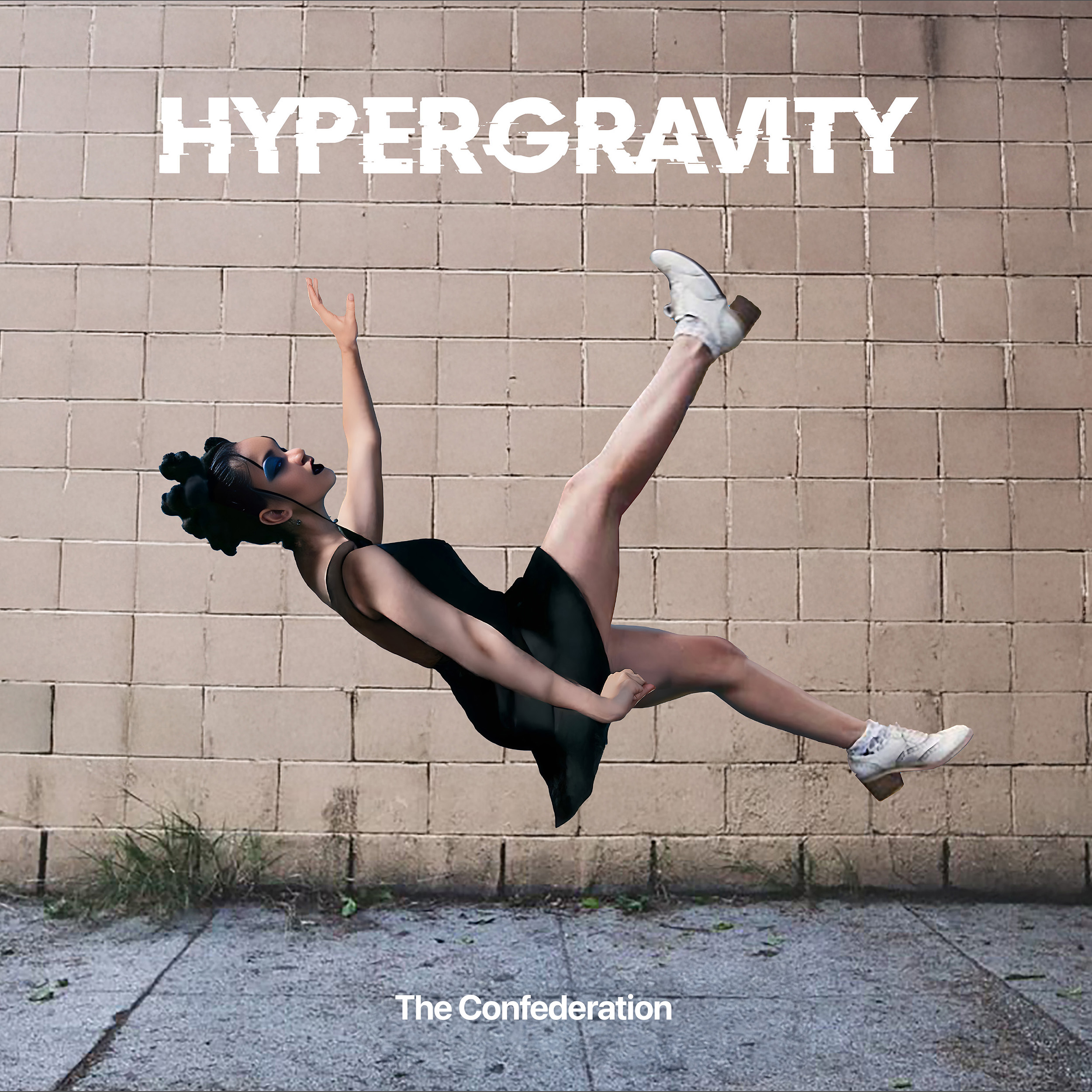
Hypergravity is an album that positions itself deliberately between narrative ambition and sonic restraint, using the language of indie pop and electronic music to tell a story that unfolds gradually rather than demanding immediate resolution. Created by The Confederation, a Coventry-based project led by Simon, the record operates as a Gothic Opera conceived for live performance, yet it never feels confined by theatrical convention. Instead, it moves with a careful sense of pacing, allowing rhythm, texture, and atmosphere to carry as much meaning as lyrics or plot.
From the opening moments, Hypergravity establishes a rhythmic identity rooted in tension and release. Beats are rarely decorative; they function as emotional cues. At times, the percussion feels minimal and almost hesitant, leaving space for voices and synths to breathe. Elsewhere, the rhythms tighten and repeat insistently, creating a subtle pressure that mirrors the psychological weight carried by the album’s characters. There is a quiet confidence in how electronic elements are used, never overwhelming the songs but shaping their internal motion, borrowing from trip-hop’s patience and indie pop’s melodic clarity.
The synth work across the album deserves particular attention. Rather than chasing brightness or excess, The Confederation favors tones that feel slightly worn, blurred at the edges, and often melancholic. Pads drift in and out like half-remembered thoughts, while sharper electronic lines cut through with a sense of urgency. Influences such as Goldfrapp, Massive Attack, and Radiohead are present, not as imitation, but as a shared vocabulary: an understanding that electronic sound can be intimate, fragile, and unsettling at the same time. The balance between analog warmth and digital manipulation gives Hypergravity a tactile quality, even when its themes lean toward abstraction.
Atmosphere is where the album truly comes into focus. Hypergravity exists in a space where reality and fantasy constantly overlap, reflecting its narrative about two outsiders navigating identity, perception, and emotional dependency in a digital age. Tracks like “Who Invented Mondays?” act as moments of reflection rather than narrative exposition, capturing fragility through restrained arrangements and understated melodic shifts. The mood often feels suspended, as if the songs are hovering just above the ground, uncertain whether to land or drift further away.
Vocals play a central role in shaping this atmosphere, not only through performance but through process. The use of AI modeling software to transform human voices into the characters of Lena and Norm introduces an uncanny dimension that feels conceptually aligned rather than gimmicky. The voices sound familiar yet slightly displaced, reinforcing themes of fractured identity and emotional mediation. This approach adds a layer of ambiguity: the listener is never entirely sure where the human ends and the constructed persona begins, which becomes part of the album’s emotional logic.
Despite its conceptual weight, Hypergravity maintains a sense of accessibility. Songs like “Seeds In Winter” balance narrative depth with melodic openness, allowing listeners to engage without needing to decode every symbolic detail. The album’s structure, inspired by classic rock operas such as Tommy and Quadrophenia, provides a loose framework rather than a rigid script. The story unfolds in fragments, emotional peaks, and quiet aftermaths, trusting the listener to connect the dots.
Production choices reinforce the idea of a raw live core enhanced digitally. Guitar, bass, piano, keyboards, and drums remain central, grounding the album even as electronic treatments and vocal processing expand its sonic palette. There is an intentional roughness in places, a refusal to polish away all imperfections, which strengthens the sense of vulnerability running through the record.
Hypergravity stands as a high-quality release that embraces risk without losing coherence. It challenges conventional storytelling in music while remaining emotionally legible, offering a listening experience that rewards attention and patience. As a work designed to extend beyond audio into live performance and visual interpretation, it feels complete yet open-ended. It is precisely this balance—between control and uncertainty, intimacy and distance—that makes Hypergravity a compelling album and one we are genuinely pleased to host on our webzine through this review.