
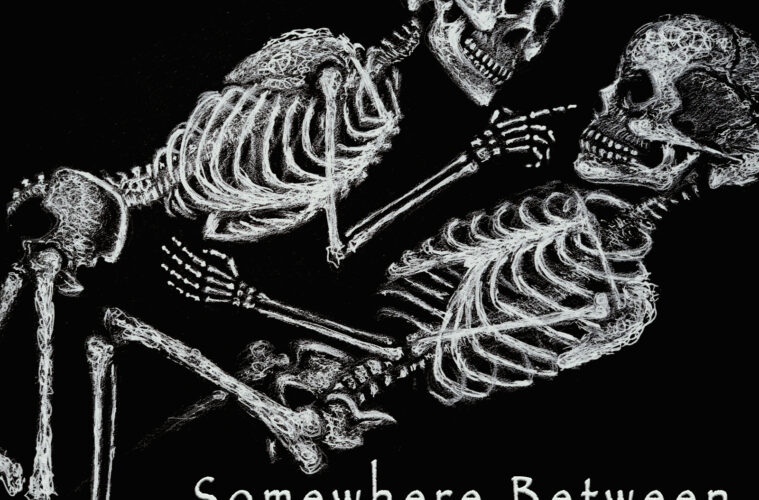
With Somewhere Between Love & Misery, London-based multimedia artist Joe McIntosh, known as JeezJesus, continues to refine the stylistic direction he has been shaping since 2022. The album represents the latest chapter in a prolific evolution that has moved through post-punk, industrial, synth-driven darkwave, and experimental electronic works. Coming after projects such as Super Creeps & Spooky Beats and Sound Art: Vol. 1, this new release consolidates the producer’s identity while embracing the eclectic nature that has defined his path. It stands as a high-quality work—one we are happy to host and analyse on our webzine.
The album opens with “Abandon Everything (Intro),” a foreboding soundscape built from repurposed fragments of older material. The track establishes the atmosphere for what follows: a tense, textural environment where synth layers and industrial tones form a sonic “hellscape,” setting the emotional stakes of the record.
“I See You,” the project’s final single, brings a sharp electro-punk edge. Rhythmically, the track pulses with a driving, almost militant percussive structure that mirrors the political urgency of the lyrics. The synths oscillate between harsh distortion and piercing clarity, giving the track a sense of controlled unrest. This interplay supports the theme of social injustice and collective alienation, making it one of the album’s most impactful rhythmic statements.
“Like to Like You” shifts toward a darker synth-pop palette. Here the rhythmic structure becomes more minimal, relying on steady electronic pulses that evoke the mechanical repetition of scrolling and online immersion. The synth work draws from influences like Gary Numan, with cold, metallic textures framing a narrative about self-esteem, data exploitation, and algorithmic manipulation.
The industrial-leaning “Control” deepens the album’s abrasive emotional landscape. Percussion lands heavily, with sharp rhythmic patterns reminiscent of early Nine Inch Nails. The synths here follow a cyclical motion, mimicking the recurring mental loops described in the lyrics. The production enhances the sensation of an internal struggle, making rhythm and texture central narrative tools.
With “Cost of the Lost,” the album introduces more prominent guitars, moving briefly into metal-inflected territory. The rhythmic momentum is steady and forceful, grounding a critique of global conflict. Synth elements blend subtly with the heavier instrumentation, maintaining the project’s electronic foundation while expanding its sonic spectrum.
“Don’t Wanna Be Here” returns to dense darkwave aesthetics. Its rhythm is restrained yet insistent, creating a sense of emotional detachment. The synths feel colder and more hollow, portraying the alienation and social exhaustion at the heart of the song.
“Pressures of Life (Killing Me)” stands as the album’s most abrasive moment. Leaning into EBM influences, the track employs pounding kick patterns and grinding synth sequences. The rhythm is intentionally oppressive, reflecting the suffocating nature of modern labour and economic precarity. Its harshness becomes a narrative device, mirroring the intensity of its theme.
The second half of the album shifts tonally, beginning with “We Could Be Friends,” an 80s-inspired synthpop piece whose lighter, melodic synth lines and upbeat rhythmic pulse contrast with the darker opening tracks. The production leans on warm pads and shimmering arpeggios, supporting a narrative of blossoming romantic feelings.
“Burnt Out” explores quirky new wave sensibilities. Its rhythm is tight and brisk, with synths jumping between playful lines and chaotic bursts that represent emotional exhaustion. “It’s Doing My Head In” continues the synthpop approach but in a more minimal form, its rhythm subdued and its synth palette smoother, reinforcing themes of repressed affection.
“Work to Die” reintroduces an electro-punk attitude with energetic rhythmic patterns. The synths are sharp and punchy, reinforcing the album’s recurring critique of socioeconomic inequality. “I’m So Stressed” then embraces chaotic post-punk influences, with a lead synth that mimics a harmonica and a rhythm section that accelerates the sense of rising tension.
The closing track, “I Want a Pony,” brings the album to an eccentric finish. Its synth lines gradually unravel into deliberate chaos, while the rhythm becomes increasingly unpredictable. The result is a playful yet provocative endpoint, reflecting the artist’s experimental roots.
Across its 14 tracks, Somewhere Between Love & Misery showcases JeezJesus’ ability to blend industrial force, emotional vulnerability, and stylistic exploration. Its rhythmic design, synth craftsmanship, and atmospheric depth form a cohesive narrative arc, marking this release as a compelling contribution to contemporary experimental electronic music.