
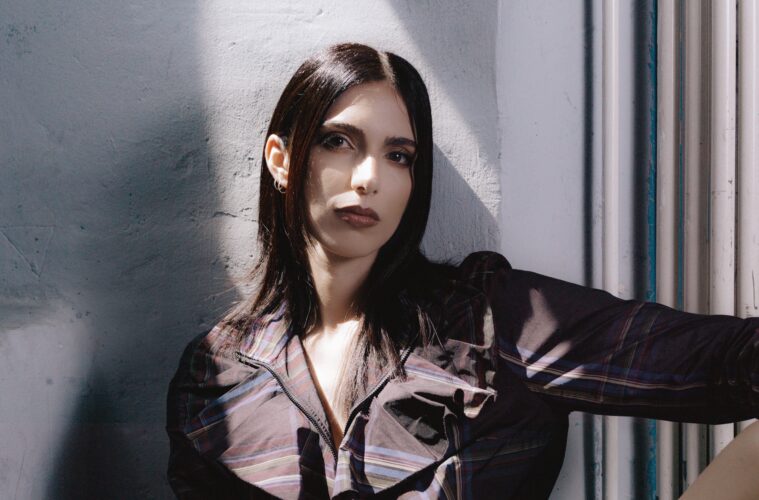
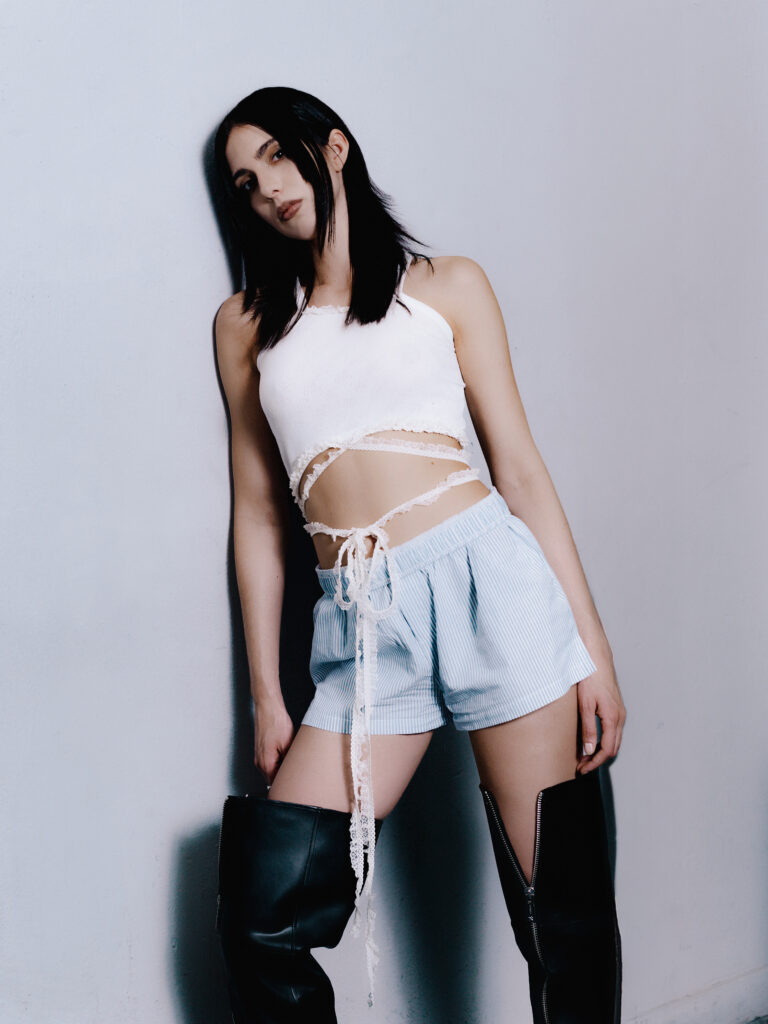
In vista della sua data italiana a Torino il 29 novembre da Azimut, abbiamo incontrato BLANKA, un’artista che sfugge a qualsiasi definizione. DJ, producer, curatrice di eventi e co-fondatrice di Room Trax, BLANKA incarna una visione in costante evoluzione, guidata da un’urgenza creativa che rifiuta di restare ferma.
Il suo percorso si sviluppa tra due città chiave: Barcellona, dove ha messo per la prima volta le mani sui piatti, esplorando sonorità house e minimal e traendo le prime ispirazioni da figure come Ricardo Villalobos; e Berlino, dove si è trasferita durante i lockdown e dove il suo suono è diventato più denso, ipnotico e tagliente. È proprio da questa tensione tra luce e ombra che nasce Room Trax, un progetto che co-gestisce con Angioma e che comprende sia un’etichetta discografica sia una serie di eventi, riflettendo una doppia identità: solare, minimale e fluida da un lato, cruda e senza compromessi, fortemente orientata al club dall’altro. Oggi Room Trax è un punto di riferimento tra Berlino e Barcellona.
Nel corso degli anni, BLANKA ha portato la sua visione in alcuni dei club e festival più influenti d’Europa, dal Berghain e il Tresor a Berlino a fabric e FOLD a Londra, passando per Garbicz Festival, Stone Techno Festival, Bassiani, Basement e il Lof ad Amsterdam, dimostrando una straordinaria capacità di leggere gli spazi, le architetture e l’energia sottile del dancefloor. Questo istinto guida anche l’approccio curatoriale di Room Trax, cresciuto da un’iniziativa mossa dalla passione a una vera e propria piattaforma internazionale con una forte identità e una comunità molto unita.
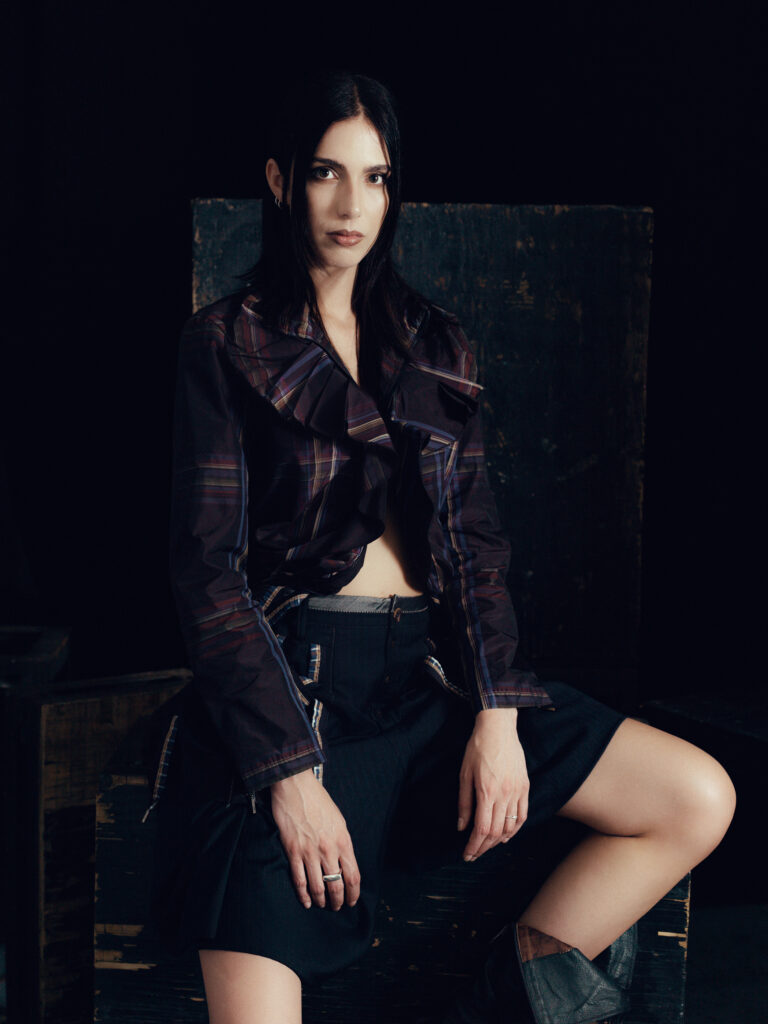
Come producer, le sue uscite su etichette come SK_eleven, Soma Records e Mutual Rytm rivelano un suono potente ma raffinato, pensato per i momenti di peak-time senza mai sacrificare la profondità. EP come “Breaking Rules” e le sue collaborazioni più recenti testimoniano un’evoluzione continua, sempre radicata in una ricerca artistica profondamente personale.
L’abbiamo incontrata all’Azimut di Torino prima del suo set per Wired Productions. Dal vivo, BLANKA è pura energia in movimento: un’artista che vive il club come uno spazio di trasformazione, dove le emozioni si trasmettono, la sperimentazione è essenziale e l’evoluzione non è negoziabile.
Quello che segue è uno sguardo nel suo mondo, nel suo processo creativo e nella filosofia che la spinge ad andare avanti, senza sosta.
1. Ciao BLANKA, benvenuta su Parkett Channel. Vorrei partire dai tuoi inizi. Negli ultimi dieci anni hai vissuto vite molto diverse, lasciando la tua città natale Córdoba per Milano, Barcellona e ora Berlino. In che modo senti che questi luoghi, le loro energie, culture e ritmi, hanno plasmato oggi la tua identità artistica?
Ogni città mi ha formata a modo suo. Milano è stato il primo grande cambiamento: mi sono trasferita lì a 18 anni, lavoravo nella moda, scoprivo la nightlife e, per la prima volta, la musica elettronica. Ha aperto una porta che non sapevo nemmeno esistesse.
Barcellona è stato il secondo capitolo, il luogo in cui ho iniziato a sperimentare, a suonare, a produrre… dove l’idea di diventare un’artista ha iniziato a sembrare reale.
Poi è arrivata Berlino con la sua intensità. Mi ha messa alla prova, mi ha spinta oltre e mi ha offerto opportunità che mi hanno permesso di crescere nell’artista che sono oggi.
Tutti questi luoghi, le loro energie, le culture e le persone che ho incontrato hanno plasmato la mia sensibilità, il mio gusto e il modo in cui comprendo la musica. Ogni città ha lasciato uno strato su di me, sia a livello personale che creativo.
2. Hai spesso parlato dell’importanza di crescere con i tuoi tempi, senza forzare le cose o prendere scorciatoie. Cosa significa per te proteggere il tuo tempo, la tua energia e la tua identità creativa in un’industria che accelera continuamente?
La scena oggi si muove così velocemente che a volte è difficile trovare musica che arrivi davvero all’anima. C’è sempre una sottile tensione tra ciò che vuoi esprimere, ciò che gli altri si aspettano da te e ciò che è di tendenza in quel momento.
Cerco di non farmi trascinare da questa corrente. Preferisco muovermi al mio ritmo, creare da un luogo che sento onesto, piuttosto che reattivo.
Proteggere il mio tempo significa non avere fretta, non fare le cose solo perché “dovrei”, ma concedermi lo spazio per aspettare finché qualcosa non mi sembra giusto. È il mio modo di preservare la mia energia, la mia intuizione e la mia identità creativa, anche quando tutto intorno a me va più veloce di quanto vorrei.
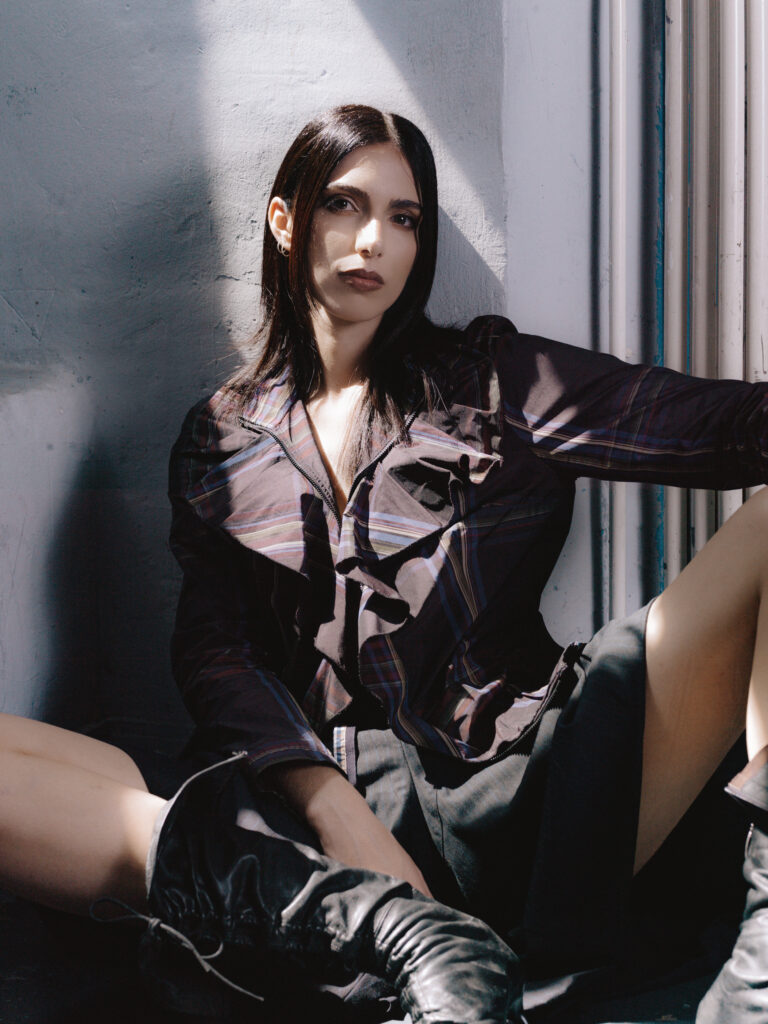
3. Gli ultimi anni sono stati molto intensi per te: dalla co-direzione dell’etichetta e degli eventi Room Trax ai tour quasi ogni weekend, fino alle release su label come SK_eleven e Mutual Rytm. In mezzo a tutto questo, cosa ti aiuta a restare ispirata e a mantenere intatta la tua energia?
È stato un anno intenso: viaggi continui, ore in studio, vita personale, l’etichetta e tutto il lavoro invisibile che c’è intorno. Spesso le persone vedono solo la superficie, ma non tutto ciò che c’è dietro.
Ciò che mi mantiene con i piedi per terra è prendermi dei momenti di distanza. Qualche giorno solo per me, andare a trovare la mia famiglia in Spagna o passare del tempo con i miei amici più stretti. Sono momenti che mi fanno stare bene, lontano dal rumore.
Per quanto riguarda il processo creativo: quando sto per iniziare a creare, mi piace ascoltare musica molto lontana dalla techno. Mi aiuta a “resettare” le orecchie e a svuotare la testa dall’intensità della cultura club. Ho bisogno di quella tela bianca, di uno spazio in cui non sono influenzata da trend, BPM o dall’ultimo set che ho suonato. È proprio questo contrasto tra mondi che permette alle nuove idee di emergere.
4. Ripensando a queste release e al tuo percorso finora, in che modo raccontano la direzione che sta prendendo il tuo suono e l’artista che stai diventando?
Sento di essere entrata in un nuovo capitolo. Sono più aperta, meno spaventata dalla sperimentazione e più disposta a spingermi fuori dalla mia comfort zone per costruire un suono che sento davvero personale.
Per esempio, per molto tempo l’idea di usare la mia voce nella musica mi spaventava: mi sembrava di essere troppo vulnerabile, troppo esposta. Ora invece è qualcosa che mi piace molto e che ha aperto un modo completamente nuovo di lavorare creativamente.
Questo periodo è fatto dall’accettare l’evoluzione e lasciare che il mio suono cresca insieme a me. E sì… in futuro sentirete sicuramente di più questo lato di me.
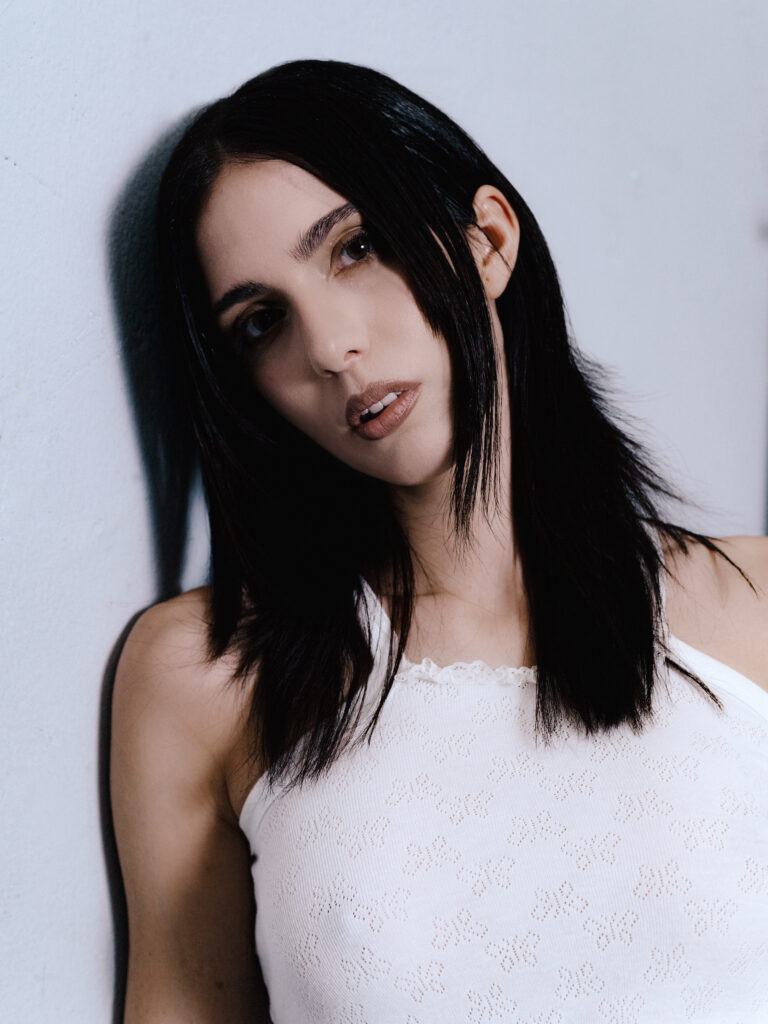
5. Suoni in contesti molto diversi tra loro, da luoghi con una forte identità culturale come Bassiani o Berghain, a festival open-air e atmosfere estive con un’energia completamente diversa. Come ti prepari per contesti così contrastanti e cosa ti aiuta ad adattare i set senza perdere la tua identità musicale?
Non ho mai preparato i miei set, preferisco essere completamente spontanea. Per contesti così diversi, però, mi piace creare alcune cartelle organizzate, così da non perdere tempo a cercare tracce sul momento, soprattutto quando i set sono lunghi e l’energia cambia molte volte nel corso della notte.
Mi muovo tra mood diversi a seconda dello spazio, del pubblico e dell’atmosfera, ma cerco comunque di restare spontanea. È quella spontaneità che mi mantiene connessa alla mia identità. Il mio obiettivo è sempre lo stesso: creare qualcosa di speciale sul dancefloor e sorprendere anche me stessa.
6. Torni in Italia per una data a Torino con Wired Production. Ripensando ai tuoi recenti show nel Paese, cosa c’è nel pubblico italiano che ti ispira o ti dà energia, e cosa aspetti di più da questa data?
Quando suono in Italia sento sempre una connessione speciale con il pubblico. C’è un calore e un’apertura nel modo in cui le persone rispondono alla musica, e questo crea una sensazione di vicinanza che mi piace molto. E sì, anche il cibo aiuta decisamente, ahaha!
Torino mi entusiasma perché quello che Wired Production sta facendo lì è significativo. Stanno investendo nella scena stessa, non solo nei grandi headliner, e si percepisce che ci tengono davvero a costruire qualcosa con intenzione. È sempre un piacere tornare nei posti in cui il pubblico condivide questo tipo di energia e visione.
7. Che tipo di impatto vorresti lasciare sulla scena o sulle persone che seguono il tuo lavoro?
Per me l’obiettivo è lasciare qualcosa che resti: una sensazione, un momento, un’emozione, che non sia effimera. Mi piacerebbe che la mia musica lasciasse un segno nella vita delle persone, qualcosa a cui poter tornare nel tempo.
The Importance of Preserving Your Energy: A Conversation with BLANKA
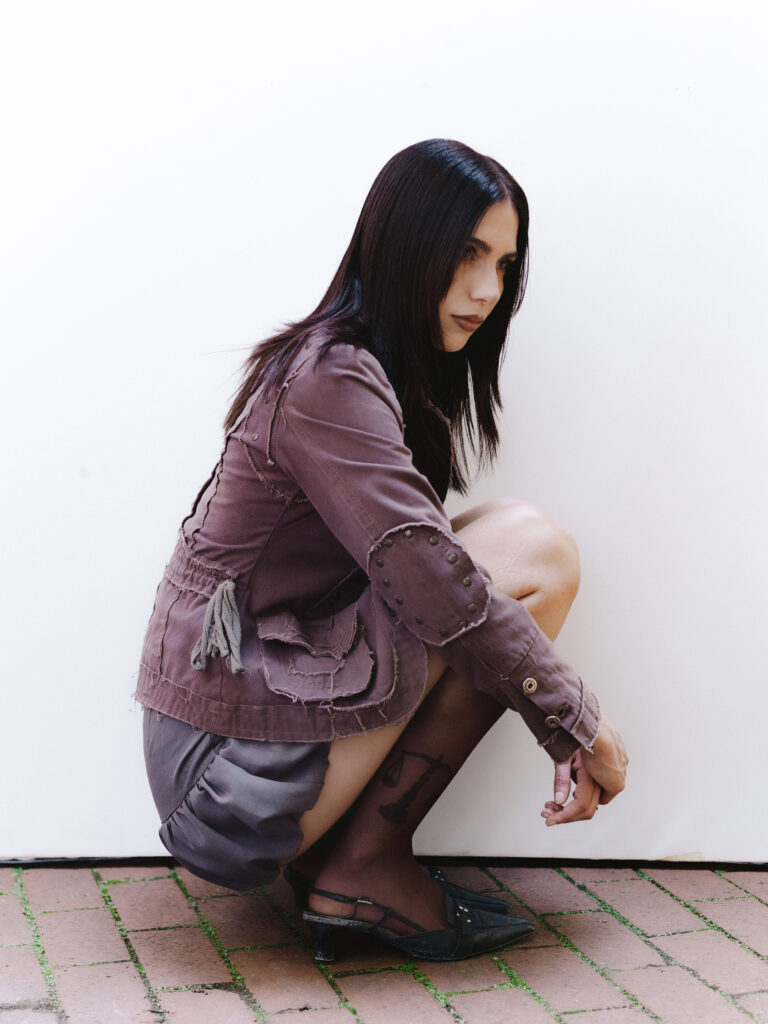
Ahead of her Italian stop in Turin on November 29 at Azimut, we sat down with BLANKA, an artist who defies any limiting definition. DJ, producer, event curator and co-founder of Room Trax, BLANKA embodies a constantly evolving vision, driven by a creative urgency that refuses to stand still.
Her path unfolds between two key cities: Barcelona, where she first stepped behind the decks, exploring house and minimal sounds and drawing early inspiration from figures such as Ricardo Villalobos; and Berlin, where she relocated during the lockdowns and where her sound became denser, more hypnotic and sharply focused. It is precisely from this tension between light and shadow that Room Trax was born, a project she co-runs with Angioma, encompassing both a record label and an event series that reflects a dual identity: sun-drenched, minimal and fluid on one side, raw and uncompromisingly club-oriented on the other. Today, Room Trax stands as a reference point between Berlin and Barcelona.
Over the years, BLANKA has brought her vision to some of Europe’s most influential clubs and festivals, from Berghain and Tresor in Berlin to fabric and FOLD in London, as well as Garbicz Festival, Stone Techno Festival, Bassiani, Basement and Amsterdam’s Lof, demonstrating an ability to read spaces, architectures and the subtle energy of the dancefloor. This instinct also informs the curatorial approach behind Room Trax, which has grown from a passion-driven initiative into an international platform with a strong identity and a tightly knit community.
As a producer, her releases on labels such as SK_eleven, Soma Records and Mutual Rytm reveal a sound that is powerful yet refined, engineered for peak-time moments without ever sacrificing depth. EPs like Breaking Rules and her most recent collaborations attest to a continuous evolution, always grounded in a deeply personal artistic research.
We’ve met her behind the decks at Azimut in Turin before her set for Wired Productions. In person, BLANKA is pure momentum, an artist who experiences the club as a space of transformation, where emotions are transmitted, experimentation is essential, and evolution is non-negotiable.
What follows is a glimpse into her world, her creative process, and the philosophy that keeps her relentlessly moving forward.
1. Hi BLANKA, welcome to Parkett Channel. I’d love to start from your beginnings. Over the last ten years, you’ve lived very different lives since leaving your hometown Córdoba to Milano, Barcelona and now Berlin. How do you feel these places – their energies, cultures and rhythms – have shaped your identity as an artist today?
Each city has shaped me in its own way. Milan was the first big shift, I moved there at 18, working in fashion, discovering nightlife, and founding electronic music for the first time. It opened a door I didn’t even know existed.
Barcelona was the second chapter, the place where I began to experiment, to play, to produce… where the idea of becoming an artist started to feel real.
And then Berlin arrived with its own intensity. It challenged me, pushed me, and offered opportunities that allowed me to grow into the artist I am today.
All these places, their energies, the cultures and the people I met shaped my sensitivity, my taste, and the way I understand music. Each city left a layer on me, both personally and creatively.
2. You’ve spoken before about growing at your own pace, without forcing things or taking shortcuts. What does it mean for you to protect your timing, your energy and your creative identity in an industry that’s always accelerating?
The scene moves so quickly these days that it can feel difficult to find music that truly reaches the soul. There’s always this subtle tension between what you want to express, what people expect from you, and whatever happens to be trending at the moment.
I try not to get swept up in that current. I prefer to move at my own rhythm, to create from a place that feels honest rather than reactive.
Protecting my timing means not rushing, not doing things just because I ‘should,’ but allowing myself the space to wait until something feels right. It’s my way of preserving my energy, my intuition, and my creative identity even when everything around me is moving faster than I want to.
3. The past few years have been intense for you: from co-curating Room Trax label and events and touring almost every weekend to releasing on labels like SK_eleven and Mutual Rytm. Amid all this, what helps you stay inspired and keep your energy intact?
It’s been an intense year, constant travel, studio hours, personal life, the label, and all the invisible work that surrounds it. People often see the surface, but not all the work that is behind it.
What keeps me grounded is stepping away for a moment. Taking a few days just for myself, visiting my family in Spain, or spending time with my closest friends. Those moments feel good to me where I can be outside the noise.
Regarding the creative process: when I’m about to start creating, I like to listen to music far away from techno. It helps me reset my ears and empty my head from the intensity of club culture. I need that blank canvas, a space where I’m not influenced by trends, BPMs, or the last set I played. That contrast between worlds is what allows new ideas to appear.
4. Thinking about these releases and your journey so far, how do they capture the direction your sound is taking and the artist you’re becoming?
I feel like I’m stepping into a new chapter right now. I’m becoming more open, less afraid to experiment, and more willing to push myself outside the box in order to shape a sound that feels truly personal.
For example, for a long time, the idea of using my own voice in my music scared me , it felt too vulnerable, too exposed. Now it’s something I really enjoy, and it has opened a completely new way in my creative process.
This period is about embracing that evolution and letting my sound grow with me. And yes… you’ll definitely be hearing more of that side of me in the future.
5. You play in very different environments — from places with a strong cultural identity like Bassiani or Berghain, to open-air festivals and summer atmospheres with a completely different energy. How do you prepare for such contrasting contexts, and what helps you adapt your sets without losing your own musical identity?
I never used to prepare my sets, I prefer to be spontaneous about it. But for these very different contexts I like to create a few organized folders so I don’t lose time searching for tracks during the moment, especially when the sets are long and the energy shifts many times throughout the night.
I move through different moods depending on the space, the crowd and the atmosphere, but I still try to stay spontaneous. That spontaneity is what keeps me connected to my identity. My goal is always the same: to create something special on the dancefloor, and to surprise myself.
6. You’re back in Italy for a show in Turin with Wired Production. Thinking about your recent shows in the country, what is it about Italian audiences that inspires or energises you, and what are you most looking forward to for this date?”
I always feel a special connection with the crowd when I play in Italy. There’s a warmth and openness in the way people respond to music, it creates a feeling of closeness that I really enjoy. And yes, the food definitely helps too haha!
Turin is exciting for me because what Wired Production is doing there feels meaningful. They’re investing in the scene itself, not just in big headliners, and you can sense that they care about building something with intention. It’s always a pleasure to return to places where the audience and the promoters share that kind of energy and vision.
7. What kind of impact do you want to leave on the scene or on the people who follow your work?
For me, the goal is to leave something that stays, a feeling, a moment, an emotion that isn’t fleeting. I’d love for my music to leave a piece in people’s lives, something they can return to in the future and still feel connected to. If my work can do that, then that’s the impact I hope to have.