
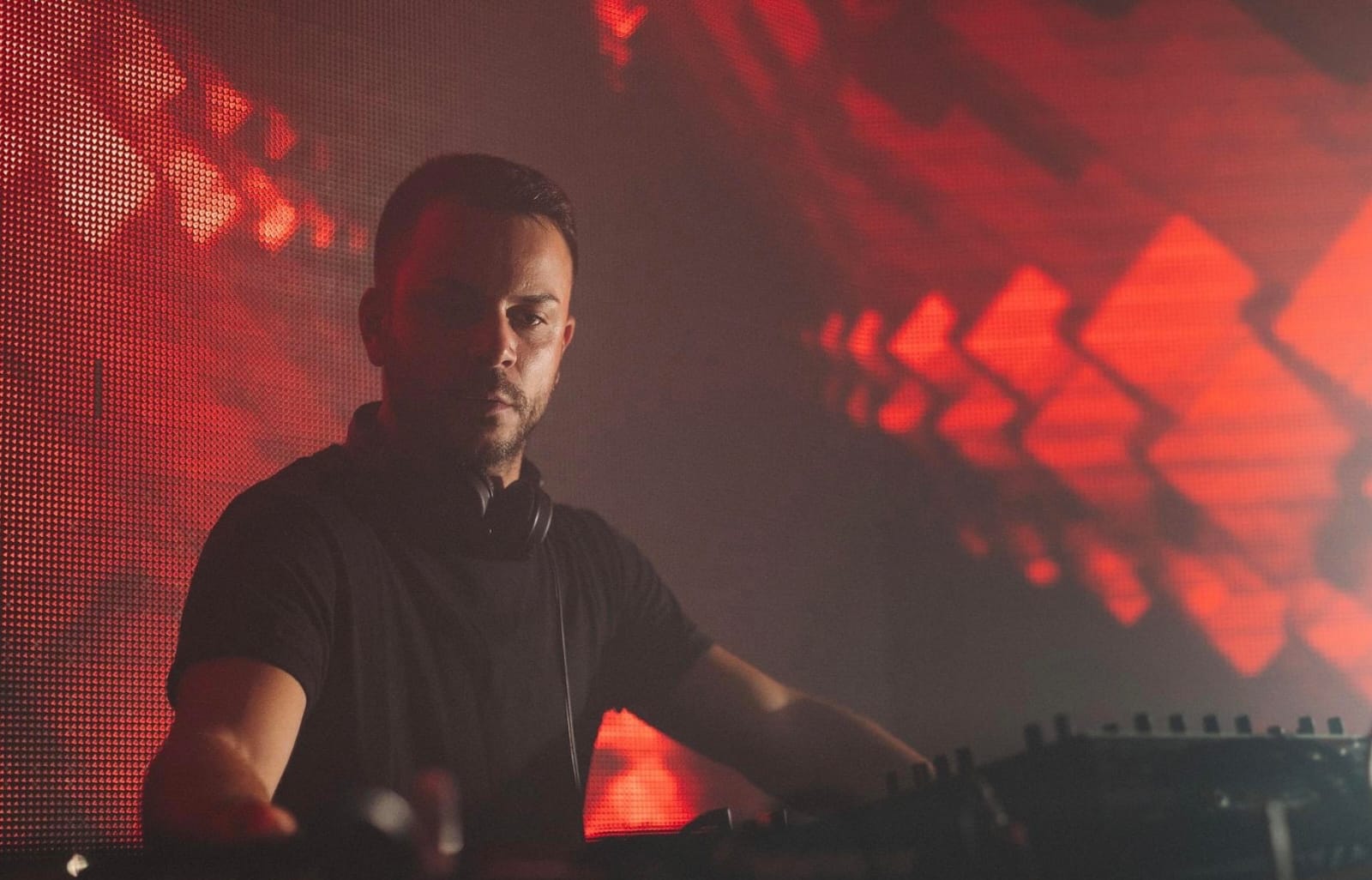
In occasione dell’uscita di “Particle Audio” il 23 marzo, abbiamo parlato con Viels di processo creativo, spazialità del suono, club culture e del ruolo di Acquario nella scena techno contemporanea.
Co-fondatore di End Of Perception e residente del progetto Acquario Immersioni a Milano, Viels si è distinto negli anni per la sua capacità di costruire paesaggi sonori stratificati, capaci di instaurare una connessione profonda con il pubblico. Nel suo percorso ha condiviso la consolle con artisti come Oscar Mulero e Svreca, affermandosi come una presenza riconoscibile nella scena techno contemporanea.
I suoi set e le sue produzioni si muovono in una dimensione immersiva, dove ritmo, spazio e percezione guidano l’ascoltatore attraverso una ricerca sonora in continua evoluzione. Con “Particle Audio“, progetto avviato nel 2026, Viels apre ora un nuovo capitolo del suo percorso artistico: uno spazio in cui le esperienze maturate negli anni si intrecciano con nuove direzioni e possibilità espressive all’interno del panorama techno.
Ciao Viels, è un piacere averti qui su Parkett!
Vorrei partire dalla tua nuova release, “Particle Audio”. Cosa ti ha spinto a dare forma a questo progetto e in che modo senti che riflette il tuo presente artistico?
Ciao Margherita, piacere mio. Particle Audio nasce principalmente dalla voglia di esprimere tutto me stesso nelle forme che naturalmente mi appartengono. Non sono mai stato un produttore troppo incentrato su una sola tipologia di techno, ho sempre avuto molti altri spunti e idee che negli anni ho lasciato quasi sempre in secondo piano. Quasi un anno fa ho avuto la necessità di condividere senza filtri e senza limiti tutto il mio background musicale senza soffermarmi troppo a pensare al dopo. Ho idee, accendo gli strumenti, registro e le butto giù. Questo è Particle Audio.
Il nome Particle richiama l’idea di frammenti di energia in movimento, di qualcosa che non è mai del tutto statico. È un modo per pensare il suono come trasformazione continua, più che come struttura lineare?
Hai centrato il senso. Questa nuova avventura mira proprio a far evolvere il mio suono, le mie idee e quello che negli anni ho avuto modo di vivere. Non è semplicemente un “inseguimento” ad arrivare dove vogliono gli altri. Tutto si base nell’ascoltare le mie emozioni, delle volte sono cupe e piene di tristezza, delle volte leggere e colme di vivacità. Da qui la trasformazione di ogni singola uscita senza mezzi termini.
Parli di “Particle Audio” come di un contenitore in grado di raccogliere diverse forme della tua ricerca, facendolo sembrare uno spazio sonoro da abitare. Come si costruisce per te uno spazio musicale, e che ruolo hanno il vuoto e il silenzio nella definizione della forma?
Bella domanda! Penso di non avere uno spazio musicale vero e proprio. O meglio, dentro di me forse c’è sempre stato, ma definirlo non è mai stato semplice. Seguo ciò che più mi viene naturale. Far cantare gli strumenti lasciando esprimere me stesso attraverso loro è la vera essenza del progetto. La ricerca della semplicità di questo progetto mira ad esplorare più nel profondo quello che non ho esplorato in passato. E forse si, la forma di questo nuovo spazio musicale va di pari passo con la naturalezza di ricercare qualcosa di più sincero, che lascia dei vuoti che prima avrei colmato.
Mi colpisce che in questo progetto la spazialità del suono con effetti echo, delay e riverberi, sembra diventare una vera e propria materia tattile. Come lavori su questa dimensione e in quale fase del processo prende realmente forma?
Sono sempre stato molto attento a creare spazio e dinamica nelle mie tracce. Sono un amante dei reverb e delay, amo partire da un singolo suono e trasformarlo in qualcosa di completamente diverso e l’implementazione di questi effetti rende il tutto più armonico. Dosati con parsimonia creano davvero mille sfaccettature nella stessa traccia. Durante l’arrangiamento sono propenso a divertirmi con gli effetti e talvolta risulta dare una marcia in più alla traccia. Resampling degli stessi, nuove atmosfere o semplici glitch ripresi da un singolo effetto creano quasi regolarmente la struttura delle mie tracce.
Guardando al tuo percorso, dalle prime release su Dynamic Reflection alle uscite successive, sembra che ci sia una narrazione coerente nel modo in cui pensi il suono e la forma. Quando guardi indietro, cosa senti ancora risuonare nel tuo modo di pensare la produzione e l’ascolto, e cosa hai scelto, consapevolmente o no, di lasciar andare per arrivare a “PAC001”?
Credo di essere sempre stato coerente, devo ammetterlo. Non sempre però, riascoltando i miei progetti, sono contento al 100% di tutto quello che ho fatto uscire. Ogni tanto riascolto anche io le mie prime release degli anni 2016-17-18, e ancora oggi mi ci ritrovo in parte. Come citato nella risposta precedente, il reverb, ad esempio, è sempre stato una parte fondamentale dei miei mix e oggi sento di aver mantenuto quello stesso stile, utilizzato per esempio nel mio primo solo Ep su Dynamic Reflection, con una nota, o forse più, di consapevolezza e saggezza nell’utilizzo.
Molte altre volte riascolto i miei brani più vecchi per prendere spunto da quello che ho fatto in precedenza. MI stupisco delle volte, credendo di non esserne più capace, e questa sorta di sfida mi porta poi ad elaborare e maneggiare con più cura le tecniche che usavo nei primi anni. Quello che posso dire è che dal passato ho imparato che la semplicità molte volte è sinonimo di qualità.
Avendo suonato in diversi club, che cosa ti ha insegnato il dancefloor in termini di ascolto e costruzione del suono? E quanto questa esperienza incide sul tuo lavoro in studio?
Incide tantissimo. Le esperienze maturate in anni di clubbing, dapprima come ascoltatore poi come artista, ha creato in me una consapevolezza incredibile. Quasi la totalità delle mie tracce vengono sviluppate partendo dal presupposto che con buone probabilità vengano suonato in un club, più o meno grande, oppure in qualche festival. Personalmente sono anche molto attento nella fase di mixing appunto per fare in modo che poi abbiano un riscontro positivo su soundsystem più o meno importanti nel club di tutto il mondo.
Acquario Immersioni, nata negli spazi del Masada e sviluppata anche attraverso formati estesi all’Amelia, è una realtà che propone un ascolto collettivo e dilatato nel tempo. Da residente, come vivi questo progetto e quale pensi sia il suo contributo all’interno della scena?
Acquario mi ha forgiato come artista. Devo tantissimo al progetto e ai ragazzi che ne fanno parte. Una grossissima fetta del mio bagaglio artistico personale, della conoscenza e della mia consapevolezza artistica, è frutto delle esperienze maturate durante tutti gli undici anni passati con Acquario. Penso che questo progetto in generale sia un punto di riferimento di coerenza, unicità e qualità nel panorama Europeo e non solo. Capita spessissimo che io suoni nei club e la gente mi faccia i complimenti per Acquario ancora prima che per la mia musica. Consiglio a tutti gli amanti di questo genere di venirci a trovare.
La scena elettronica vive in un contesto di uscite sempre più rapide, che rapporto hai con il tempo della musica? “Particle Audio” si colloca dentro o fuori questa velocità?
Non voglio che Particle Audio segua un trend. Sono molto sensibile a riguardo.
Negli anni ho sofferto a causa di come il nostro mondo si è evoluto e Particle Audio mi sta tirando fuori da questa bolla che si è creata. Mi viene da pensare: davvero la gente crede che tutto ciò sia sinonimo di qualità? Davvero abbiamo bisogno di tutto questo? Era bello quando non vedevi l’ora che il tuo artista preferito pubblicasse il prossimo Ep, il prossimo album. Ora ne pubblicano talmente tanti che anche il tuo idolo più grande rischia di diventare scontato. Se almeno si rallentasse un po di più, sono sicuro che si tornerebbe alla qualità di un tempo.
Per concludere, se dovessi descrivere “Particle Audio” non come una release, ma come uno spazio o una condizione percettiva, come la racconteresti?
Come un momento di totale spensieratezza.

ENGLISH VERSION
Hi Viels, it’s a pleasure to have you here on Parkett!
I’d like to start with your new release, “Particle Audio”. What led you to shape this project, and in what way do you feel it reflects your current artistic moment?
Hi Margherita, the pleasure is mine. Particle Audio mainly comes from the desire to express myself fully through the forms that naturally belong to me. I’ve never really been a producer focused on just one type of techno; I’ve always had many other ideas and influences that, over the years, I often kept in the background. About a year ago I felt the need to share my musical background without filters or limits, without overthinking what might come next. I have ideas, I turn on the machines, I record, and I put them down. That’s Particle Audio.
The name Particle suggests fragments of energy in motion, something that is never entirely static. Is it a way of thinking about sound as a continuous transformation rather than a fixed, linear structure?
You’ve captured the idea perfectly. This new venture is really meant to let my sound evolve, along with my ideas and everything I’ve experienced over the years. It’s not simply about “chasing” where others want you to go. For me, it all comes down to listening to my own emotions. Sometimes they’re dark and full of sadness, other times they’re lighter and filled with vitality. From there comes the transformation that shapes each release, without compromise.
You describe “Particle Audio” as a container capable of bringing together different aspects of your musical research, almost like a sonic space to inhabit. How do you build a musical space, and what role do emptiness and silence play in shaping its form?
Great question! I don’t think I have a defined musical space as such. Or rather, maybe it has always existed somewhere inside me, but it has never been easy to define it. I simply follow what comes most naturally. Letting the instruments “sing” and expressing myself through them is really the essence of this project. The search for simplicity behind Particle Audio is also a way to explore more deeply what I hadn’t explored before. And maybe yes, the form of this new musical space goes hand in hand with the desire to pursue something more honest, something that allows for empty spaces that in the past I probably would have filled.
What strikes me in this project is how the spatiality of sound through echo, delay, and reverbs, almost becomes a tactile material. How do you work with this dimension, and at what stage of the process does it really take shape?
I’ve always been very attentive to creating space and dynamics in my tracks. I’m a big fan of reverbs and delays, I love starting from a single sound and transforming it into something completely different, and the use of these effects helps make everything more harmonic. When used with care, they can create countless nuances within the same track. During the arrangement phase I like to experiment with effects, and sometimes that ends up giving the track an extra push. Resampling them, generating new atmospheres, or even capturing small glitches from a single effect often ends up shaping the structure of my tracks.
Looking back at your journey, from your early releases on Dynamic Reflection to your later work, there seems to be a coherent narrative in the way you approach sound and form. When you look back, what do you still hear resonating in the way you think about production and listening, and what have you consciously (or unconsciously) chosen to leave behind in order to arrive at “PAC001”?
I think I’ve always been quite consistent, I have to admit. That said, when I listen back to some of my past projects, I’m not always 100% happy with everything I’ve released. Sometimes I go back and listen to my first releases from around 2016–17–18, and even today I can still recognize myself in them to some extent. As I mentioned before, reverb has always been a fundamental part of my mixes, and today I feel that I’ve kept that same approach—like in my first solo EP on Dynamic Reflection—but with a bit more awareness and maturity in how I use it. Very often I also revisit my older tracks to take inspiration from what I did back then. Sometimes I’m even surprised by them, thinking I might not be capable of that anymore, and that kind of challenge pushes me to revisit and handle with more care the techniques I used in my early years. What I’ve learned from the past, in the end, is that simplicity is very often a synonym for quality.
Having played in many different clubs, what has the dancefloor taught you in terms of listening and sound construction? And how much does that experience influence your work in the studio?
It influences it a lot. The experiences I’ve gained through years of clubbing, first as a listener and then as an artist—have given me a strong sense of awareness. Almost all of my tracks are developed with the idea that they will most likely be played in a club, whether small or large, or perhaps at a festival. Personally, I’m also very attentive during the mixing phase, precisely to make sure the tracks translate well on different kinds of sound systems in clubs around the world.
Acquario Immersioni, born in the spaces of Masada and later developed through extended formats at Amelia, is a project that proposes a collective and time-dilated listening experience. As a resident, how do you experience this project, and what do you think its contribution is within the scene
Acquario has really shaped me as an artist. I owe a lot to the project and to the people involved in it. A huge part of my personal artistic background, my knowledge, and my artistic awareness comes from the experiences I’ve had during the eleven years I’ve spent with Acquario. I believe the project represents a point of reference in terms of coherence, uniqueness, and quality, not only within the European scene but beyond. It happens very often that I play in clubs and people compliment me on Acquario even before mentioning my own music. I would definitely recommend that anyone who loves this kind of sound comes to experience it for themselves.
The electronic scene is moving at an increasingly fast pace in terms of releases. What is your relationship with the time of music today? Does “Particle Audio” position itself within this speed, or outside of it?
I don’t want Particle Audio to follow any trend. I’m very sensitive about that. Over the years I’ve struggled with the way our world has evolved, and Particle Audio is helping me break out of the bubble that has formed around it. It makes me wonder: do people really believe that all of this is a synonym for quality? Do we really need this much? There was something special about waiting for your favorite artist to release their next EP or album. Now they release so much music that even your biggest idol risks becoming predictable. If things slowed down a little, I’m sure we would return to the kind of quality we once had.
If you had to describe “Particle Audio” not as a release, but as a space or a perceptual condition, how would you describe it?
Like a moment of complete carefree freedom.