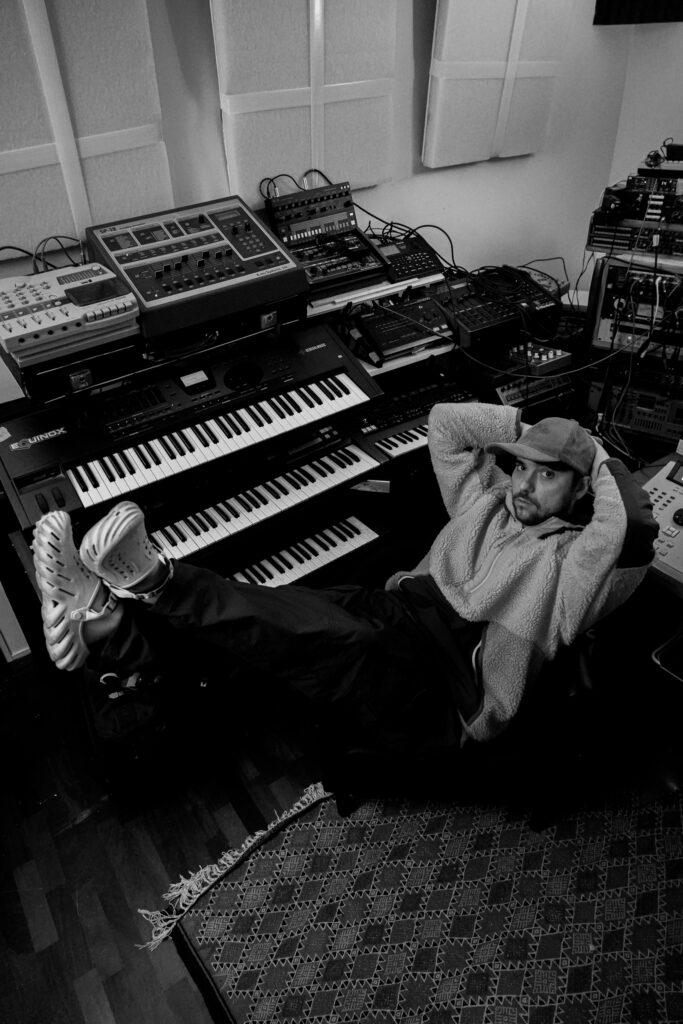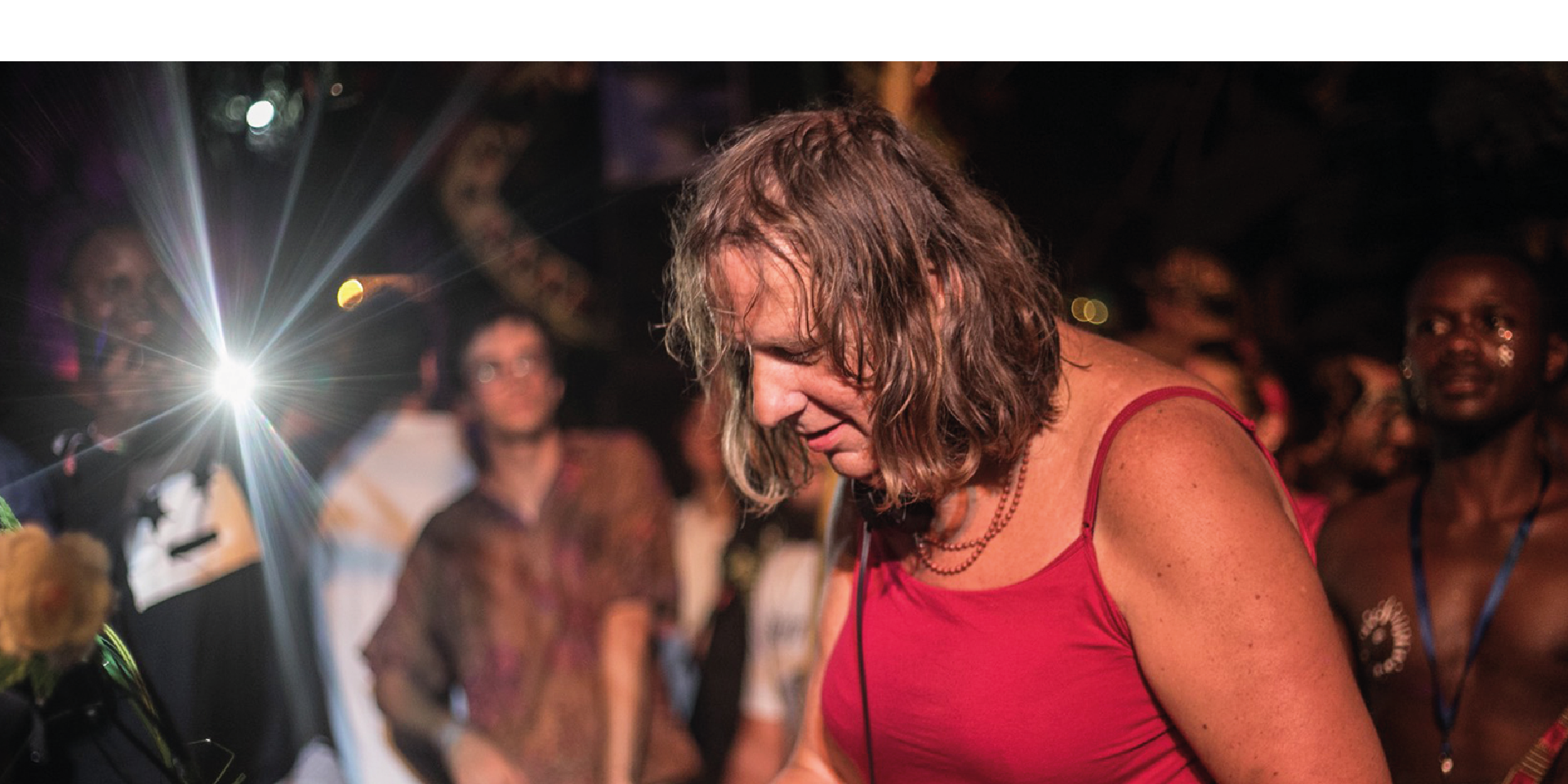

In occasione della Biennale di Venezia, dove suono, spazio e gesto performativo si intrecciano in un continuum fluido, incontriamo DJ Marcelle, figura emblematica del DJing sperimentale europeo.
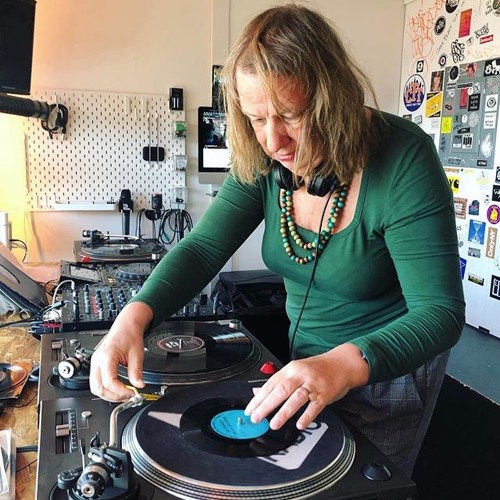
Attiva sin dalla fine degli anni Settanta e formatasi nell’alveo dell’attitudine punk e DIY, Marcelle van Hoof è oggi una delle figure più radicali e inclassificabili del DJing europeo. Un po’ perché il suo lavoro si muove su un terreno ibrido, in cui il DJ set diventa composizione in tempo reale, un po’ per quella dote innata nell’ improvvisazione strutturata.Utilizzando tre giradischi e una collezione che supera i 15.000 vinili, DJ Marcelle costruisce set basati sulla sovrapposizione simultanea di materiali eterogenei: industrial techno, dub, breakcore, free jazz, avanguardia, spoken word, registrazioni politiche e suoni concreti.
Il suo modo di vivere la musica mette in crisi le aspettative del pubblico e le ritualità del clubbing, perché lontano da qualsiasi idea di intrattenimento o di compiacenza verso il pubblico. Si, DJ Marcelle rivendica il ruolo del DJ come musicista e autore, una dj “politica” non nel senso puro del termine, ma sicuramente capace di discostarsi dall’ idea di selezionatrice funzionale, e vedere nel dj set un atto di onestà intellettuale che forse oggi non siamo abituati ad aprezzare.
Durante l’incontro veneziano abbiamo parlato con lei di libertà creativa, di come l’umorismo possa essere una chiave per interpretare la scena odierna, di cosa significhi mixare e di alcuni dischi che non possono mancare nella sua borsa. Buona lettura!
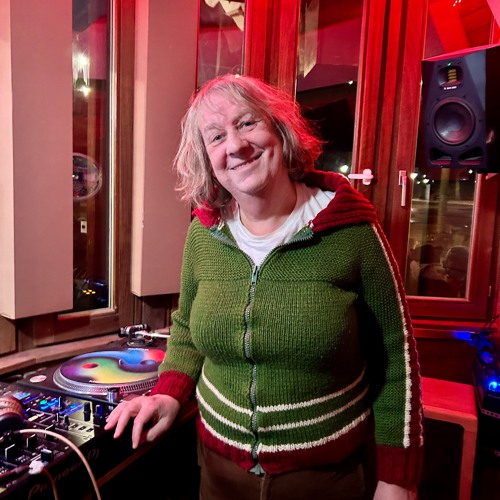
Siamo qui alla Biennale della Musica di Venezia. Grazie, Dj Marcelle, per essere con noi oggi.
Grazie a voi.
Vorrei partire dal luogo in cui ci troviamo: siamo alla Biennale di Venezia: portare un DJ set in questo contesto significa introdurre l’energia grezza del club nel linguaggio dell’arte contemporanea. Vedi questo ambiente come qualcosa con cui dialogare o come qualcosa da disturbare, almeno in parte?
In generale, io suono ovunque: nelle gallerie, nei club. Quindi, superficialmente, non mi interessa davvero dove suono, dall’altra parte, però, sono molto interessata all’arte. La settimana scorsa ho suonato in Norvegia, a Oslo, e sono andata a visitare il Museo Munch. Una delle mie grandi ispirazioni per quello che faccio è l’outsider art, l’art brut. Quindi sì, ho sicuramente un’affinità con le forme d’arte più sperimentali.
Spesso descrivi il tuo approccio al DJing come una forma di libertà radicata nel punk: fare le cose senza chiedere permesso. Come sopravvive questo atteggiamento in un’epoca in cui anche la ribellione sembra essere stata mercificata?
Sai, non ho molto da dire sugli altri. Quello che faccio mi viene naturale, non è niente di speciale per me. Ho sempre avuto un’idea molto chiara di come l’arte dovesse essere: spontanea, non troppo rifinita. Dovrebbe provocare, mettere in discussione, mostrare emozioni diverse.
A volte le persone usano l’etichetta “punk”, ma credo che spesso dica più di chi la usa che di me, perché quello che faccio è profondamente contemporaneo.La musica che suono è contemporanea. E penso che la musica debba essere libera perché io non sono una fornitrice di un servizio e oggi molti artisti lo sono, soprattutto nel mondo dei DJ.
Le tue performance sono spesso ironiche e concettuali. L’umorismo, per te, è un modo per smascherare le contraddizioni del mondo dell’arte o semplicemente un modo per affrontare l’assurdità della vita quotidiana?
Forse la seconda. Ridere di se stessi o del mondo intorno a noi è anche un modo per sopravvivere a quanto il mondo sia diventato terribile. E io ho un forte senso dell’umorismo, ma l’umorismo fa parte di qualcosa di molto serio. Credo che nel mondo della musica elettronica ci sia troppo poca autoironia: tutti si prendono terribilmente sul serio, certo questo non significa che io non mi prenda sul serio, però è importante anche scuotere un po’ le cose, e l’umorismo è uno degli strumenti per farlo.
Non è qualcosa che pianifico prima: quello che faccio sul palco è lo stesso modo in cui vivo. Non c’è differenza, non è una recita. Errore, caos e libertà.
Il tuo modo di suonare rifiuta il beatmatching tradizionale e permette a ritmi incompatibili di coesistere. È un modo di accogliere l’errore come parte del set. Quando le cose smettono di funzionare secondo le regole tradizionali, è un fallimento, una forma di libertà o entrambe?Cosa rappresenta per te il momento in cui il mix “si rompe”, quando l’ordine sembra crollare?
In realtà non si rompe né crolla davvero, è solo che, soprattutto vent’anni fa, molte persone pensavano: “Non fa beatmatching, quindi non è il modo giusto di suonare”. Ecco, questa è una stronzata. Penso che la musica, in generale, sia più stimolante quando si mettono insieme tipi diversi di musica, e nel mio caso anche quando li sovrappongo, come con tre giradischi uno sopra l’altro.
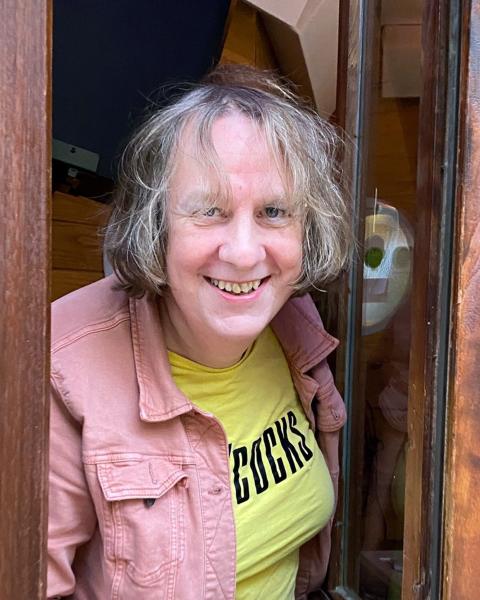
A un certo punto devi decidere da solo se seguire questa strada oppure no. E credo che non esistano errori né perfezionismo e dipende tutto da come guardi le cose. Per me è qualcosa di del tutto naturale, fa parte di quello che faccio. Credo che la musica, quando mescoli insieme generi diversi e anche la musica che produco io stessa, diventi più viva ed eccitante. Spesso lo paragono al mangiare un piatto di cibo: non mangi solo riso per tutto il tempo, lo mescoli con altri ingredienti. Una bella metafora.
La tua recente uscita sembra espandere ancora di più il tuo universo sonoro..Tra riferimenti che vanno dal dub alla poesia concreta, come vedi il dialogo con i tuoi live set, ad esempio per questa sera? Come inserisci il nuovo lavoro nei set dal vivo?
È tutto improvvisato. Non ho mai preparato un set in vita mia, nel senso di provare a casa la musica che suonerò la sera stessa. Porto con me, in genere, i dischi più recenti, alcuni più vecchi, spesso dischi dei Muslimgauze, che sono tra i miei artisti preferiti. In generale suono semplicemente quello che mi sento e non è importante il contesto.
Oggi le comunità musicali spesso esistono online, come archivi digitali tipo Spotify o altre piattaforme di streaming. Qual è, per te, la differenza tra quella connessione virtuale e la comunità che si crea in uno spazio fisico condiviso?
Non sono sicura di aver capito la domanda, ma penso che cose come Spotify siano terribili. Ascoltare musica basandosi sugli algoritmi uccide completamente la curiosità.Per me è un mondo diverso, e non passo il tempo a dire “odio Spotify” o le piattaforme di streaming, semplicemente non fanno parte del mio modo di vivere la musica.
Io sono sempre andata nei negozi di dischi, oppure le persone mi consigliano cose, scopro musica parlando con altri artisti.Quello che faccio è reale: toccare i dischi, avere la musica fisicamente. Avere oggetti tra le mani.Per questo sto il più possibile lontano da tutto ciò che è online. Non ho Instagram, non ho TikTok. Conduco una vita più semplice e tranquilla, a parte quando sono sul palco, dove sono molto energica .Non voglio creare dipendenza, e molte di queste cose sono finte, quasi tutto è finto. È un mondo strano quello in cui viviamo.
Da tempo resisti al conformismo in una macchina che spesso premia la prevedibilità. Vedi la resistenza stessa come una forma di gesto politico?
È una domanda difficile, ma credo di sì. Anche se, ancora una volta, io faccio semplicemente quello che mi sento di fare. Se poi altri la chiamano resistenza o altro, rispetto a certe norme della musica elettronica, va bene così. Però quest’anno ho pubblicato il mio primo disco apertamente politico. Credo di essere sempre stato politica, ma non in modo diretto.
Ora però, di fronte alle atrocità e al genocidio a Gaza, ho realizzato un 12 pollici intitolato “Showing No Silence”, donando tutti i proventi a un’organizzazione per bambini. Perché penso che, in questi tempi neo-fascisti in cui viviamo, molte persone sottovalutino quanto la situazione sia grave. Credo di dover prendere posizione.È successo anche che ero su un’etichetta tedesca, “Play Loud”, di Berlino. Questo brano faceva parte di un nuovo album, ma quando hanno ascoltato il disco hanno deciso di non pubblicarlo perché parlava di genocidio.
Pensavo fossero persone “normali”, non dei fanatici di destra. Eppure hanno rifiutato di pubblicare un disco che diceva la verità. Nel brano c’è anche un campionamento di Nan Goldin, artista ebrea, che si esprime apertamente contro il genocidio. Ho trovato molto ironico, e anche terribile, che un’etichetta tedesca rifiutasse la voce di una donna ebrea.
Lo trovo assurdo. Per te mescolare generi, tempi e origini è anche un modo di rifiutare identità fisse. L’idea del mix ti interessa come costruzione di un linguaggio ibrido e aperto, che resiste alle definizioni? Vedi il mix come una metafora dell’ibridazione, dell’apertura?
È una domanda molto difficile..si, apertura e anche mescolanza di culture. A volte un disco africano può suonare più techno di un vero disco techno.Non sono d’accordo quando la gente dice “io non vedo il colore delle persone”. Certo che lo vedi, e lo senti. Ma allo stesso tempo, se metti tutto insieme, quei confini iniziano a scomparire. E in più, credo che questo migliori la musica. Quindi vedo il mio mixare come una sorta di composizione con i suoni. Sì, detto in modo un po’ pretenzioso.
Ultima domanda. So che hai un’enorme collezione di dischi, ma se dovessi sceglierne tre da portare sempre con te, non necessariamente per ballare, ma per ciò che dicono di chi sei, quali sarebbero?
Il primo disco che mi ha davvero colpito è stato “What Do I Get?” dei Buzzcocks, del 1978. Sono diventato orfana molto presto nella mia vita.Quel disco traduceva esattamente come mi sentivo allora: “che cosa mi resta nella vita?”, essere così solo, senza genitori. Doveva esserci qualcosa.
Poi sicuramente qualcosa dei The Fall, che sono la mia band preferita di sempre. Forse “Smile” .E come ultimo, forse qualcosa dei Muslimgauze. Non so… “Sick Out” dei Muslimgauze.
Grazie davvero Dj Marcelle di essere stata con noi
Grazie
ENGLISH VERSION
On the occasion of the Venice Biennale, where sound, space, and performative gesture intertwine in a fluid continuum, we meet DJ Marcelle, an iconic figure in European experimental DJing.
Active since the late 1970s and shaped by the punk and DIY ethos, Marcelle van Hoof is today one of the most radical and unclassifiable figures in European DJing. Partly because her work operates in a hybrid territory, where the DJ set becomes a real-time composition, and partly because of her innate talent for structured improvisation.
Using three turntables and a collection of over 15,000 vinyl records, DJ Marcelle creates sets based on the simultaneous layering of diverse materials: industrial techno, dub, breakcore, free jazz, avant-garde, spoken word, political recordings, and concrete sounds.Her approach to music challenges audience expectations and the rituals of clubbing, as it is far removed from any notion of entertainment or catering to the crowd.Indeed
Indeed, DJ Marcelle claims the role of the DJ as musician and author, a “political” DJ not in the strictest sense, but certainly one capable of diverging from the idea of a functional selector, seeing the DJ set as an act of intellectual honesty that we may not be used to appreciating today.
During our encounter in Venice, we spoke with her about creative freedom, how humor can be a key to interpreting today’s scene, what it truly means to mix, and some records that are essential in her bag. Enjoy the read!
We’re here at the Venice Music Biennale. Thank you, DJ Marcelle, for being with us today.
Thank you for having me.
I’d like to start with the place we’re in: the Venice Biennale. Bringing a DJ set into this context means introducing the raw energy of the club into the language of contemporary art. Do you see this environment as something to engage with, or something to disrupt, at least in part?
In general, I play everywhere: in galleries, in clubs. So, on the surface, I don’t really care where I play. On the other hand, I’m very interested in art. Last week I played in Oslo, Norway, and I visited the Munch Museum. One of my biggest inspirations for what I do is outsider art, art brut. So yes, I definitely feel an affinity for more experimental forms of art.
You often describe your approach to DJing as a form of freedom rooted in punk: doing things without asking for permission. How does this attitude survive in an era where even rebellion seems to have been commodified?
You know, I don’t have much to say about others. What I do comes naturally; it’s nothing special to me. I’ve always had a very clear idea of what art should be: spontaneous, not overly polished. It should provoke, challenge, and show different emotions.Sometimes people use the label “punk,” but I think it often says more about the person using it than about me, because what I do is deeply contemporary. The music I play is contemporary. And I think music should be free because I’m not a service provider—and today many artists are, especially in the DJ world.
Your performances are often ironic and conceptual. For you, is humor a way to expose the contradictions of the art world, or simply a way to deal with the absurdity of everyday life?
Perhaps the latter. Laughing at yourself or the world around you is also a way to survive in a world that has become so terrible. I have a strong sense of humor, but humor is part of something very serious. I think there’s far too little self-irony in the electronic music world: everyone takes themselves way too seriously.Of
Of course, that doesn’t mean I don’t take myself seriously, but it’s also important to shake things up a little, and humor is one of the tools to do that.It’s not something I plan in advance: what I do on stage is the same way I live. There’s no difference—it’s not an act. Mistakes, chaos, and freedom.
Your way of playing rejects traditional beatmatching and allows incompatible rhythms to coexist. It’s a way of embracing mistakes as part of the set. When things stop working according to the traditional rules, is it a failure, a form of freedom, or both? What does it mean to you when a mix “breaks,” when order seems to collapse?
Actually, it doesn’t really break or collapse. It’s just that, especially twenty years ago, many people thought: “She doesn’t do beatmatching, so that’s not the right way to play.” That’s nonsense. I think music, in general, is more exciting when you bring together different kinds of music, and in my case, even more so when I layer them—like with three turntables stacked on top of each other. At some point, you have to decide for yourself whether to follow that path or not. I believe there are no mistakes, no perfectionism, it all depends on how you look at things.For
For me, it’s completely natural; it’s part of what I do. I think music becomes more alive and exciting when you mix diverse elements together, including the music I produce myself. I often compare it to eating a dish: you don’t eat only rice all the time, you mix it with other ingredients. A nice metaphor.
Your recent release seems to expand your sonic universe even further. With references ranging from dub to concrete poetry, how do you see the dialogue with your live sets, for example, for tonight? How do you integrate your new work into live performances?
It’s all improvised. I’ve never prepared a set in my life, in the sense of practicing at home the music I’ll play that evening. I usually bring my most recent records, some older ones, and often records by the Muslimgauze, who are among my favorite artists. In general, I just play what I feel, and the context doesn’t really matter.
Today, musical communities often exist online, as digital archives like Spotify or other streaming platforms. For you, what’s the difference between that virtual connection and the community that forms in a shared physical space?
I’m not sure I fully understand the question, but I think things like Spotify are terrible. Listening to music based on algorithms completely kills curiosity. For me, it’s a different world, and I don’t spend my time saying “I hate Spotify” or streaming platforms— they simply aren’t part of the way I experience music.I’ve always gone to record stores, or people recommend things to me; I discover music by talking to other artists.What
What I do is real: touching records, having the music physically, holding objects in my hands. That’s why I stay as far away as possible from anything online. I don’t have Instagram, I don’t have TikTok. I live a simpler, quieter life, except when I’m on stage, where I’m very energetic. I don’t want to create addiction, and a lot of these things are fake; almost everything is fake. It’s a strange world we live in.
You’ve long resisted conformity in a system that often rewards predictability. Do you see resistance itself as a form of political gesture?
It’s a difficult question, but I think yes. Even so, I still just do what I feel I need to do. If others call it resistance or something else, in relation to certain norms in electronic music, that’s fine. But this year I released my first openly political record. I think I’ve always been political, but not in a direct way.
Now, faced with the atrocities and genocide in Gaza, I created a 12-inch called “Showing No Silence”, donating all proceeds to an organization for children. I feel that, in these neo-fascist times we live in, many people underestimate how serious the situation is. I felt I needed to take a stand.It also happened that I was on a German label, Play Loud, in Berlin. This track was part of a new album, but when they heard it, they decided not to release it because it dealt with genocide. I thought they were “normal” people, not right-wing fanatics. Yet they refused to release a record that told the truth. The track even includes a sample from Nan Goldin, a Jewish artist who speaks openly against genocide. I found it both ironic and terrible that a German label would reject the voice of a Jewish woman.
I find that absurd. For you, is mixing genres, tempos, and origins also a way of rejecting fixed identities? Does the idea of the mix interest you as the construction of a hybrid, open language that resists definition? Do you see the mix as a metaphor for hybridity, for openness?
That’s a very difficult question… yes, openness, and also the mixing of cultures. Sometimes an African record can sound more techno than an actual techno record. I don’t agree when people say, “I don’t see people’s color.” Of course you see it—and you hear it. But at the same time, when you put everything together, those boundaries start to disappear. And on top of that, I think it makes the music better. So I see my mixing as a kind of composition with sounds. Yes, that sounds a bit pretentious when you put it that way.
Last question. I know you have a huge record collection, but if you had to choose three records to always carry with you—not necessarily to dance to, but for what they say about who you are, what would they be?
The first record that really hit me was “What Do I Get?” by the Buzzcocks, from 1978. I became an orphan very early in my life. That record translated exactly how I felt back then: “What do I get in life?”—being so alone, without parents. There had to be something more.Then definitely something by The Fall, who are my favorite band of all time. Maybe “Smile”. And lastly, perhaps something by Muslimgauze. I don’t know… “Sick Out” by Muslimgauze